Abebe Bikila “joined the 5th Infantry Regiment of the Ethiopian Imperial Guard, an elite infantry division that safeguarded the emperor of Ethiopia,” Wikipedia says; World Athletics says, “Aged 19, he applied to join the Imperial Body Guard and was accepted.” At the 1960 Olympics in Rome, “the field of 69 athletes from 35 countries” ran the marathon, and “few would have even heard of – let alone fancied – the barefooted Bikila to feature.” “However, in the final days of preparation for the Games in Rome, his shoes fell apart.” “He went to a local shoe store but after picking up a pair of shoes which gave him blisters, he opted to run barefoot for the biggest race of his career.”
The Second Italo-Ethiopian War “was a war of aggression waged by Italy against Ethiopia, which lasted from October 1935 to May 1936,” and “On 3 October 1935, two hundred thousand soldiers of the Regio Esercito (Royal Army) commanded by Marshal Emilio De Bono attacked from Italian Eritrea without prior declaration of war.” In Rome, “the race started at 5.30pm in an effort to avoid the worst of the heat. Scheduled to finish after sunset, hundreds of Italian soldiers lit the course with torches.” “In the early-evening darkness, his path along the Appian Way was lined with Italian soldiers holding torches,” Wikipedia says.
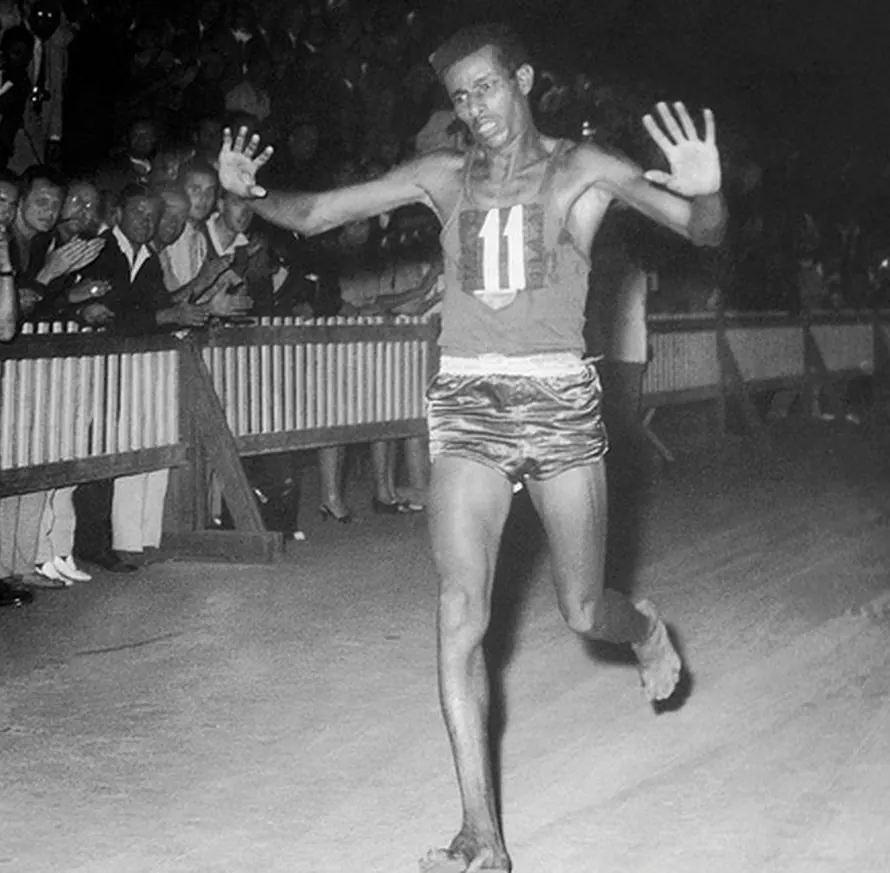
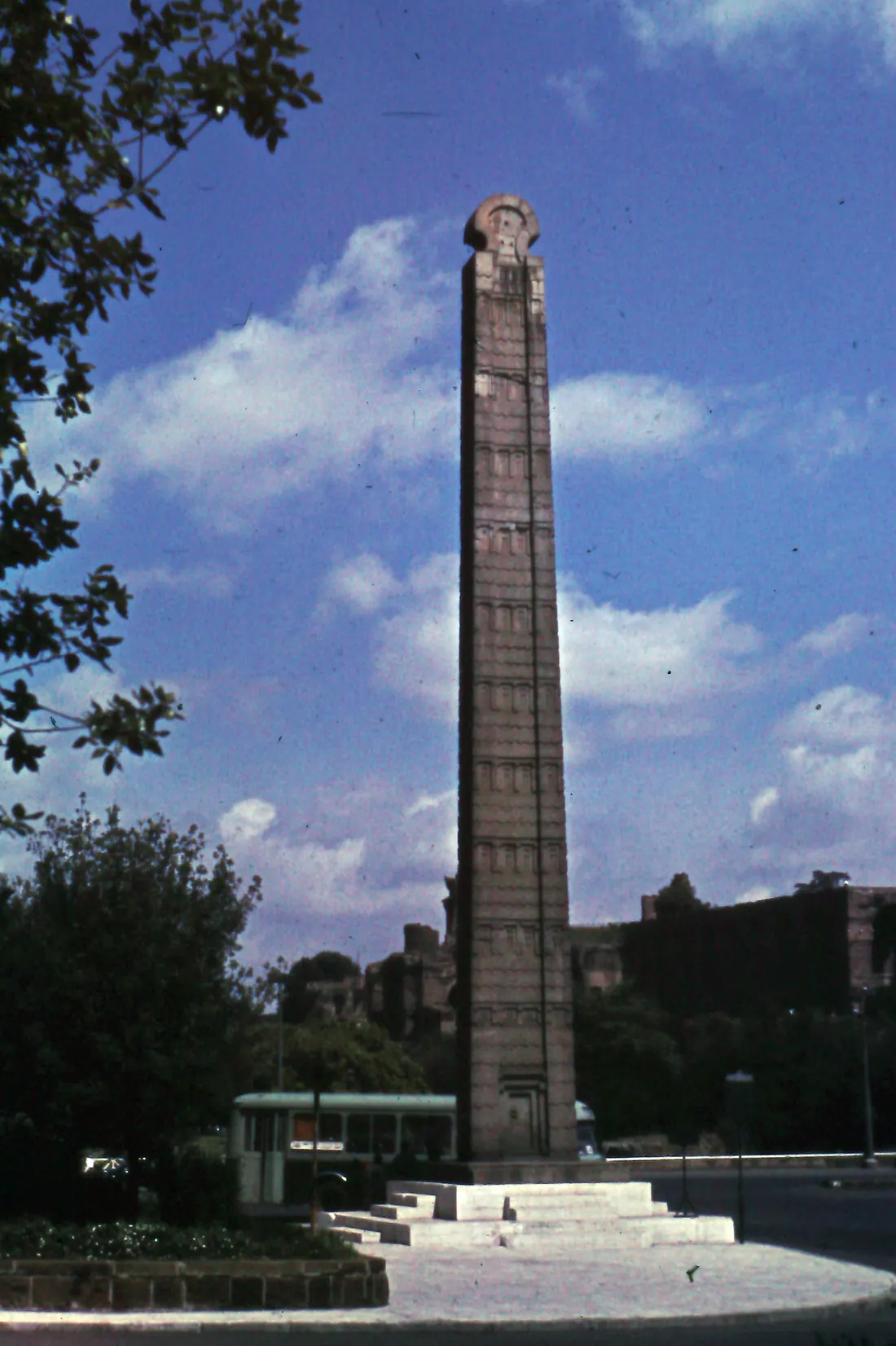
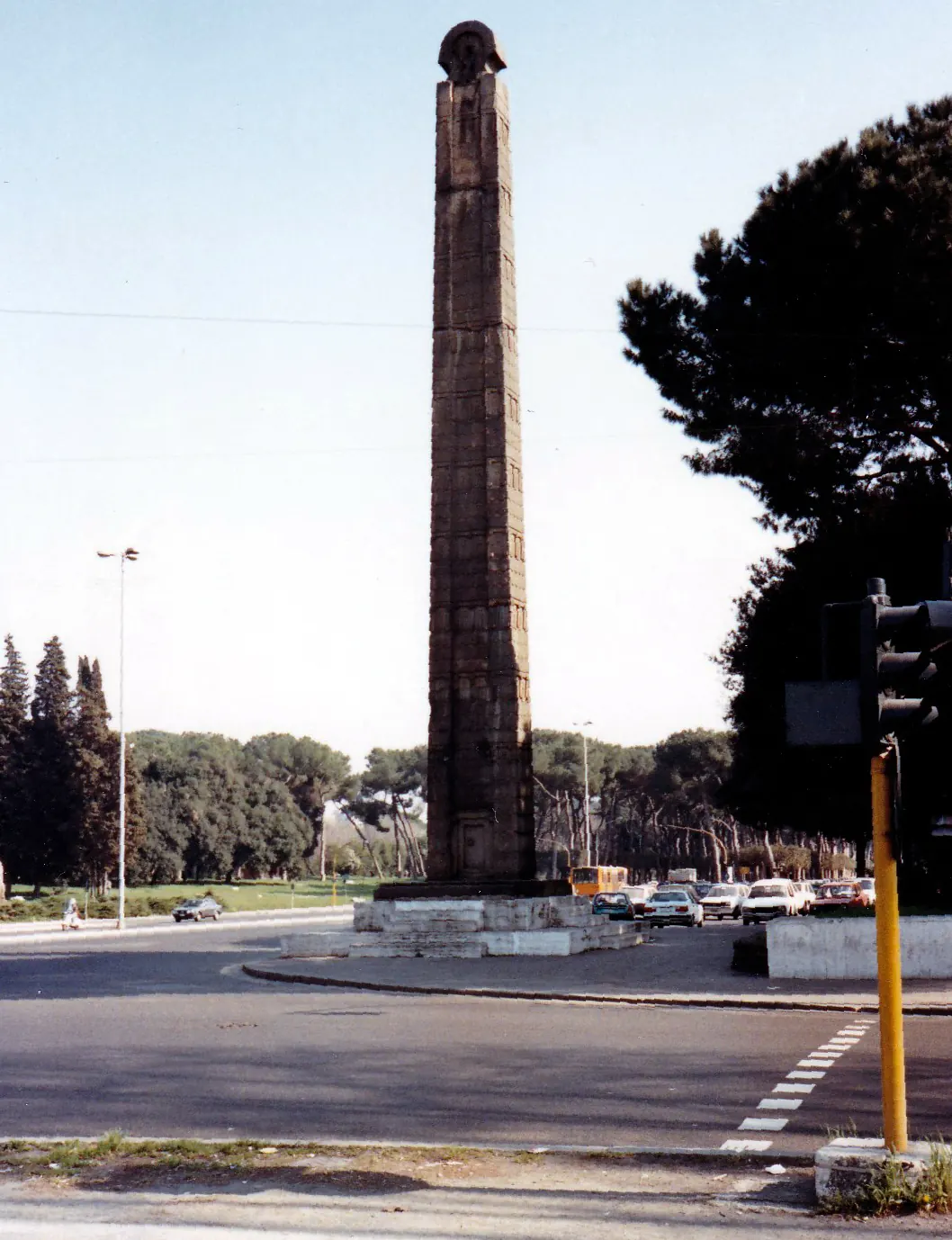
“Then at about 500m from the finish, the Ethiopian made the decisive strike at the Piazza di Porta Capena,” World Athletics says, and “the square contained the Obelisco di Axum, which had been brought back from Ethiopia by the Italians following their invasion of the East African nation in 1936.” It had been “taken to Italy as war spoil,” and it stayed in Rome “until 19 April 2005 when the middle piece was repatriated,” Wikipedia says. “Identifying the monument, he lengthened his stride and moved clear of Abdesselem.” “Bikila breasted the finish line at the Arch of Constantine in a world and Olympic record of 2:15:16.2 – trimming 0.8 from Popov’s world record,” “twenty-five seconds faster than ben Abdesselam at 2:15:41.6.” He was “the first Ethiopian Olympic gold medalist,” and “Immediately after crossing the finish line Abebe began to touch his toes and run in place, and later said that he could have run another 10–15 km (6–9 mi).”
“Forty days before the 1964 Summer Olympics in Tokyo, Abebe began to feel pain while training in Debre Zeit. He was brought to the hospital and diagnosed with acute appendicitis, and had an appendectomy on September 16.” “Four years later he returned – this time running in shoes – to successfully defend his Olympic title in Tokyo in a stunning world record mark of 2:12:11.2,” World Athletics says. “Abebe entered the Olympic stadium alone, to the cheers of 75,000 spectators,” and “Abebe finished with a time of 2:12:11.2, four minutes and eight seconds ahead of silver medallist Basil Heatley of Great Britain.” “Abebe did not appear exhausted after the finish, and he again performed a routine of calisthenics, which included touching ‘his toes twice then [lying] down on his back, cycling his legs in the air.’”
“He was the first person to win the Olympic marathon consecutively, doing so in 1960 and 1964,” Olympedia says, and “In both victories, he ran in world record time,” Wikipedia says. “As of the 2024 Olympic marathon in Paris, Abebe, Waldemar Cierpinski, and Eliud Kipchoge are the only athletes to have won two gold medals in the event.” “On March 22, 1969, Abebe was paralysed due to a car accident,” and “Abebe died at age 41 in 1973 of a cerebral haemorrhage related to his accident four years earlier.”
Fact check
The facts and where they come from
- He won the Olympic marathon in world record time, but he wasn’t wearing any shoes. Wikipedia: “winning his first gold medal at the 1960 Summer Olympics in Rome while running barefoot”; “In both victories, he ran in world record time.” World Athletics: “Bikila breasted the finish line at the Arch of Constantine in a world and Olympic record of 2:15:16.2.” 21
- His name was Abebe Bikila, a soldier in the Ethiopian emperor’s guard. Wikipedia: he “joined the 5th Infantry Regiment of the Ethiopian Imperial Guard, an elite infantry division that safeguarded the emperor of Ethiopia.” World Athletics: “Aged 19, he applied to join the Imperial Body Guard and was accepted.” 21
- At the Rome Olympics, his running shoes fell apart. World Athletics: “However, in the final days of preparation for the Games in Rome, his shoes fell apart.” 1
- The new pair gave him blisters. World Athletics: “He went to a local shoe store but after picking up a pair of shoes which gave him blisters, he opted to run barefoot for the biggest race of his career.” Wikipedia: “In Rome, Abebe purchased new running shoes, but they did not fit well and gave him blisters.” 12
- So he ran the marathon barefoot. Wikipedia: “He consequently decided to run barefoot instead.” 21
- Back in 1935, Italy had invaded his country. Wikipedia: “On 3 October 1935, two hundred thousand soldiers of the Regio Esercito (Royal Army) commanded by Marshal Emilio De Bono attacked from Italian Eritrea without prior declaration of war.” 4
- Now he raced through Rome into the night, past Italian soldiers holding torches. World Athletics: “the race started at 5.30pm in an effort to avoid the worst of the heat. Scheduled to finish after sunset, hundreds of Italian soldiers lit the course with torches.” Wikipedia: “In the early-evening darkness, his path along the Appian Way was lined with Italian soldiers holding torches.” 12
- Near the finish stood an obelisk Italy had taken from Ethiopia. World Athletics: “the square contained the Obelisco di Axum, which had been brought back from Ethiopia by the Italians following their invasion of the East African nation in 1936.” Wikipedia: “the Obelisk of Axum was taken to Italy as war spoil.” 15
- Right there, he made his move. World Athletics: “Then at about 500m from the finish, the Ethiopian made the decisive strike at the Piazza di Porta Capena”; “Identifying the monument, he lengthened his stride and moved clear of Abdesselem.” Wikipedia: “Nearing the obelisk again, Abebe sprinted to the finish.” 12
- He won by 25 seconds and broke the world record. Wikipedia: “Abebe’s winning time was 2:15:16.2, twenty-five seconds faster than ben Abdesselam at 2:15:41.6, and breaking Popov’s world record by eight tenths of a second.” 2
- Weeks before the Tokyo Olympics, doctors removed his appendix. Wikipedia: “He was brought to the hospital and diagnosed with acute appendicitis, and had an appendectomy on September 16.” World Athletics: “despite just 40 days earlier having undergone an appendectomy.” 21
- He ran anyway, in shoes this time. World Athletics: “Four years later he returned – this time running in shoes – to successfully defend his Olympic title in Tokyo in a stunning world record mark of 2:12:11.2.” 12
- He won by over four minutes, in another world record. World Athletics: “won by a victory margin of more than four minutes.” Wikipedia: “Abebe finished with a time of 2:12:11.2, four minutes and eight seconds ahead of silver medallist Basil Heatley of Great Britain.” 12
- He didn’t even look tired. He just touched his toes. Wikipedia: “Abebe did not appear exhausted after the finish, and he again performed a routine of calisthenics, which included touching ‘his toes twice then [lying] down on his back, cycling his legs in the air.’” 2
- Nobody had ever won the Olympic marathon twice, until the barefoot soldier from Ethiopia. Olympedia: “He was the first person to win the Olympic marathon consecutively, doing so in 1960 and 1964.” Wikipedia: “He was the first runner to successfully defend an Olympic marathon title.” 32
Sources
- Abebe Bikila’s 1960 Olympic marathon victory (Steve Landells, 2020) World Athletics
- Abebe Bikila Wikipedia
- Abebe Bikila Olympedia
- Second Italo-Ethiopian War Wikipedia
- Obelisk of Aksum Wikipedia
Notes
Why he ran barefoot: World Athletics says his own shoes fell apart and the new pair gave him blisters; Wikipedia says the new pair he bought in Rome did not fit and gave him blisters; some retellings say the sponsor had no shoes left that fitted him. The page uses what the two share. World Athletics also says he had trained “both with and without shoes,” so the page never says he had never run barefoot.
The appendix: World Athletics says the operation was “just 40 days earlier”; Wikipedia says the pain began 40 days before the Games and the operation was on September 16, five weeks before the October 21 race. The Short and the page say “weeks.”
The dates: the invasion began on October 3, 1935 (Wikipedia), while World Athletics dates it 1936, and Wikipedia’s article on the obelisk dates its taking to 1937. The page gives no year for the obelisk except in quotes.
“World record”: marathon records of the time were world bests (Olympedia marks both times “WB”); World Athletics and Wikipedia call them world records, and so does the page. Left out: a widely quoted line about Italy and one Ethiopian soldier, which has no reliable original source, and his reported service in Korea, which this story doesn’t need.
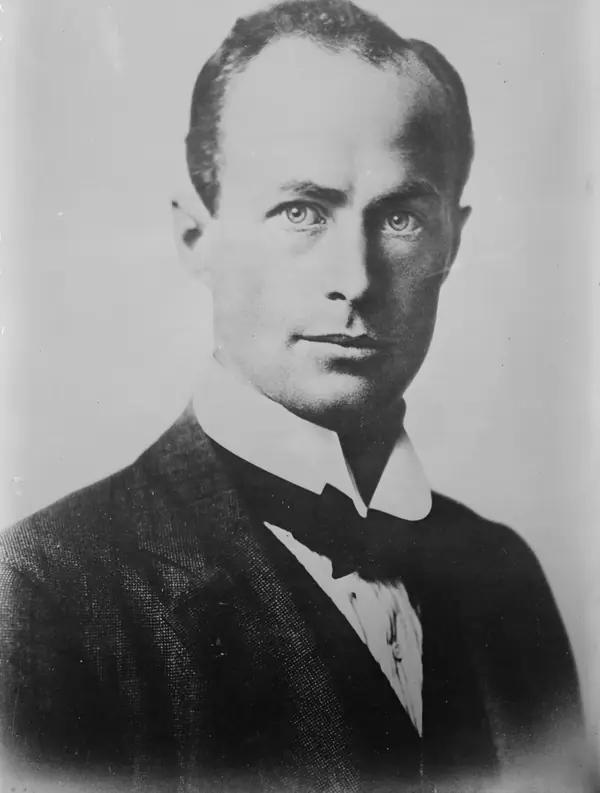
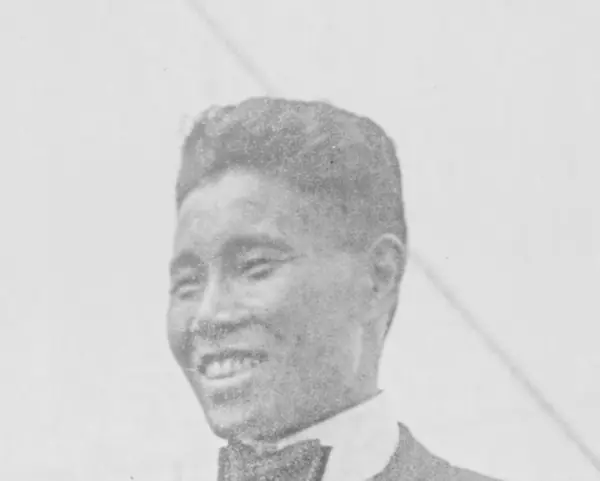
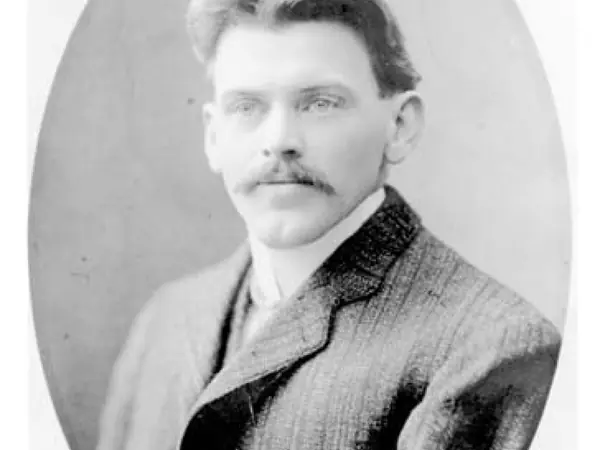
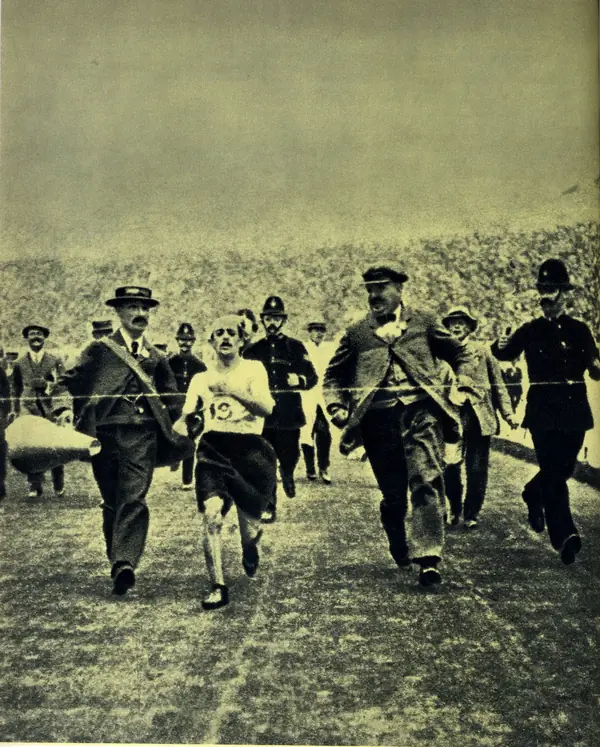
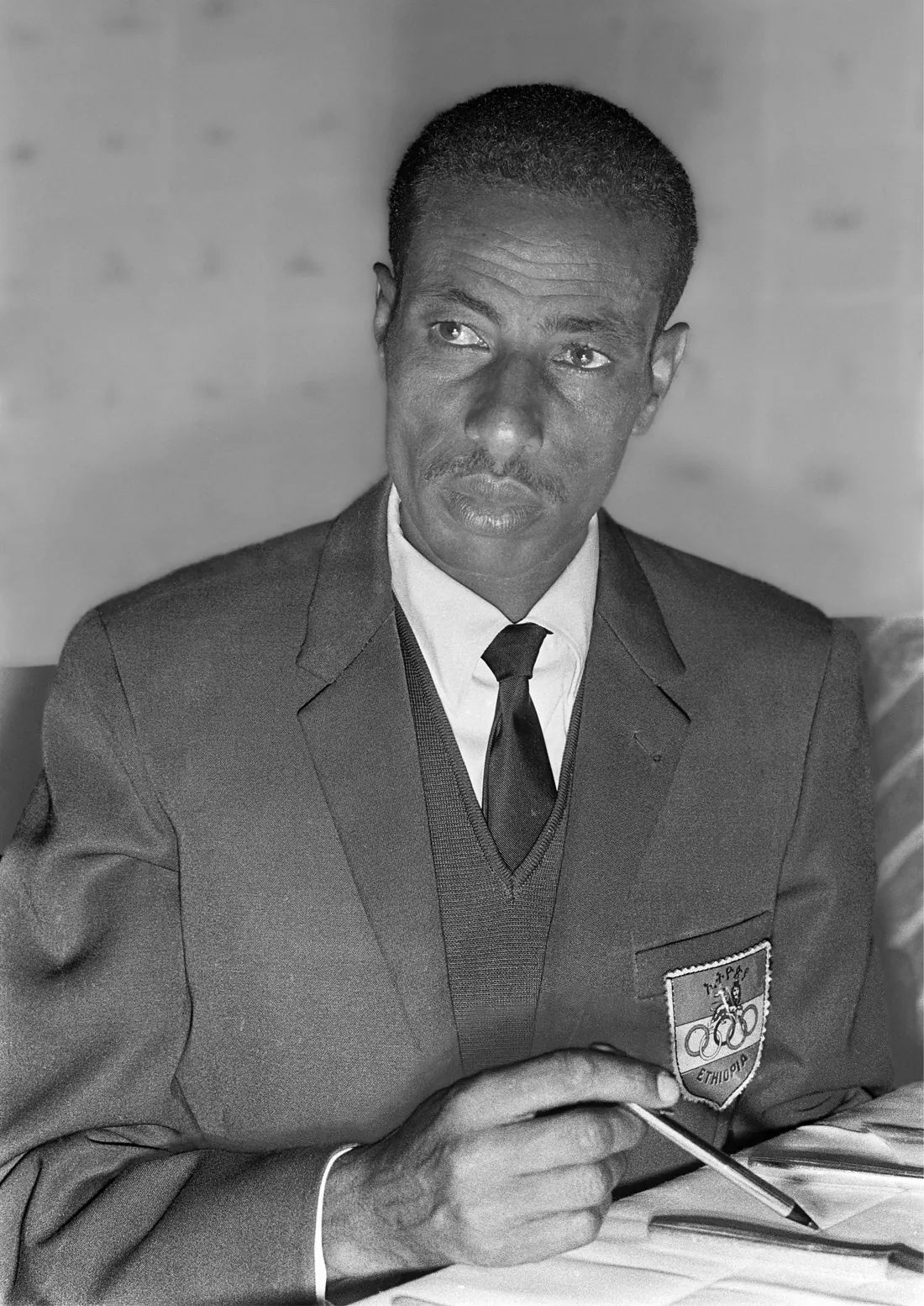
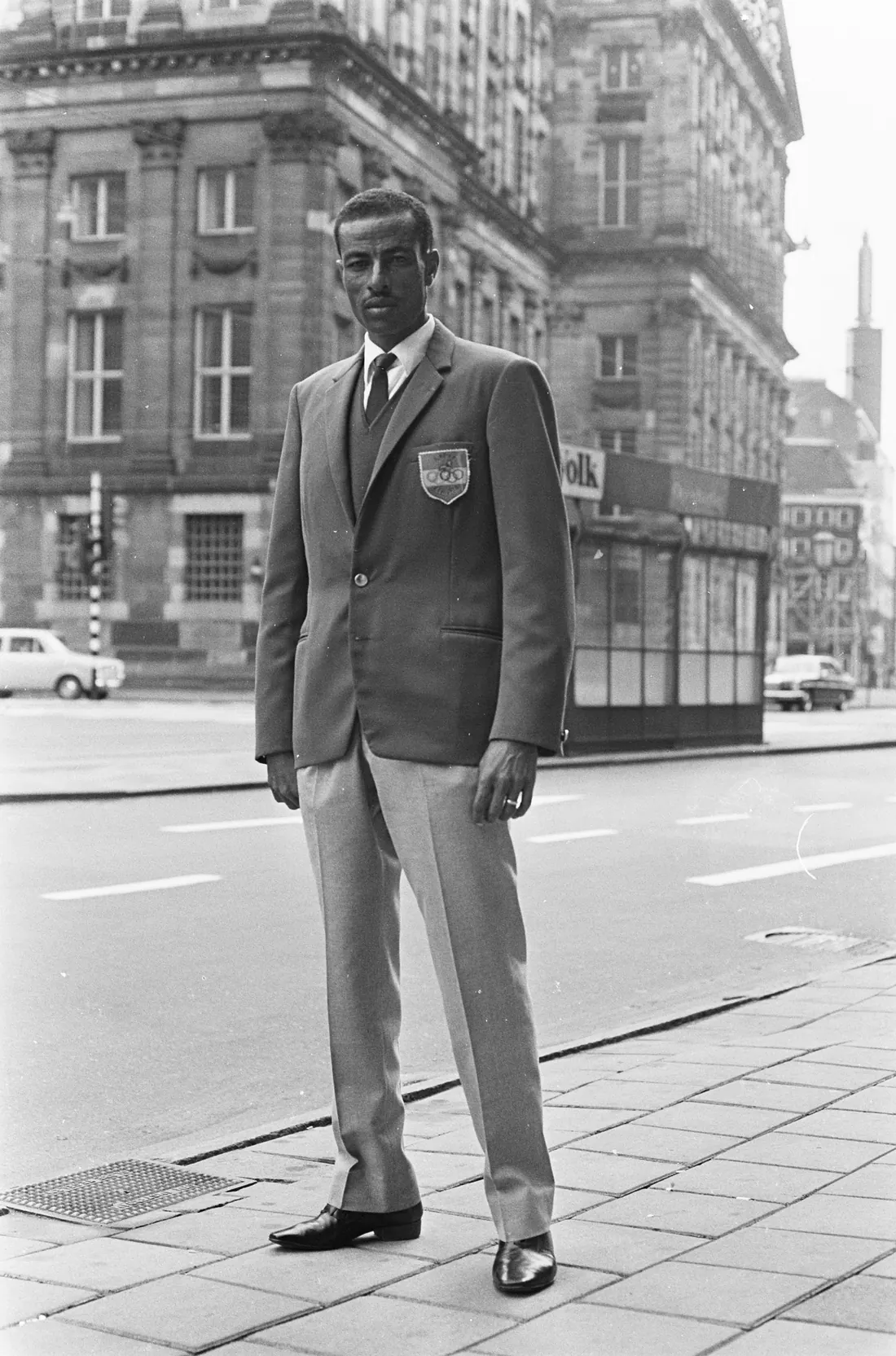
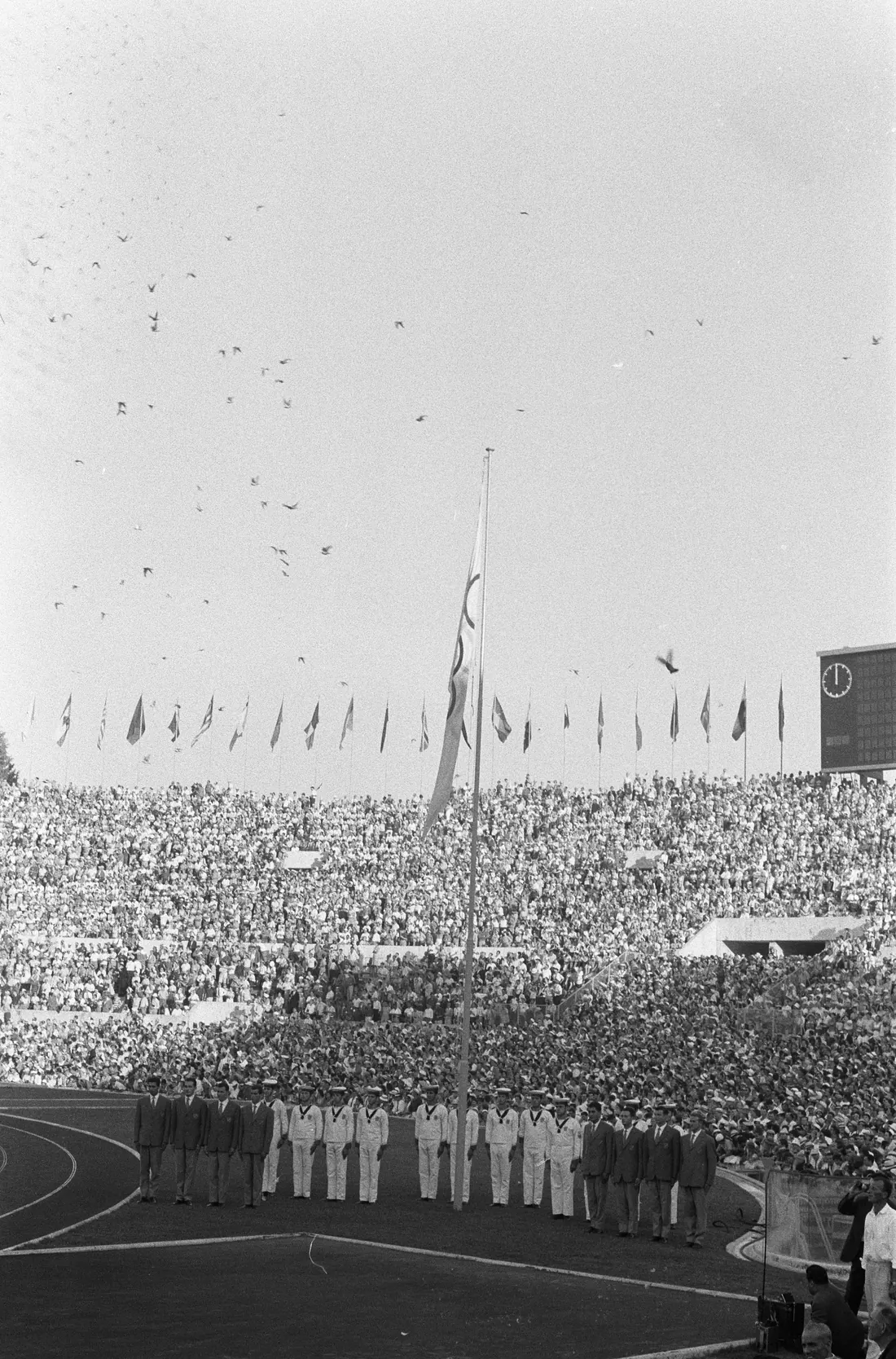
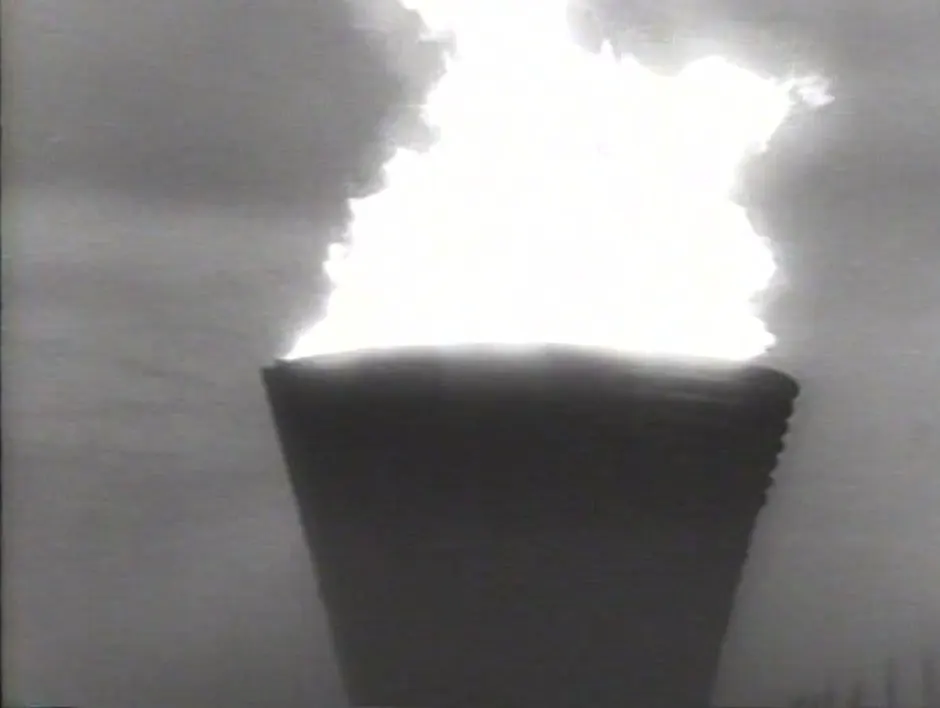
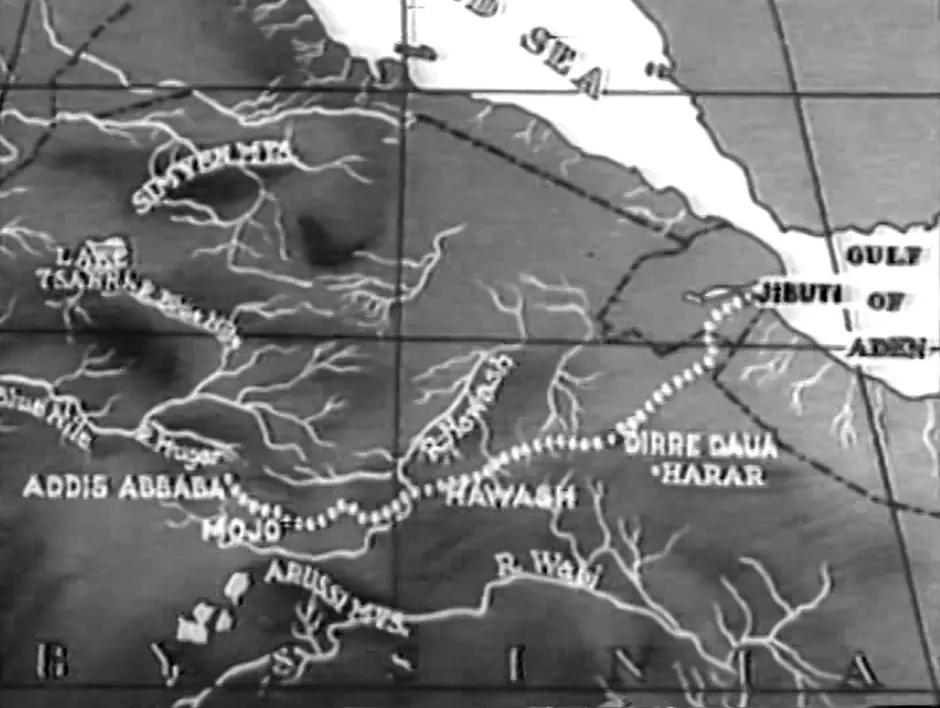
Pictures: the two portraits of Bikila were taken in Amsterdam on September 22, 1968, for the Anefo agency (Nationaal Archief, CC0), years after both races. The only photo here of the 1960 race is the Organizing Committee’s official photo of him barefoot at the Rome finish, September 10, 1960. The doves are from the Rome opening ceremony, August 25, 1960, not the marathon. The map of Ethiopia and the Italian troops marching are 1935 footage in the Universal Newsreel “25 Years Ago” (1960); the newsreel doesn’t say where the troops were filmed. The Obelisk of Axum in Rome’s Piazza di Porta Capena was photographed in the 1960s by Bair175 and in May 1990 by G41rn8. The Tokyo frames come from the Universal Newsreel “Olympics End” (October 26, 1964): the Olympic flame, a runner’s shoes on the course (the newsreel doesn’t name the runner), Bikila alone on the stadium track, touching his toes after the finish, and on the podium with his gold medal. The other people in these pictures are not named.
Photo credits
The archive photos in this story
The photographs and illustrations in this story are in the public domain or shared under open licenses; each one is credited below with its license. Tap one to enlarge it, or follow the link to its archive page for the full record. The narration, captions and graphics in the Short are our own; its music and sound effects are credited below.
Music and sound effects
Music: Schumann, Kinderszenen, Op. 15: No. 1 'Of Foreign Lands and Peoples' (Musopen, public domain); Mussorgsky, Pictures at an Exhibition: IV. Bydlo (piano) (Musopen, public domain); Dvorak, Symphony No. 9 'From the New World': II. Largo (Musopen, public domain).
Sound effects: Freesound, CC0.