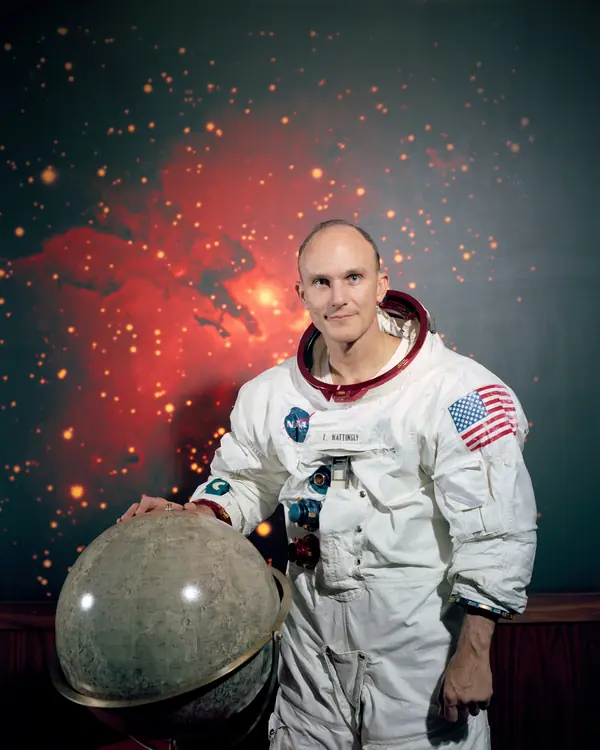
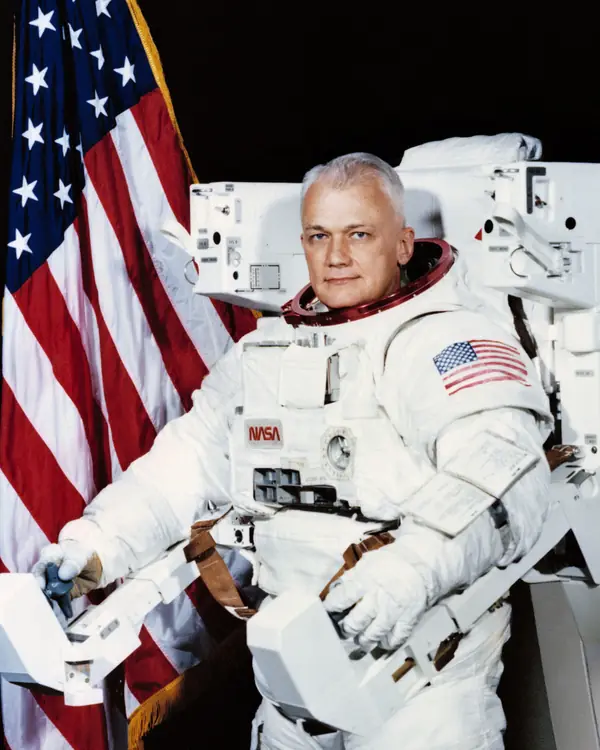
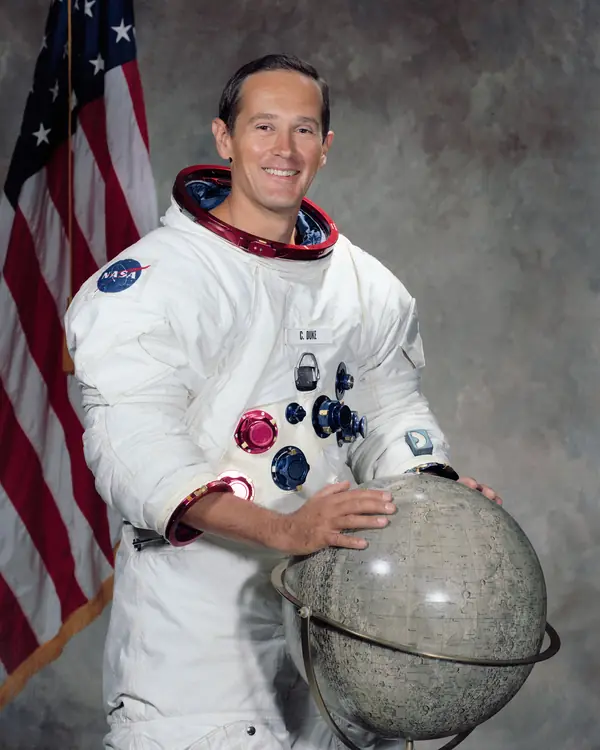
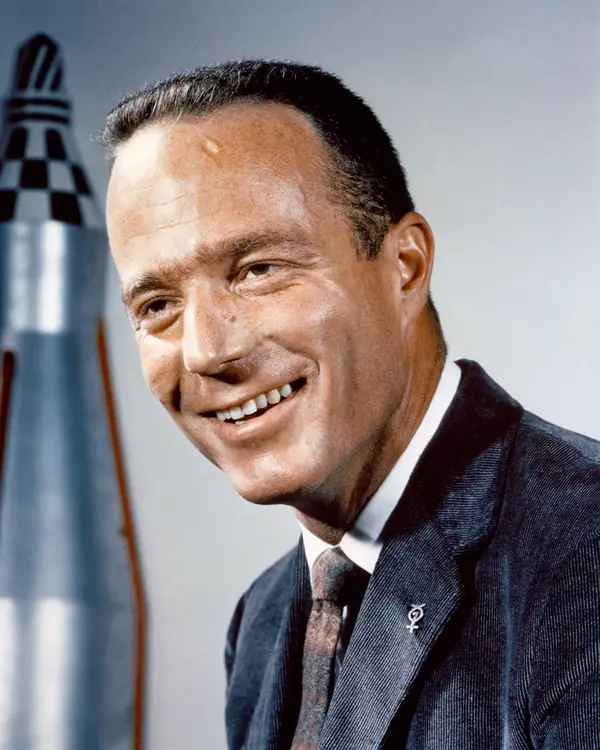
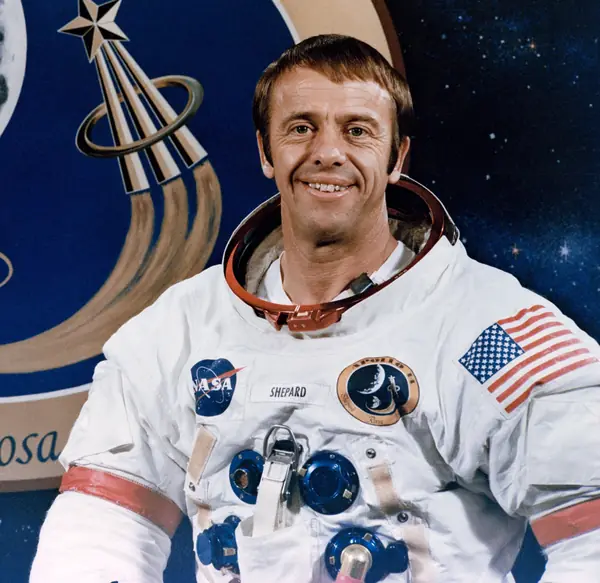
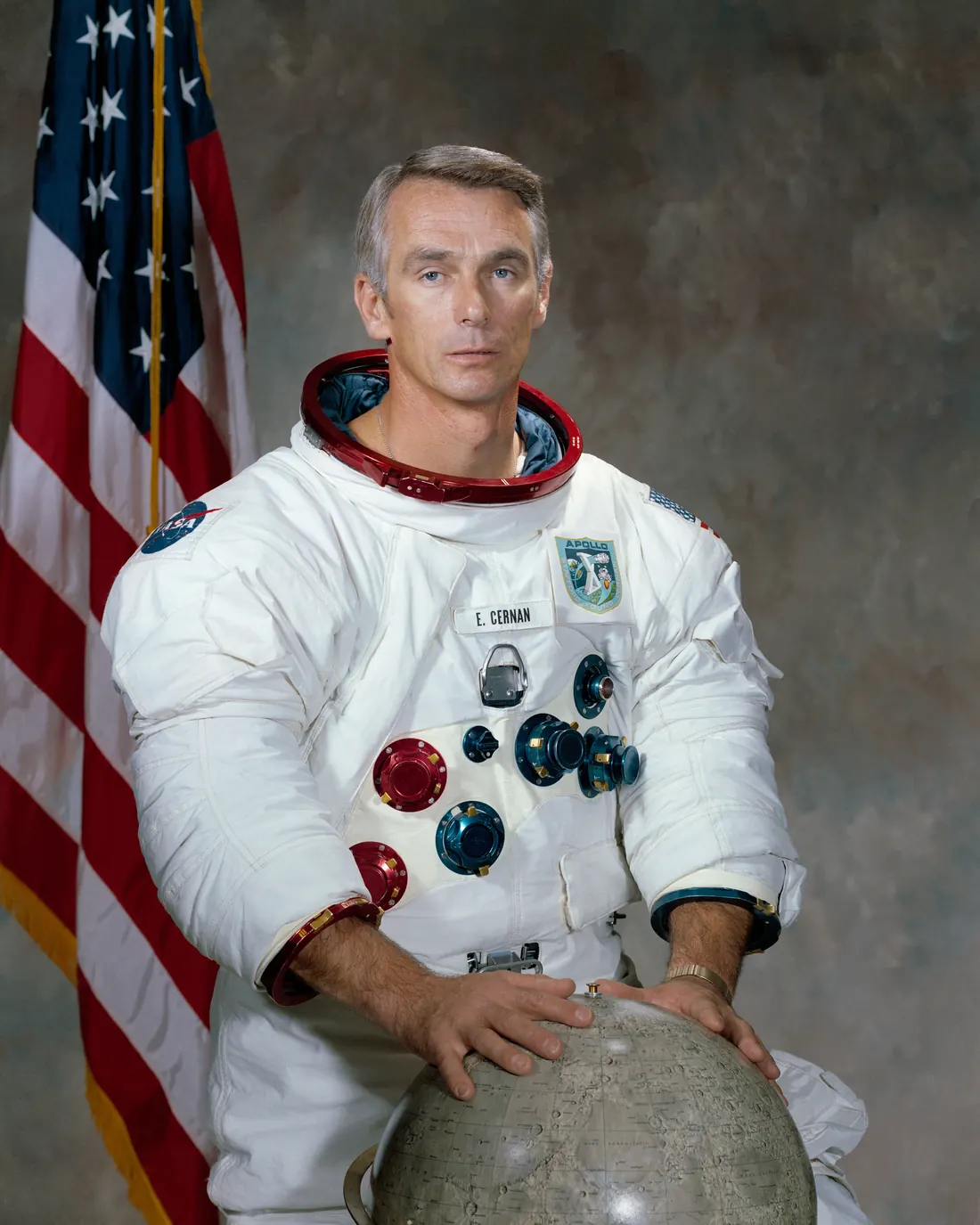
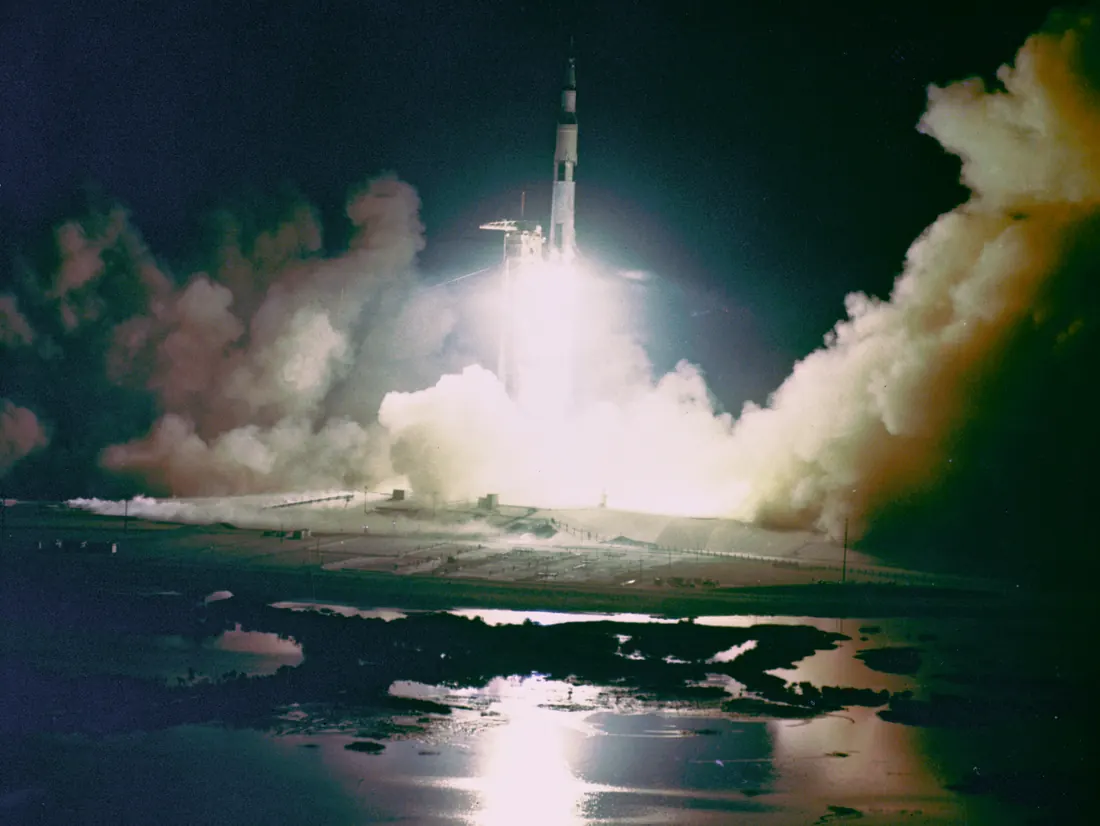
Gene Cernan “was commander of NASA’s Apollo 17 mission,” the Associated Press wrote. “Cernan, Schmitt and Ronald Evans had blasted off atop a Saturn rocket in the first manned nighttime launch from Kennedy Space Center,” at “12:33 a.m., December 7, 1972,” NASA’s photo caption says. “On Dec. 11, 1972, Cernan guided the lander, named Challenger, into a lunar valley called Taurus-Littrow, with Harrison ‘Jack’ Schmitt at his side,” while “Evans remained behind as pilot of the command module,” and “Cernan and Schmitt … spent more than three days on the moon.” Of landing there, Cernan said, “you have just landed in another world on another body out there (somewhere in the) universe, and what you are seeing is being seen by human beings — human eyes — for the first time.”
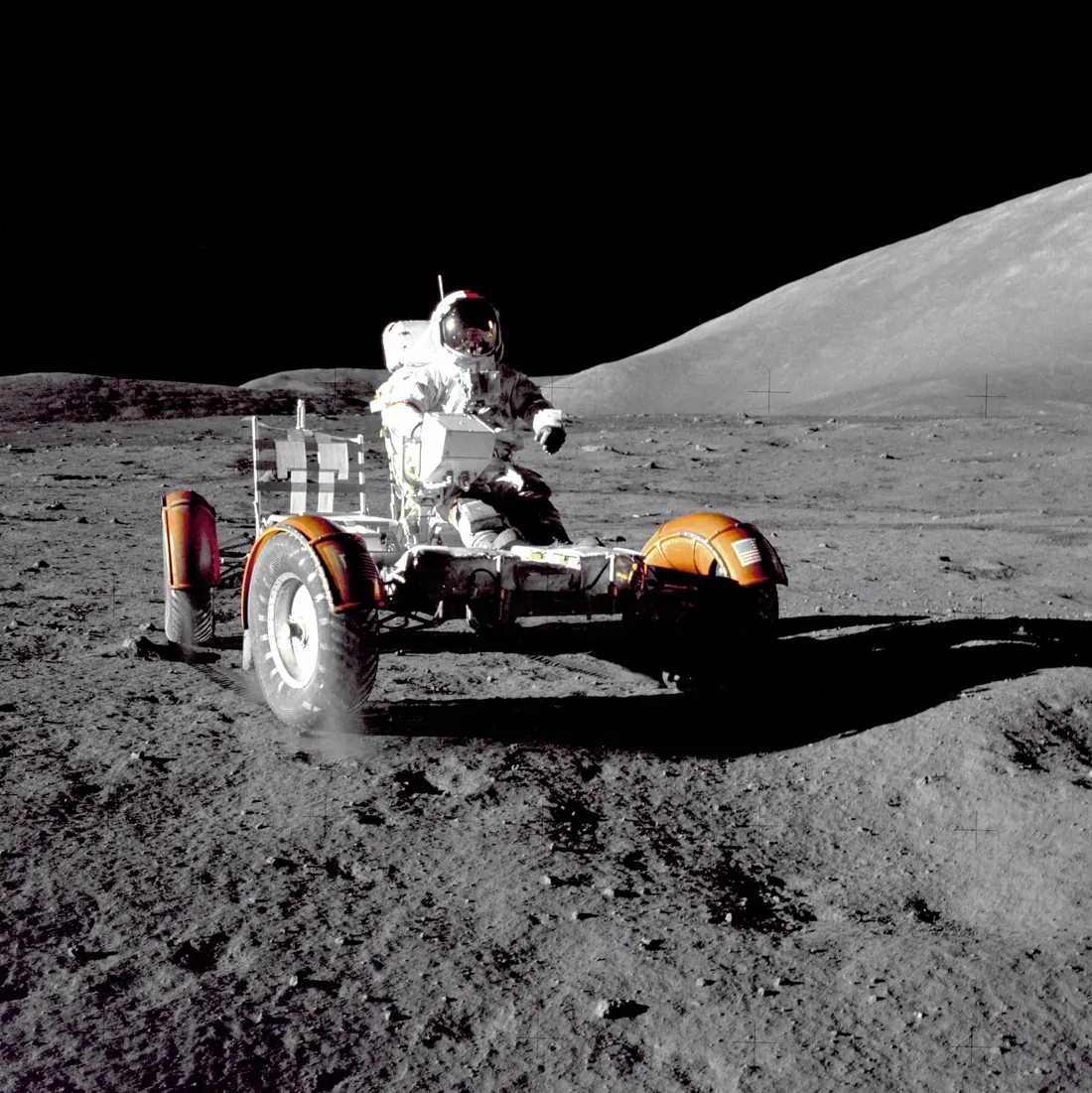
Back home was his daughter. “Tracy is Gene’s daughter, who was nine years old at the time of the mission,” NASA’s Apollo Lunar Surface Journal says, and AP wrote that “Teresa was Cernan’s only child.” “Before heading home, Cernan said he drew the letters ‘TDC’ — the initials of his then 9-year-old daughter, Teresa Dawn — with his finger on the dusty gray lunar surface.” Wikipedia says that in the 2014 documentary The Last Man on the Moon “he wrote them in the lunar dust as he left the rover to return to the LM and Earth,” and that “Cernan wrote her initials in the dust, not on a rock.” In his own words, in 2007: “Like my daughter’s initials I put into the Moon during that three days we were there.”
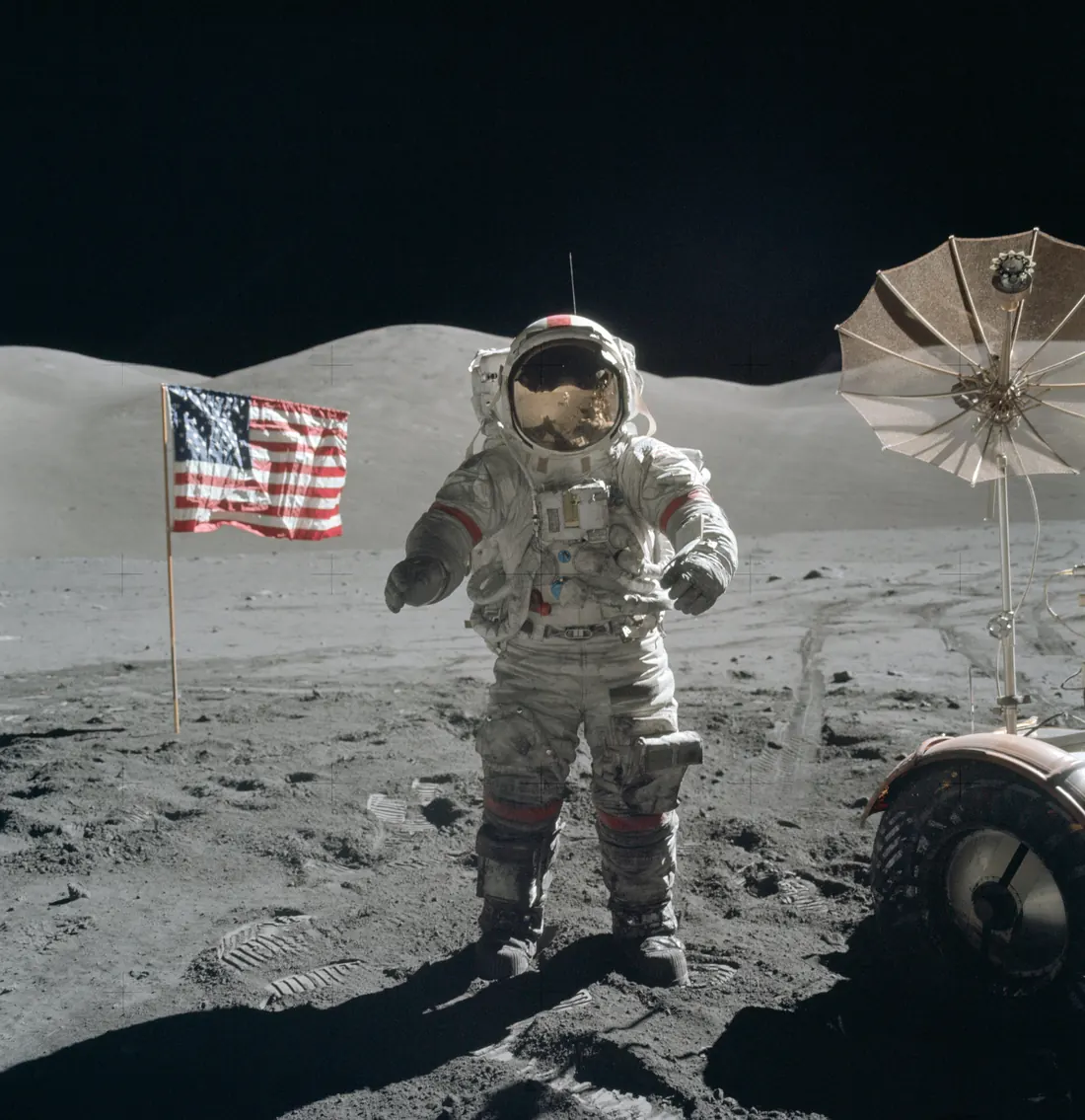
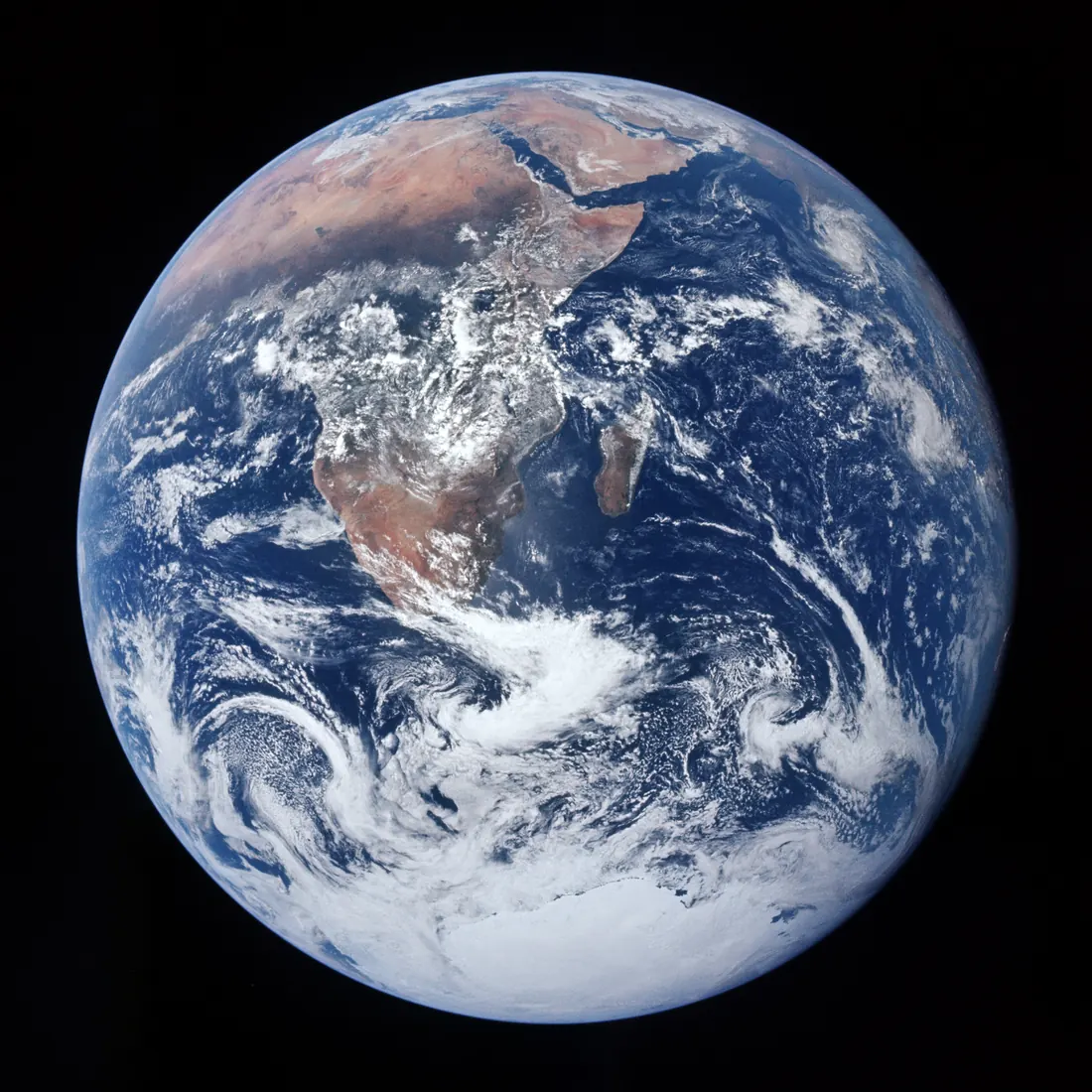
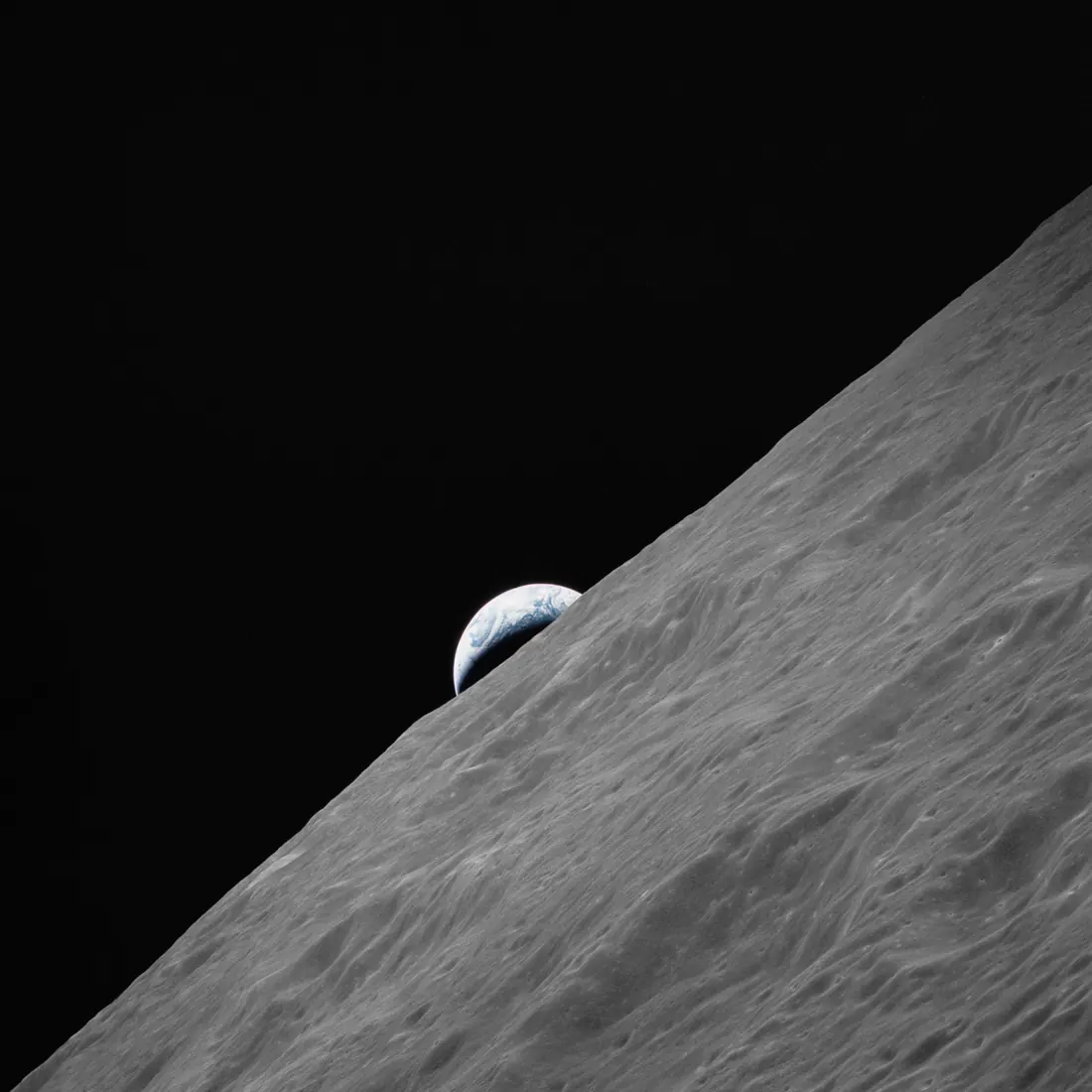
“Completing their third moon walk on Dec. 14, Schmitt returned to the lunar module and was followed by Cernan,” AP wrote. “But when I climbed up the ladder for that last step, and I looked down, and there was my final footsteps on the surface, and I knew I wasn’t coming back this way again,” Cernan told NASA’s oral history project in 2007. “I looked over my shoulder because the Earth was on top of the mountains in the southwestern sky. Never moved for the whole three days we were there.” And: “Those steps up that ladder, they were tough to make. I didn’t want to go up. I wanted to stay a while.”
“People kept saying ‘What are you going to say, what are going to be the last words on the Moon?’” he remembered. At 170:41:00 in NASA’s transcript, he said them: “We leave as we came and, God willing, as we shall return, with peace and hope for all mankind,” as AP quotes the line. “On Dec. 14, 1972, he became the last of only a dozen men to walk on the moon,” AP wrote. He imagined that someone in the distant future would find “our lunar rover and our footprints and those initials and say, ‘I wonder who was here? Some ancient civilization was here back in the 20th century, and look at the funny marks they made.’”
On January 16, 2017, AP reported: “Former astronaut Gene Cernan, who as the last person to walk on the moon returned to Earth with a message of ‘peace and hope for all mankind,’ died on Monday, his family said. He was 82.” “As the years went by he realized he wouldn’t live to witness someone follow in his footsteps.” In 2026, Royal Museums Greenwich wrote, “It’s been over 50 years since humans last walked on the Moon”; “In April 2026, Artemis 2 was a crewed test flight which looped around the Moon,” and “Artemis 4 will be the first crewed moon landing mission since Apollo 17 in 1972.” On the Moon, Robert Pearlman of collectSPACE told Space.com, “you don’t have erosion, either by wind or water, to make those features disappear as quickly as they would on Earth.” And Cernan remembered: “Someone said, ‘How long will they be there?’ I said, ‘Forever, however long forever is.’ I’m not sure we, any of us, understand that.”
Fact check
The facts and where they come from
- He wrote his daughter’s initials on the Moon, but nobody has walked there since. AP: “he traced his only child’s initials in the dust before climbing the ladder of the lunar module the last time.” Cernan (NASA oral history, 2007): “Like my daughter’s initials I put into the Moon during that three days we were there.” Royal Museums Greenwich (2026): “It’s been over 50 years since humans last walked on the Moon.” 126
- His name was Gene Cernan. AP: “Cernan was commander of NASA’s Apollo 17 mission.” 1
- In December 1972, he commanded Apollo 17. AP: “Cernan, Schmitt and Ronald Evans had blasted off atop a Saturn rocket in the first manned nighttime launch from Kennedy Space Center.” NASA’s photo caption: “Liftoff of the Apollo 17 Saturn V Moon Rocket from Pad A, Launch Complex 39, Kennedy Space Center, Florida, at 12:33 a.m., December 7, 1972.” 19
- Back home, his daughter, Tracy, was nine. AP: “the initials of his then 9-year-old daughter, Teresa Dawn”; “Teresa was Cernan’s only child.” NASA’s Apollo Lunar Surface Journal: “Tracy is Gene’s daughter, who was nine years old at the time of the mission.” 14
- Up there, he explored a valley no human had ever seen. AP: “Cernan guided the lander, named Challenger, into a lunar valley called Taurus-Littrow.” Cernan (2007): “you have just landed in another world on another body out there (somewhere in the) universe, and what you are seeing is being seen by human beings — human eyes — for the first time.” AP: “Cernan and Schmitt … spent more than three days on the moon.” 1
- Before he left, he wrote her initials in the dust with his finger: T, D, C. AP: “Before heading home, Cernan said he drew the letters ‘TDC’ — the initials of his then 9-year-old daughter, Teresa Dawn — with his finger on the dusty gray lunar surface.” Wikipedia, on the 2014 documentary The Last Man on the Moon: “he wrote them in the lunar dust as he left the rover to return to the LM and Earth.” 17
- Then he climbed the ladder for the last time. AP: “before climbing the ladder of the lunar module the last time”; “Completing their third moon walk on Dec. 14, Schmitt returned to the lunar module and was followed by Cernan.” Cernan (NASA oral history): “But when I climbed up the ladder for that last step, and I looked down, and there was my final footsteps on the surface, and I knew I wasn’t coming back this way again.” 12
- He looked back at Earth, above the mountains. Cernan (NASA oral history): “I looked over my shoulder because the Earth was on top of the mountains in the southwestern sky. Never moved for the whole three days we were there.” 2
- He later said, “I didn’t want to go up. I wanted to stay a while.” Cernan (NASA oral history, 2007, also quoted by AP): “those steps up that ladder, they were tough to make. I didn’t want to go up. I wanted to stay a while.” 21
- His last words were, “We leave as we came and, God willing, as we shall return.” NASA’s Apollo Lunar Surface Journal gives the line at 170:41:00 in the transcript. AP: “‘We leave as we came and, God willing, as we shall return, with peace and hope for all mankind,’ Cernan said.” Cernan (NASA oral history): “People kept saying ‘What are you going to say, what are going to be the last words on the Moon?’” 312
- He died in 2017, still the last man on the Moon. AP (January 16, 2017): “Former astronaut Gene Cernan, who as the last person to walk on the moon returned to Earth with a message of ‘peace and hope for all mankind,’ died on Monday, his family said. He was 82.” “as the years went by he realized he wouldn’t live to witness someone follow in his footsteps.” Royal Museums Greenwich: “Artemis 4 will be the first crewed moon landing mission since Apollo 17 in 1972.” 16
- There’s no wind or rain up there to wipe them away. Robert Pearlman of collectSPACE (Space.com, 2011): “The moon doesn’t have an atmosphere, so that makes it such that features seem more permanent because you don’t have erosion, either by wind or water, to make those features disappear as quickly as they would on Earth.” AP: his footsteps are “still visible on the moon more than 40 years later.” 51
- Someone once asked him how long they would be there. Cernan (NASA oral history), right after “Like my daughter’s initials I put into the Moon during that three days we were there”: “Someone said, ‘How long will they be there?’” 2
- He said, “Forever, however long forever is.” Cernan (NASA oral history): “I said, ‘Forever, however long forever is.’ I’m not sure we, any of us, understand that.” 2
Sources
- Gene Cernan, last astronaut to walk on the moon, dies at 82 (Seth Borenstein and Michael Graczyk, January 16, 2017) The Associated Press, on Boston.com
- Eugene A. Cernan, interviewed by Rebecca Wright, Houston (December 11, 2007) NASA Johnson Space Center Oral History Project (archived copy)
- Apollo 17: EVA-3 Closeout (ed. Eric M. Jones, with the mission transcript) NASA Apollo Lunar Surface Journal
- Apollo 17: Station 6 NASA Apollo Lunar Surface Journal
- On the Moon, Flags & Footprints of Apollo Astronauts Won’t Last Forever (Denise Chow, Space.com, September 7, 2011) NBC News
- NASA’s Artemis Moon Missions: all you need to know (2026) Royal Museums Greenwich
- Eugene Cernan Wikipedia
- Apollo 17 Wikipedia
- Apollo 17 Night Launch (NASA photo S72-55070 and its caption) Wikimedia Commons
Notes
The initials: no photo of them turned up in NASA’s photo record or the Apollo Lunar Surface Journal, so the story rests on Cernan’s own account (his 1999 book, his 2007 NASA oral history, the 2014 documentary, and AP’s “Cernan said he drew”); Wikipedia places them by the rover. None of the pictures here shows the letters.
“Tracy’s Rock”: the Station 6 boulder got that name from an Alan Bean painting. Cernan said he had not written anything on the rock, and wished he had (NASA’s Journal, Wikipedia), so the page doesn’t use it.
Her name: AP gives her formal name as Teresa Dawn; her family and NASA’s Journal call her Tracy. She appears here only as AP and NASA’s Journal describe her in 1972, and nothing here goes into her private life.
“Forever”: micrometeorites slowly churn the lunar soil, and scientists expect Apollo traces to fade over about 10 to 100 million years (Space.com, quoting the Lunar Reconnaissance Orbiter’s Mark Robinson). The lunar module’s liftoff blast is another unknown, so the page never says the initials are certainly still there; it keeps to the Short’s “no wind or rain” and Cernan’s own word, “forever.”
“Nobody has walked there since” is true as of November 2026: Artemis II flew around the Moon in April 2026 without landing, and the next planned landing is Artemis IV (Royal Museums Greenwich).
His last words: the Short calls the “we leave as we came” line his last words. NASA’s transcript gives it at 170:41:00, at the close of the third moonwalk, and Cernan said people kept asking him what the last words on the Moon would be.
The valley: the Short’s “a valley no human had ever seen” rests on AP’s account of the landing in Taurus-Littrow and on Cernan’s own words about seeing it “for the first time.”
Left out: the plaque, the quotes from his 1999 book, Gemini 9’s “spacewalk from hell” and his 2011 testimony to Congress, none needed for this story, and every NASA photo of his family.
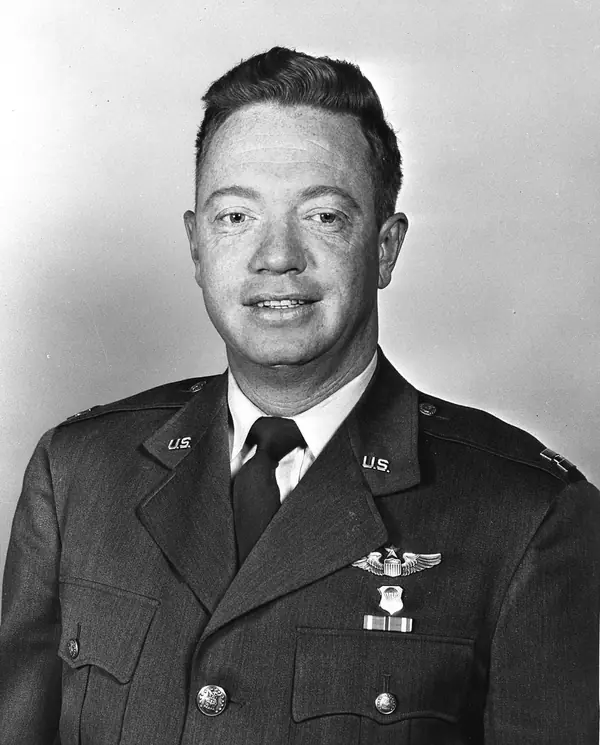
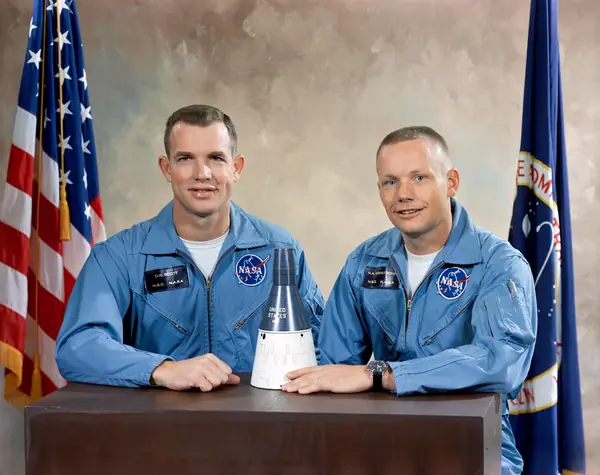
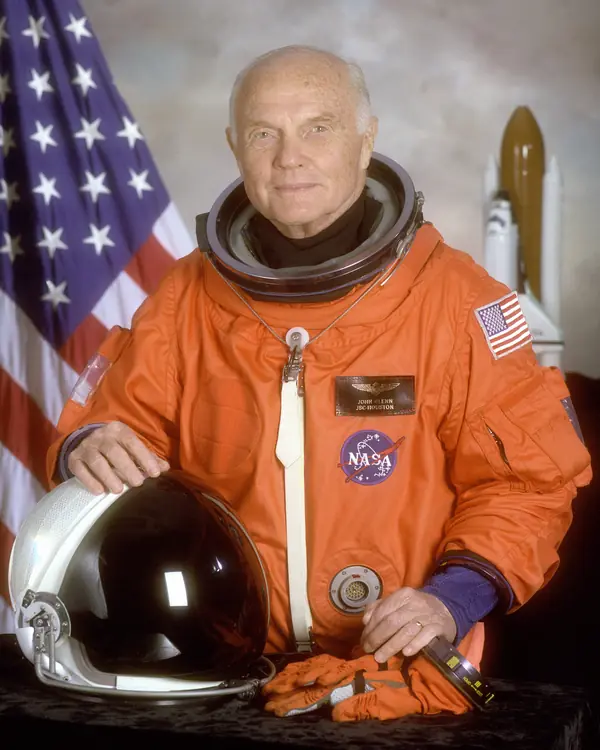
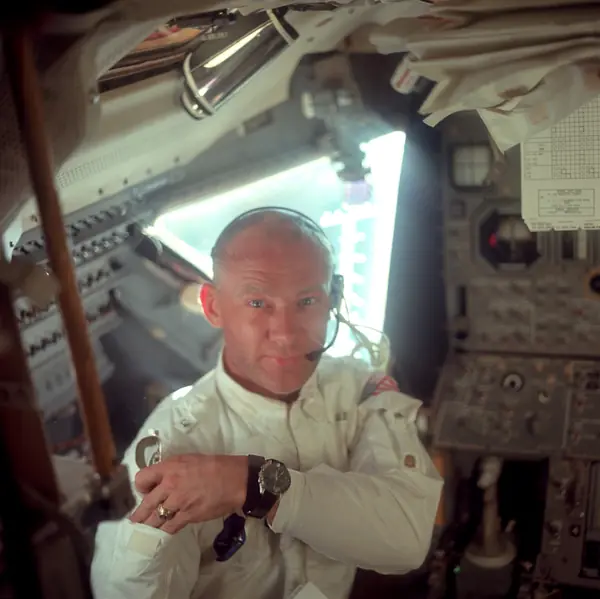
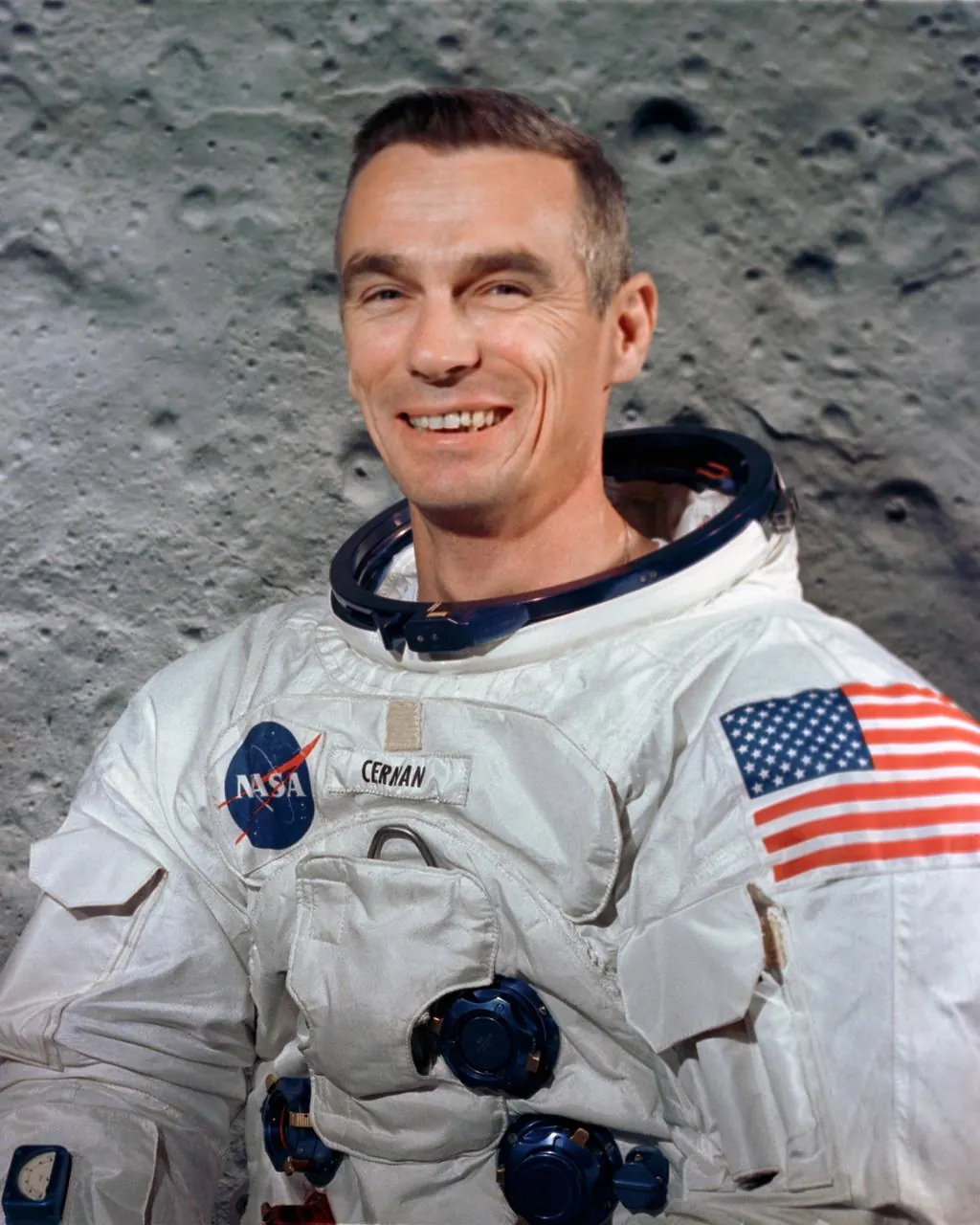
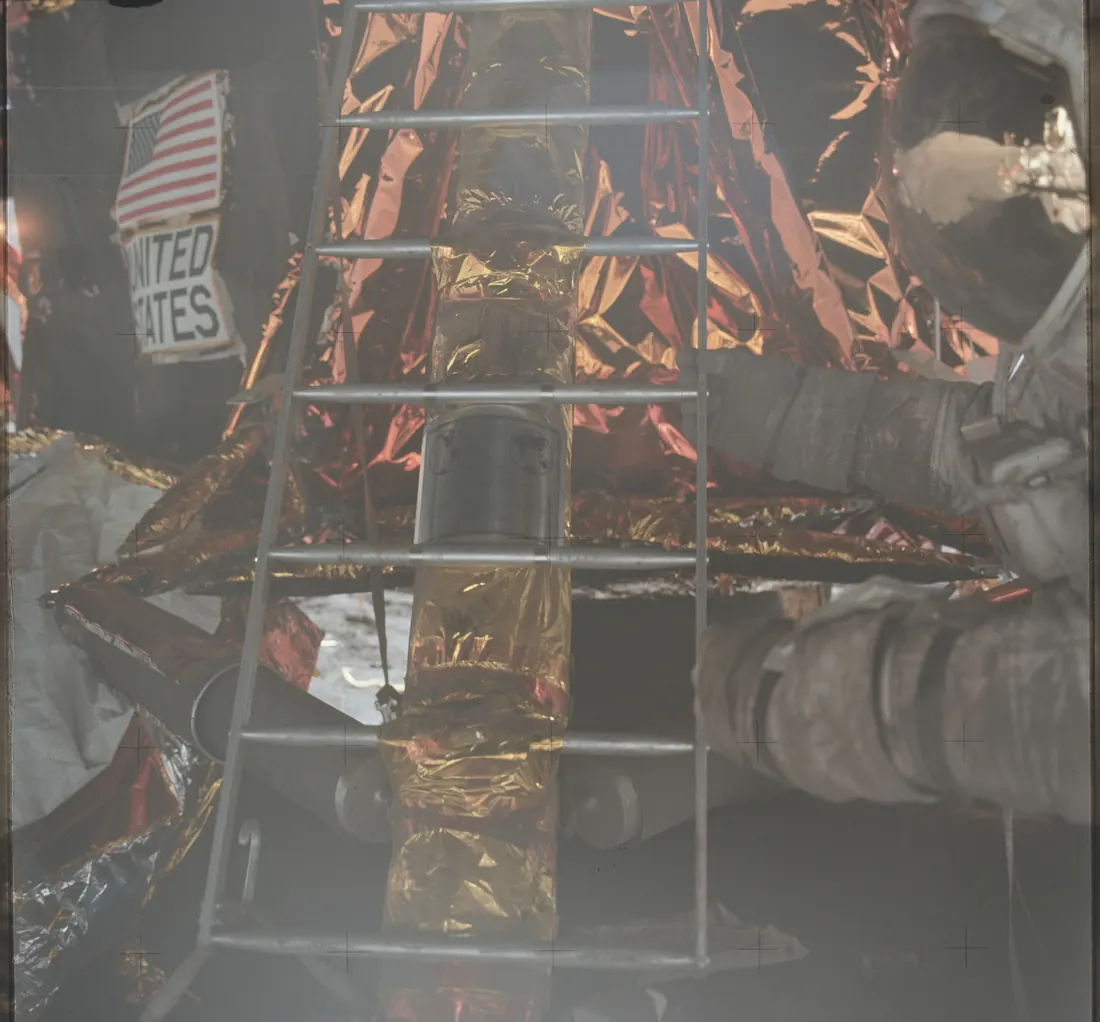
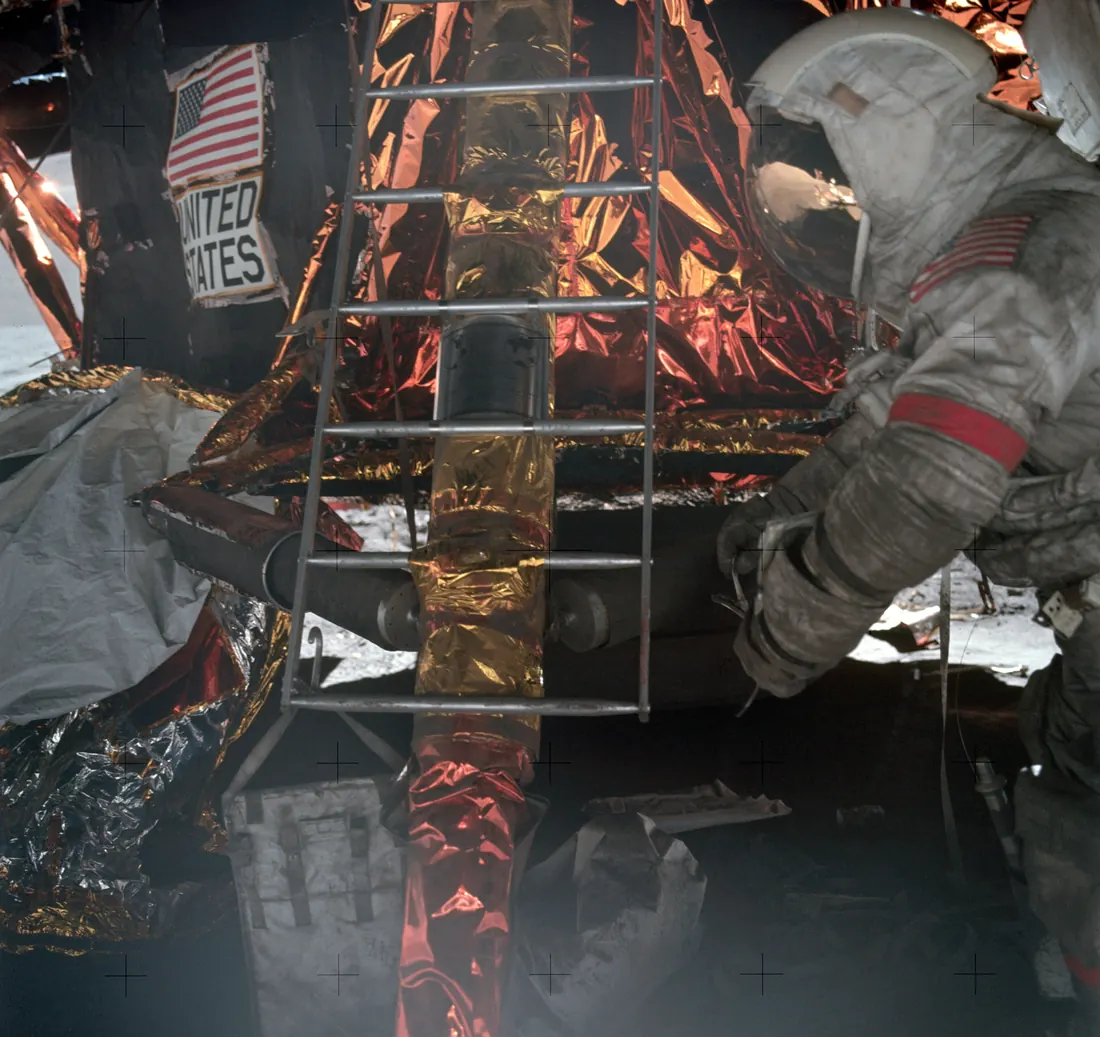
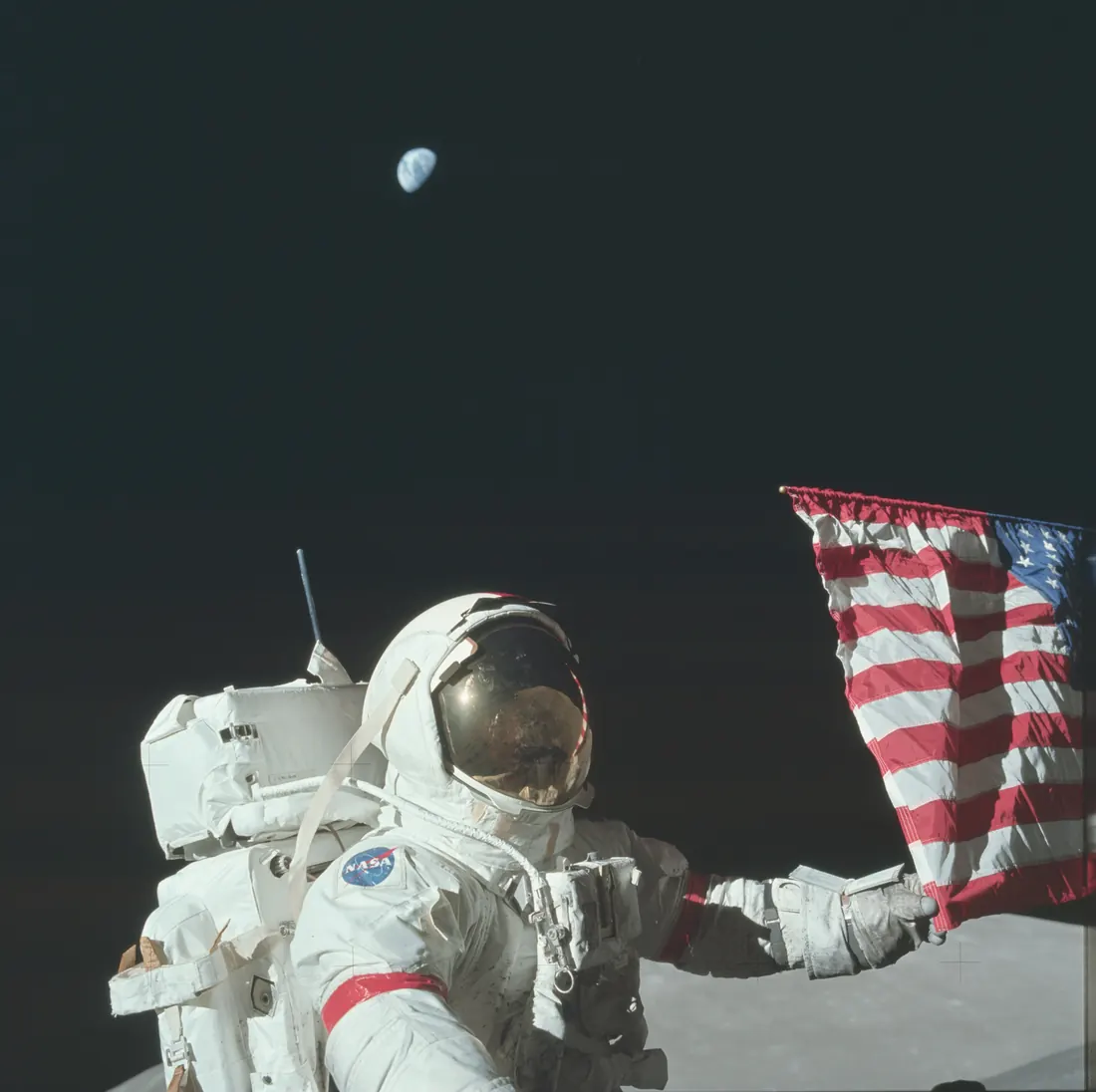
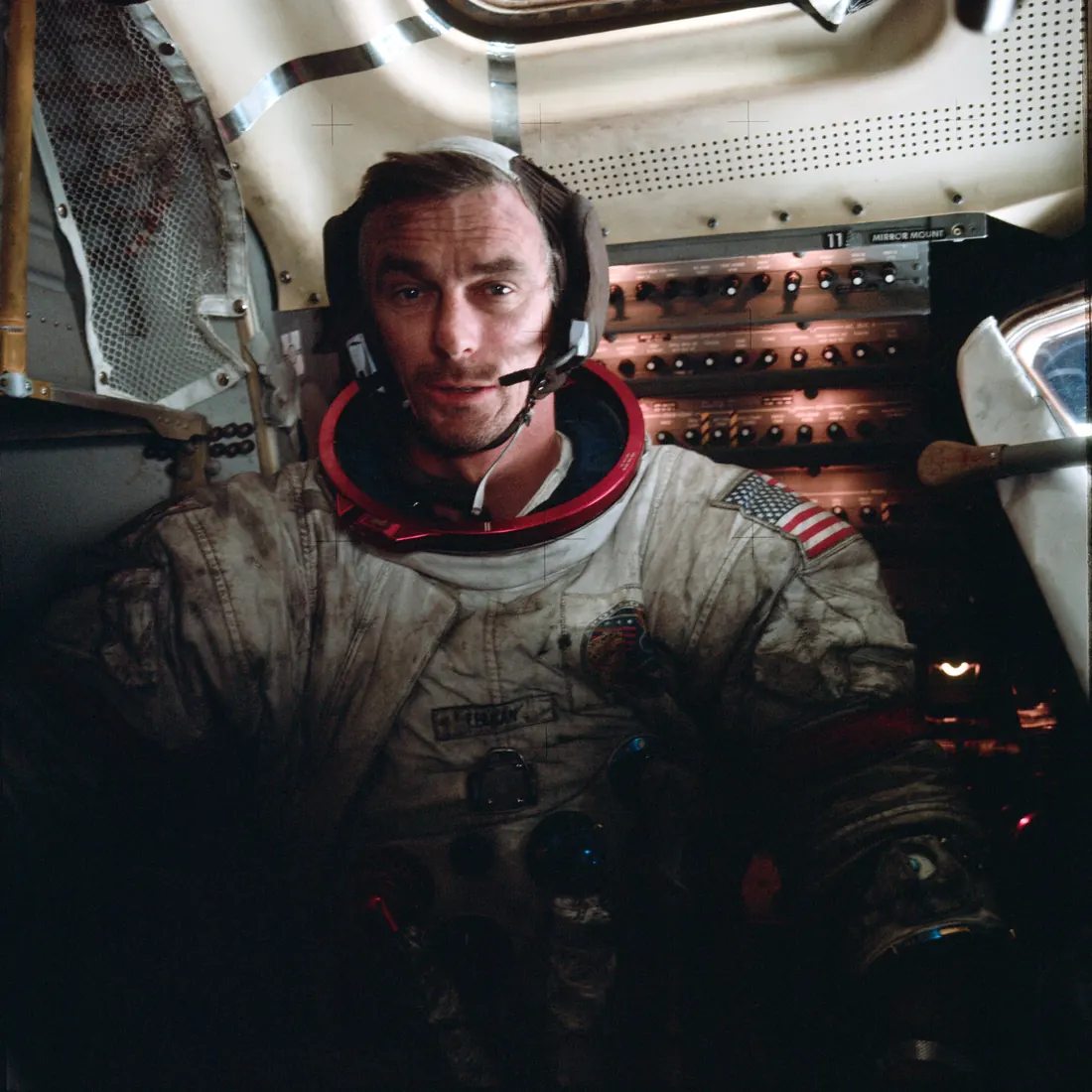
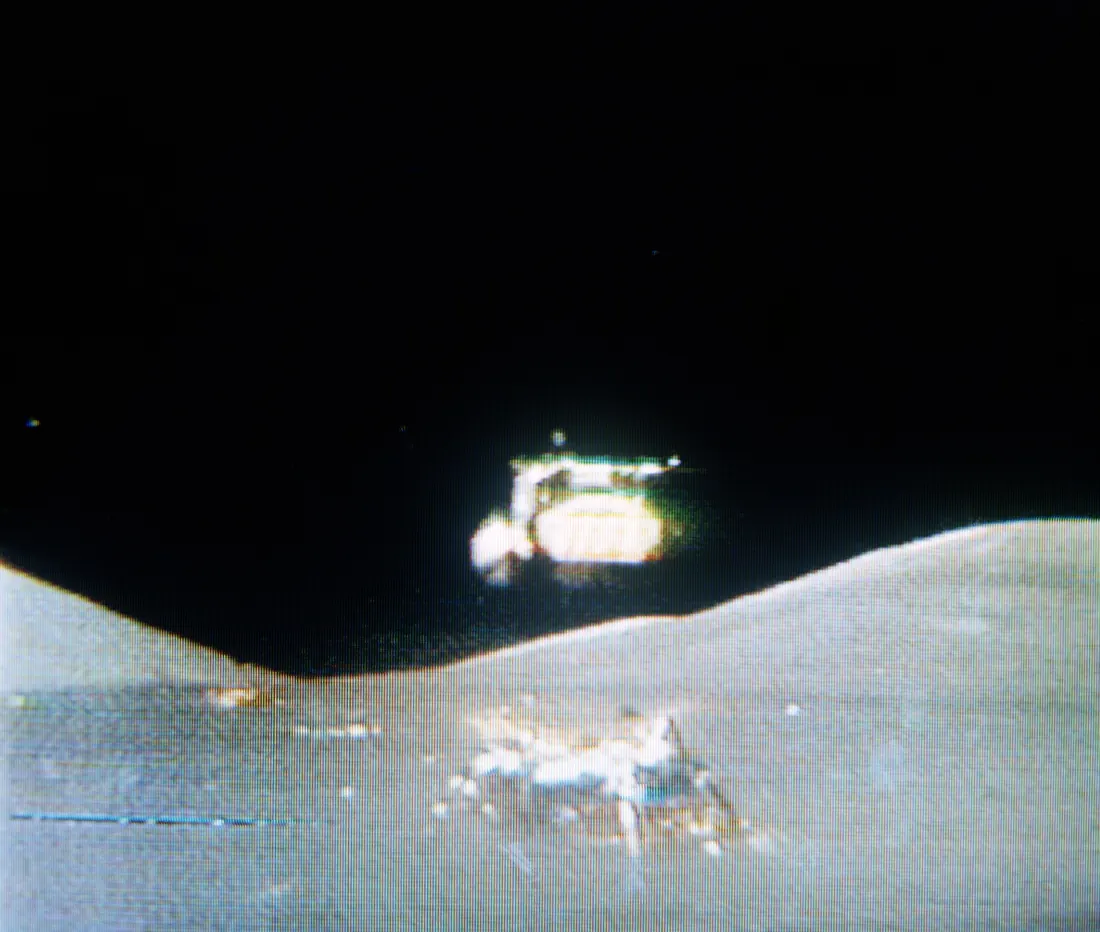
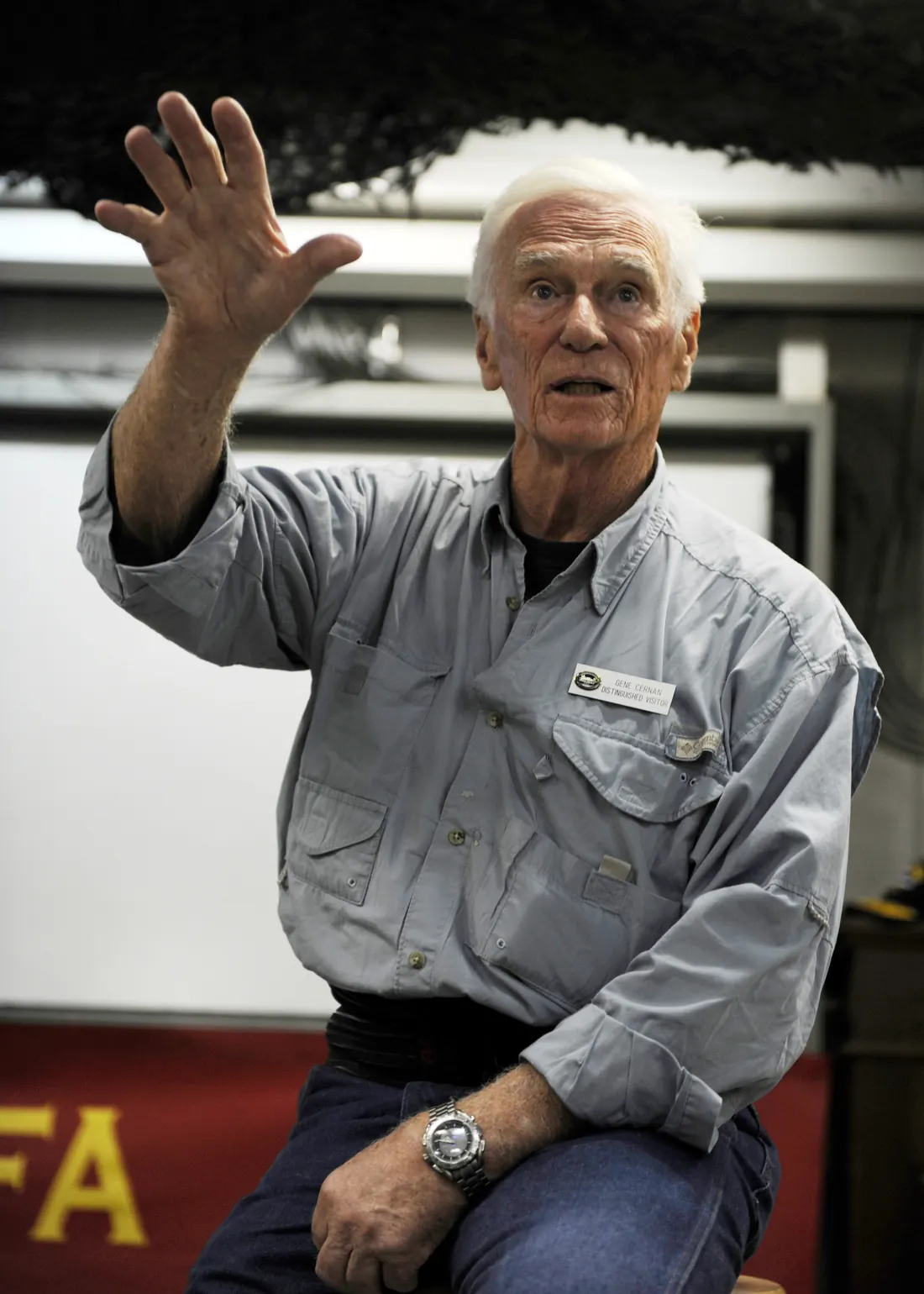
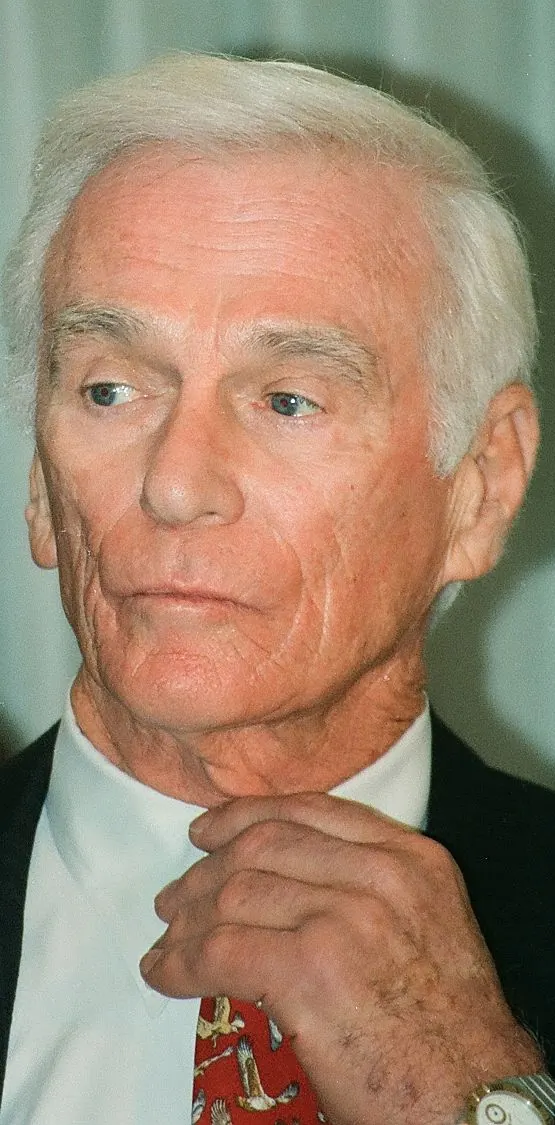
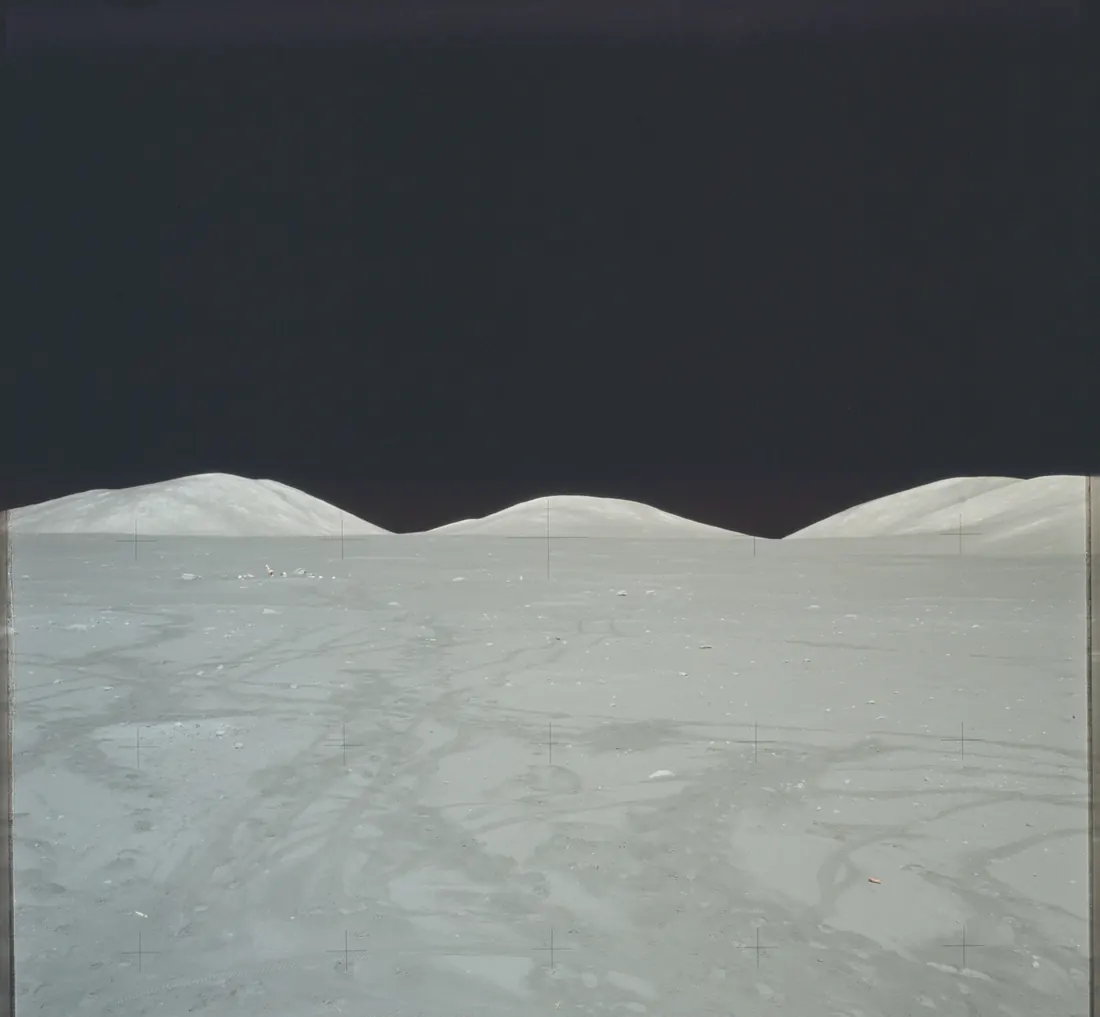
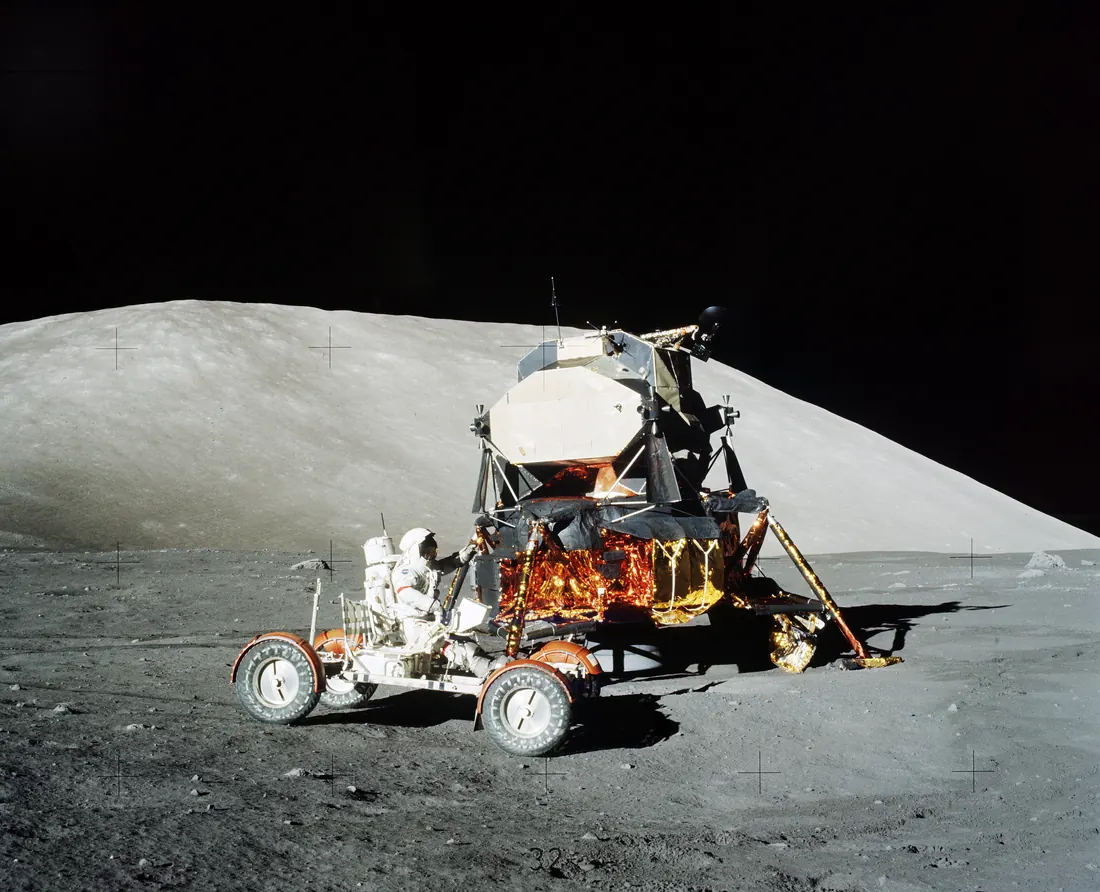
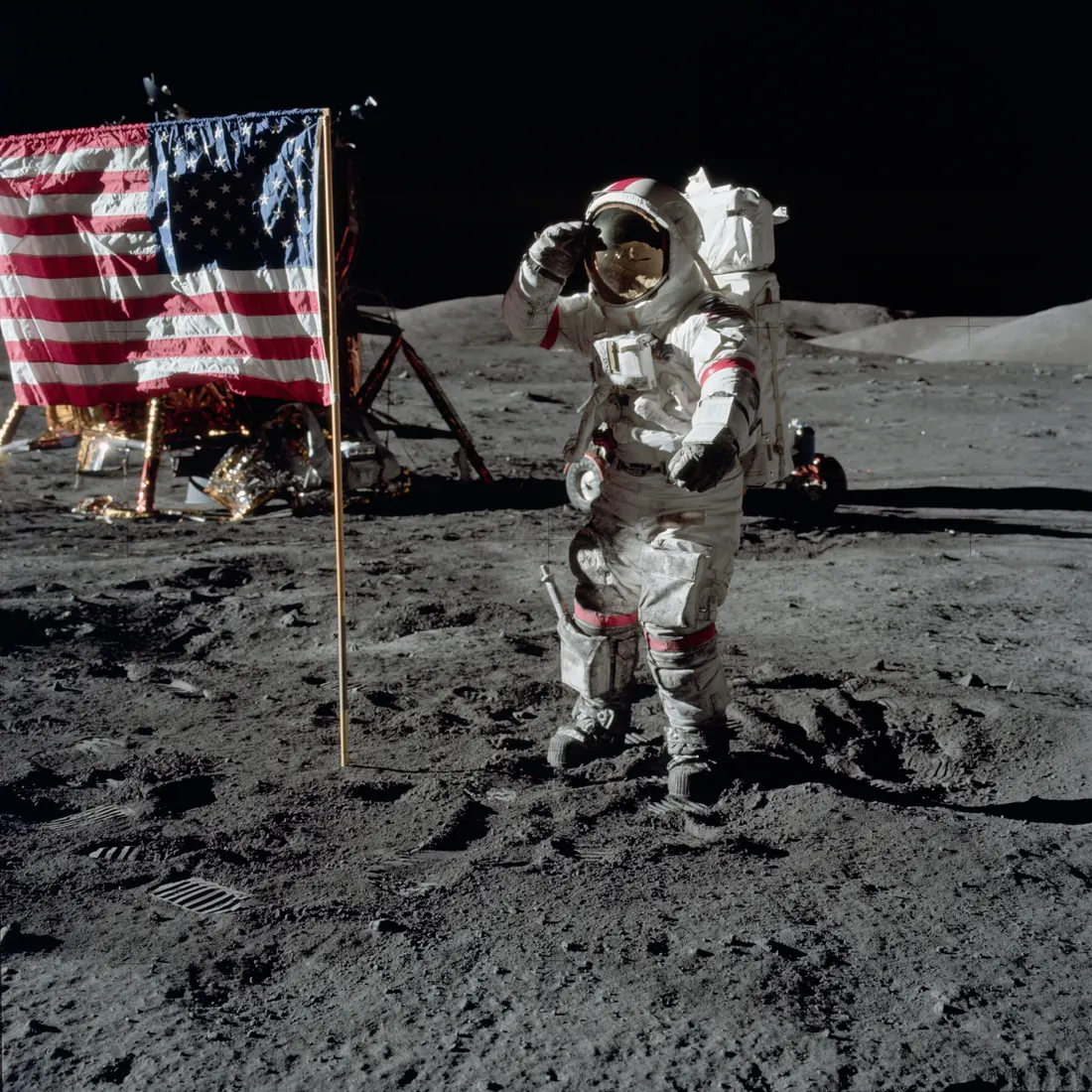
Pictures: all are NASA photos in the public domain, except a US Navy photo (also public domain) and John Mathew Smith’s 1997 photo (CC BY-SA 2.0). No photo of Tracy or of the initials is used; the line about her sits on the Blue Marble, the Earth photographed by the Apollo 17 crew on the way to the Moon, December 7, 1972. Cernan is in his NASA portraits of 1969 and September 21, 1971; by the flag at the start of his third and last moonwalk, December 13, 1972, photographed by Harrison Schmitt; driving the rover; in his jump salute by the flag; with the flag and the Earth in the black sky; at the lunar module ladder, and his dusty gloves there, at the end of the last moonwalk; and dusty inside the lunar module after a moonwalk. The close-ups of bootprints in the Short come from the flag and jump-salute frames and are not the initials. Schmitt took most of the Moon photos and is not shown. The night launch is December 7, 1972; the rover beside Challenger is in the Taurus-Littrow valley; Challenger’s liftoff is a photo of the rover camera’s TV picture, December 14, 1972; the footprints and rover tracks were photographed from the lunar module window just before liftoff; the Earth over the Moon’s horizon was photographed from Apollo 17, not from the valley. Cernan is at the National Press Club on December 11, 1997, and with Marines aboard USS Harry S. Truman on October 9, 2010. The other people in these photos are not named.
Photo credits
The archive photos in this story
The photographs and illustrations in this story are in the public domain or shared under open licenses; each one is credited below with its license. Tap one to enlarge it, or follow the link to its Wikimedia Commons page for the full record. The narration, captions and graphics in the Short are our own; its music and sound effects are credited below.
Music and sound effects
Music: Schumann, Kinderszenen, Op. 15: No. 1 'Of Foreign Lands and Peoples' (Musopen, public domain); Mussorgsky, Pictures at an Exhibition: IV. Bydlo (piano) (Musopen, public domain); Dvorak, Symphony No. 9 'From the New World': II. Largo (Musopen, public domain).
Sound effects: Freesound, CC0.