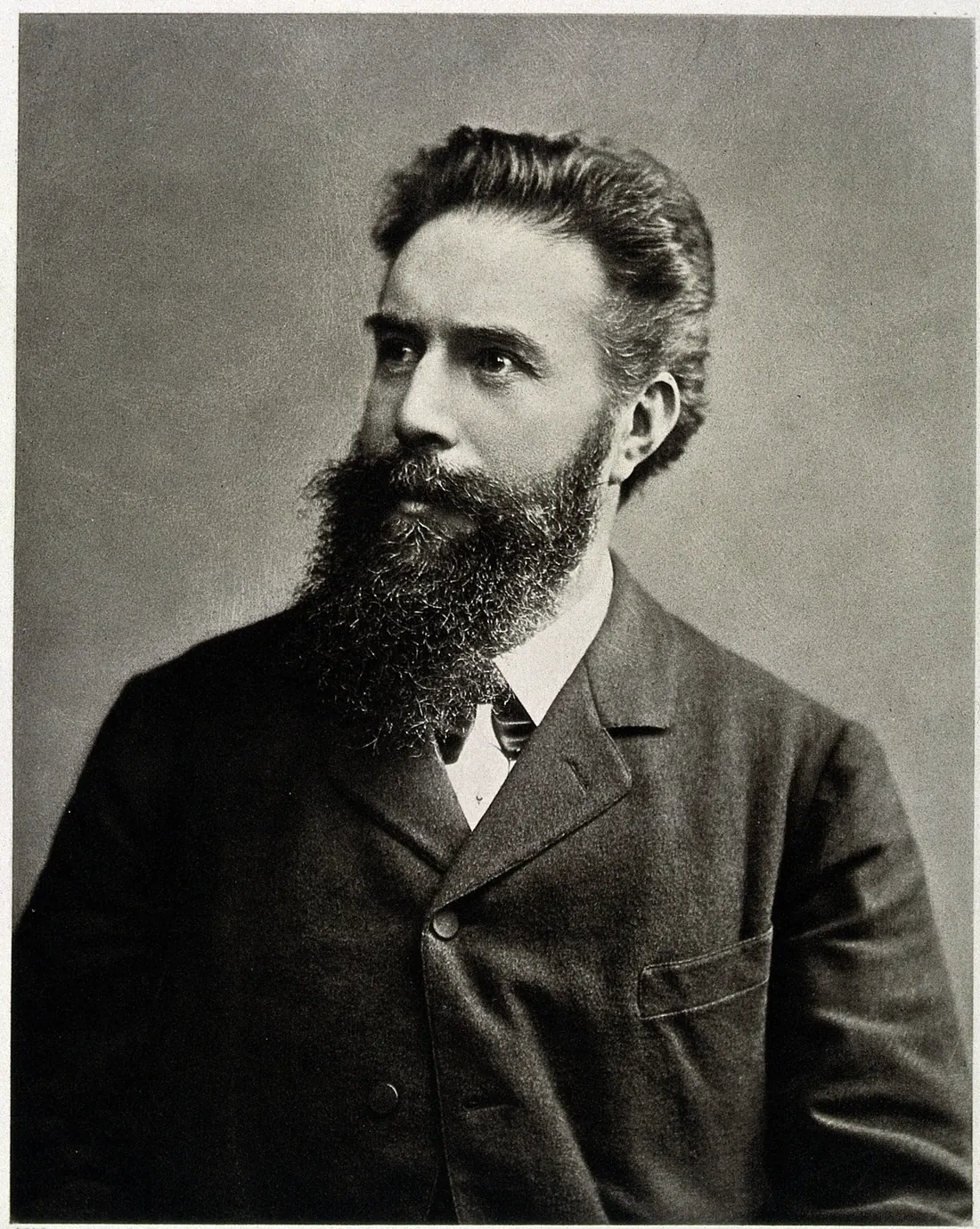
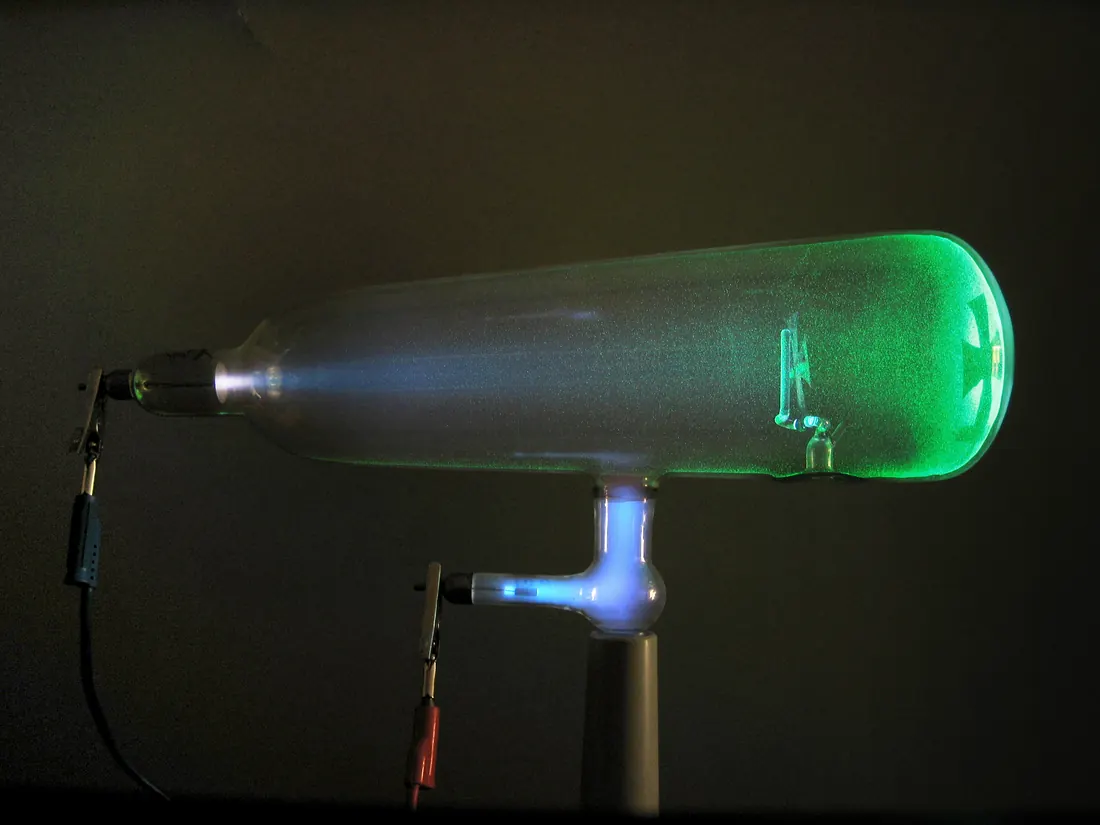
“Wilhelm Conrad Röntgen … was a German experimental physicist,” Wikipedia says, and from 1888 he held the Chair of Physics at Würzburg (NobelPrize.org). “It all began on a late Friday evening in Würzburg, November 8, 1895,” the German Patent and Trade Mark Office says. “On the evening of November 8, 1895, he found that, if the discharge tube is enclosed in a sealed, thick black carton to exclude all light, and if he worked in a dark room,” a paper screen coated on one side with barium platinocyanide “became fluorescent” even two meters from the tube, NobelPrize.org says. Wikipedia: “He carefully constructed a black cardboard covering.”
“He determined the fluorescence was caused by invisible rays originating from the Crookes tube … which penetrated the opaque black paper wrapped around the tube,” APS News says. “Because their nature was then unknown, he gave them the name X-rays,” NobelPrize.org says, “using the mathematical designation (‘X’) for something unknown,” Wikipedia adds. He was “Secreted in his lab for six weeks, pausing only to take meals,” Howard Markel wrote for PBS NewsHour, and Wikipedia says, “In the following weeks, he ate and slept in his laboratory.”
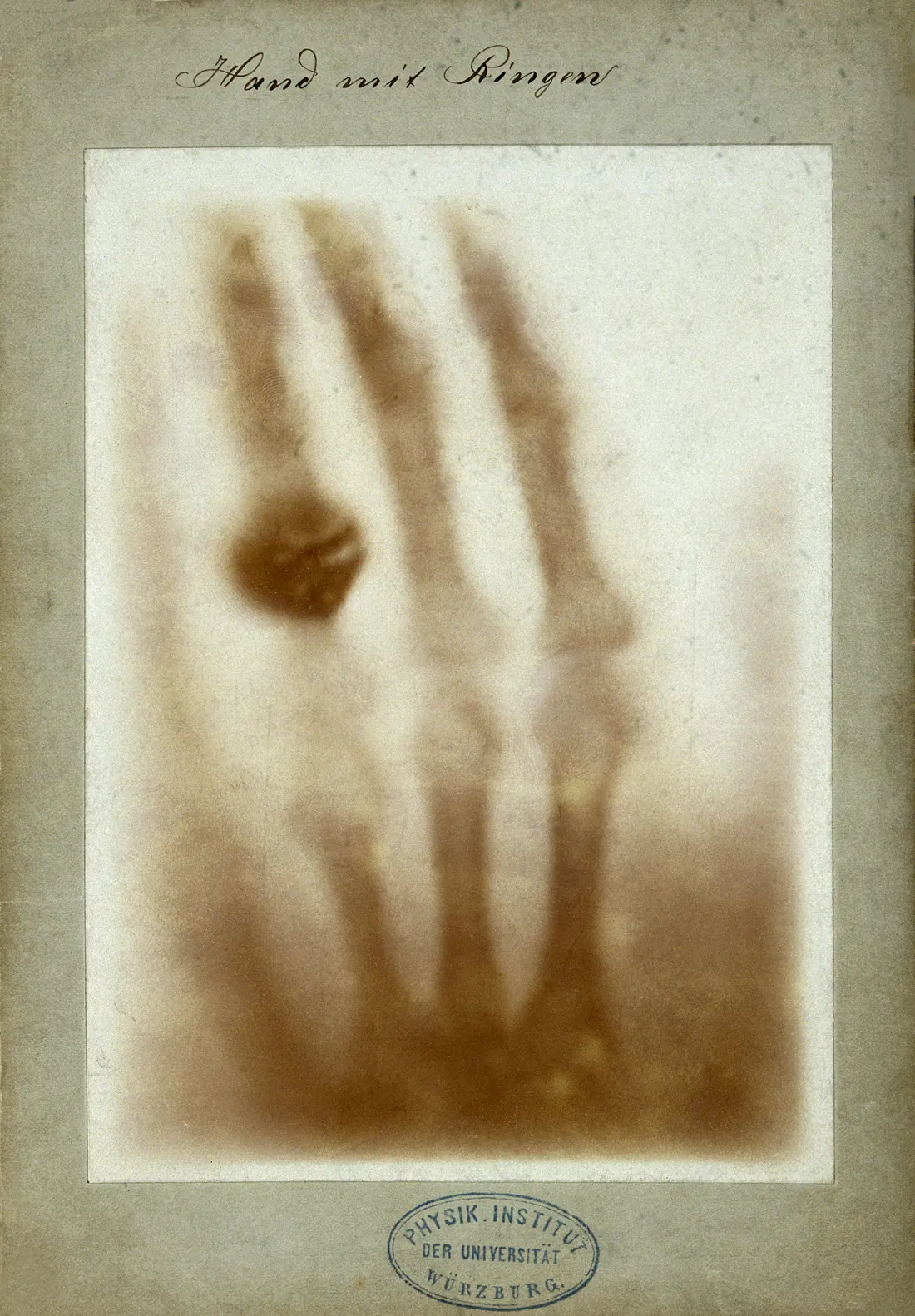
“It was created on December 22, 1895,” Hyperallergic says of the picture. Röntgen “immobilised for some moments the hand of his wife in the path of the rays over a photographic plate,” and “he observed after development of the plate an image of his wife’s hand which showed the shadows thrown by the bones of her hand and that of a ring she was wearing,” NobelPrize.org says. APS News describes “a film of his wife Bertha’s hand, with her wedding ring clearly visible.” “When she saw her skeleton, she exclaimed ‘I have seen my death!’” Wikipedia says; PBS NewsHour: “Mrs. Roentgen exclaimed, ‘I have seen my death.’” Hyperallergic says “she reportedly exclaimed” it.
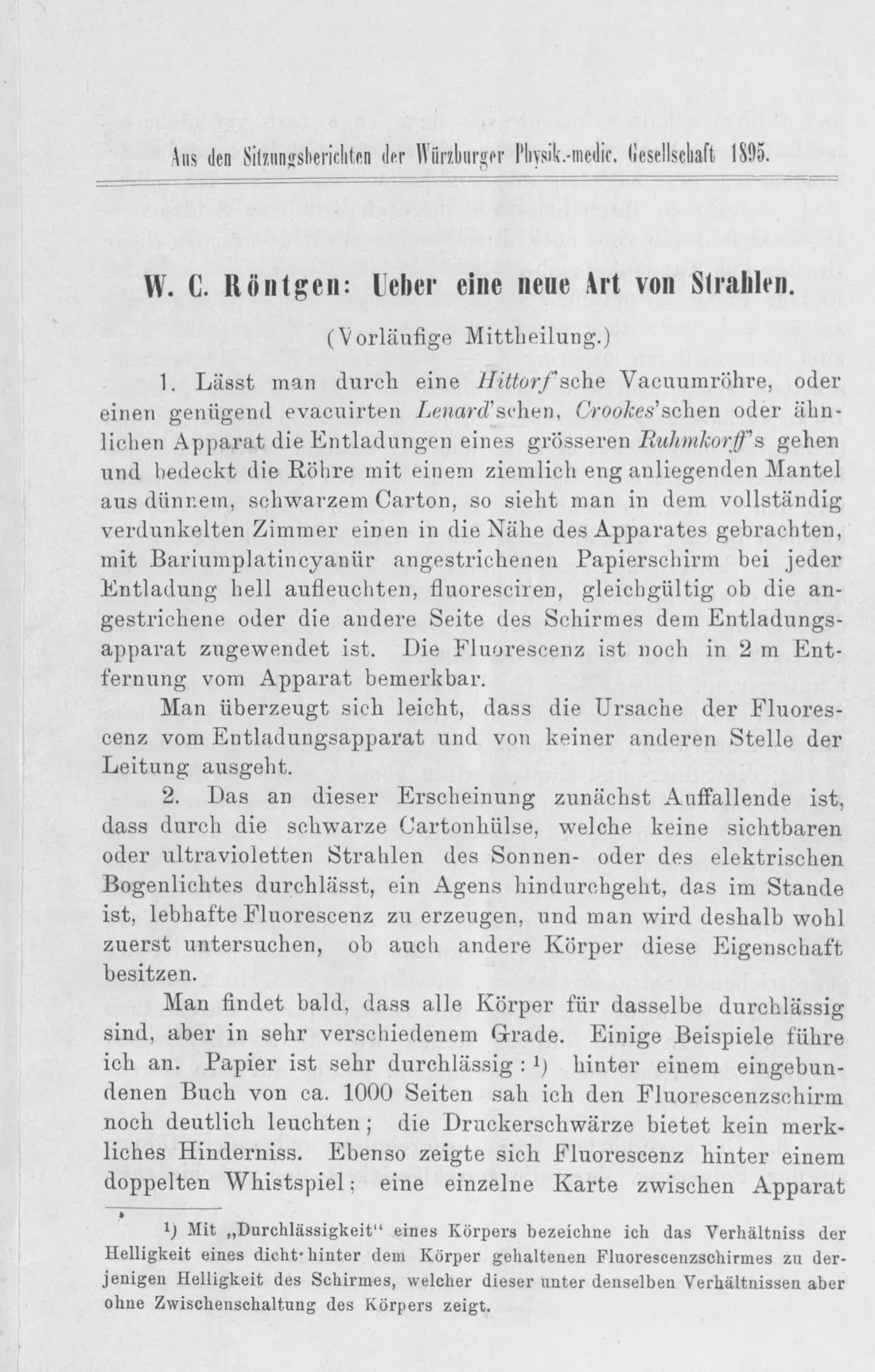
His paper, “Ueber eine neue Art von Strahlen” (“On a New Kind of Rays”), was published on December 28, 1895. “It took a matter of weeks before such news spread around the world and X-rays became the media sensation of the day,” PBS NewsHour says, and “This first X-ray image ensured that news of his discovery spread around the world in no time at all,” the German Patent and Trade Mark Office says. “X-rays had laid the foundation for a revolutionary medical procedure that made it possible to diagnose the inside of the body without surgical intervention.”
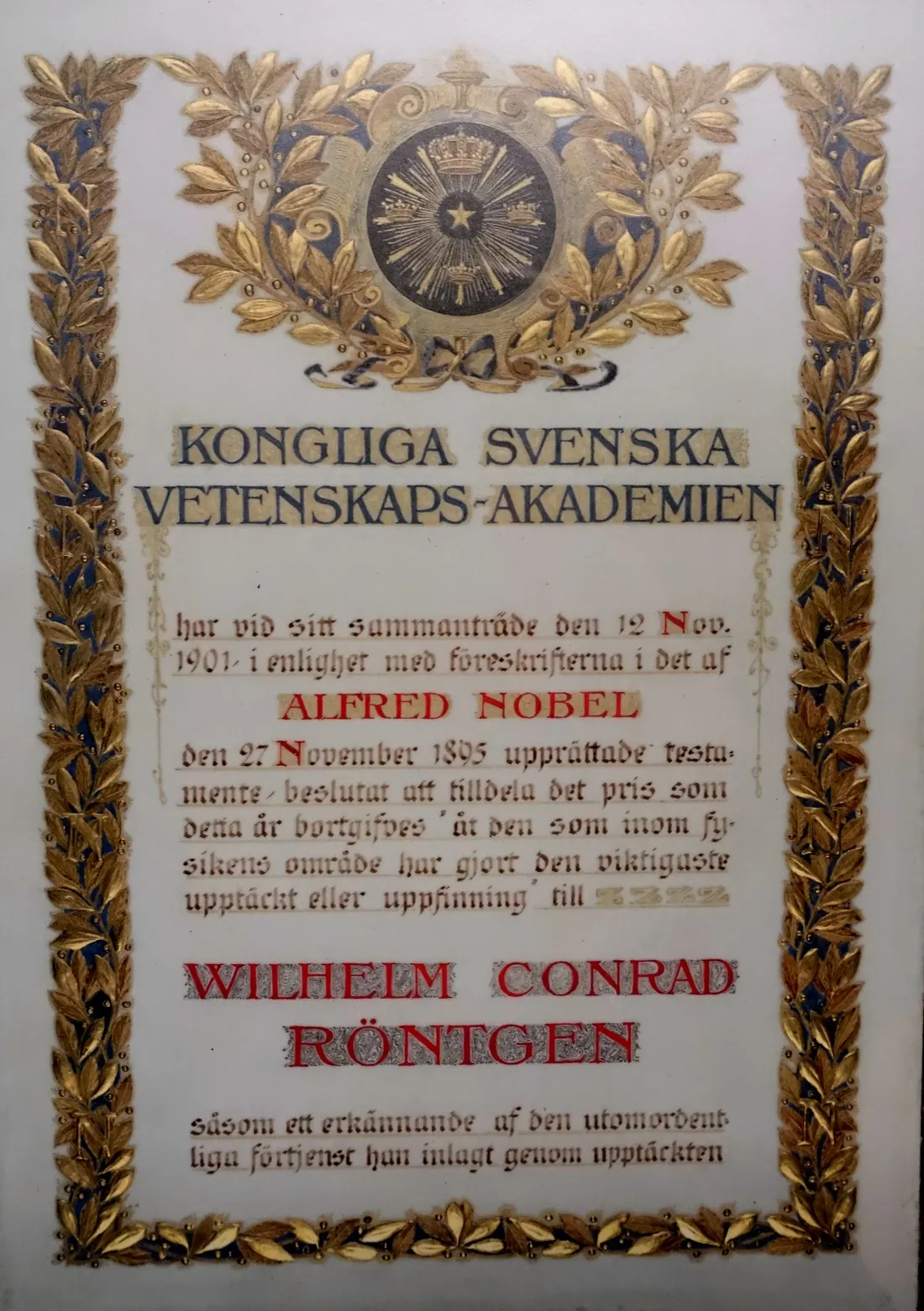
“He refrained from securing a patent for the generation of X-rays: Their use for the benefit of research and mankind should be free,” the office says, and “He rejected offers from industry to market the X-rays.” APS News: “he never took out any patents on X-rays, to ensure that the world could freely benefit from his work.” He turned down “the proffered title of nobility,” and after the first Nobel Prize in Physics, in 1901, “He donated his Nobel Prize money to the University of Würzburg.” He died in 1923. The German Patent and Trade Mark Office captions his X-ray “A picture that made history: Anna Röntgen’s left hand.”
Fact check
The facts and where they come from
- He photographed his wife’s hand, but the picture showed her bones. NobelPrize.org: “an image of his wife’s hand which showed the shadows thrown by the bones of her hand and that of a ring she was wearing.” Wikipedia: “Röntgen took a picture (a radiograph) using X-rays of his wife Anna Bertha’s hand.” 21
- His name was Wilhelm Röntgen. Wikipedia: “Wilhelm Conrad Röntgen … was a German experimental physicist.” 1
- In 1895, this German professor was testing a glass tube in the dark. NobelPrize.org: “On the evening of November 8, 1895, he found that, if the discharge tube is enclosed in a sealed, thick black carton to exclude all light, and if he worked in a dark room …” The German Patent and Trade Mark Office: “It all began on a late Friday evening in Würzburg, November 8, 1895.” From 1888 he held the Chair of Physics at Würzburg (NobelPrize.org). 25
- He sealed it in black cardboard to block all light. NobelPrize.org: “a sealed, thick black carton to exclude all light.” Wikipedia: “He carefully constructed a black cardboard covering.” 21
- But a screen two meters away began to glow. NobelPrize.org: “a paper plate covered on one side with barium platinocyanide placed in the path of the rays became fluorescent even when it was as far as two metres from the discharge tube.” 2
- Something invisible was passing through. APS News: “He determined the fluorescence was caused by invisible rays originating from the Crookes tube … which penetrated the opaque black paper wrapped around the tube.” 4
- He called them X-rays, X for unknown. NobelPrize.org: “Because their nature was then unknown, he gave them the name X-rays.” Wikipedia: “using the mathematical designation (‘X’) for something unknown.” 21
- For weeks, he barely left his lab. PBS NewsHour: “Secreted in his lab for six weeks, pausing only to take meals.” Wikipedia: “In the following weeks, he ate and slept in his laboratory.” 31
- Just before Christmas, his wife, Bertha, held her hand still in the rays. Hyperallergic: “It was created on December 22, 1895.” NobelPrize.org: he “immobilised for some moments the hand of his wife in the path of the rays over a photographic plate.” APS News calls her “his wife Bertha”; Wikipedia calls her Anna Bertha. 6241
- The photo showed her bones, and her wedding ring. APS News: “a film of his wife Bertha’s hand, with her wedding ring clearly visible.” PBS NewsHour: “the bones of his wife’s hand and her wedding ring.” 43
- When she saw it, she reportedly said, “I have seen my death.” PBS NewsHour: “Mrs. Roentgen exclaimed, ‘I have seen my death.’” Hyperallergic: “she reportedly exclaimed, ‘I have seen my death.’” Wikipedia: “When she saw her skeleton, she exclaimed ‘I have seen my death!’” 361
- Within weeks, the news went around the world. PBS NewsHour: “It took a matter of weeks before such news spread around the world and X-rays became the media sensation of the day.” The German Patent and Trade Mark Office: “This first X-ray image ensured that news of his discovery spread around the world in no time at all.” 35
- Doctors could see inside the body without cutting it open. The German Patent and Trade Mark Office: “X-rays had laid the foundation for a revolutionary medical procedure that made it possible to diagnose the inside of the body without surgical intervention.” 5
- He refused to patent them, so everyone could use them. The German Patent and Trade Mark Office: “He refrained from securing a patent for the generation of X-rays: Their use for the benefit of research and mankind should be free.” APS News: “he never took out any patents on X-rays, to ensure that the world could freely benefit from his work.” Wikipedia: “he refused to take out patents related to his discovery of X-rays, as he wanted society as a whole to benefit.” 541
- He gave his Nobel Prize money to his university. The German Patent and Trade Mark Office: “He donated his Nobel Prize money to the University of Würzburg.” APS News: “donated his Nobel Prize money to his university.” 54
- That picture of her hand changed medicine forever. The German Patent and Trade Mark Office says X-rays “not only revolutionized medical diagnostics,” and captions the picture “A picture that made history: Anna Röntgen’s left hand.” 5
Sources
- Wilhelm Röntgen Wikipedia
- Wilhelm Conrad Röntgen – Biographical (from Nobel Lectures, Physics 1901–1921) NobelPrize.org
- ‘I have seen my death’: How the world discovered the X-ray (Howard Markel) PBS NewsHour
- November 8, 1895: Roentgen’s Discovery of X-Rays APS News
- Röntgen’s X-rays German Patent and Trade Mark Office
- ‘I Have Seen My Death’: The First X-Ray Photograph Hyperallergic
Notes
“I have seen my death” is widely repeated (PBS NewsHour; Wikipedia, citing a 1997 source; Hyperallergic, which says “reportedly”), but no record from 1895 has been found, so the Short and the page say “reportedly.” The wording varies slightly.
The distance: NobelPrize.org says the screen glowed as far as two meters away, APS News says nine feet, and Wikipedia a few feet; the page uses NobelPrize.org’s figure. The exposure time of the hand differs between retellings, so it is left out. The date: December 22, 1895 (PBS NewsHour, Hyperallergic); Wikipedia says “about six weeks after his discovery.”
“First”: PBS NewsHour calls it the world’s first X-ray of a human, but Wikipedia says Röntgen had already seen his own bones on the screen while holding a piece of lead, so the page never calls it the first. Whose hand: the Wellcome Collection’s record of the print hedges (“possibly the hand of Röntgen’s wife”), while NobelPrize.org, PBS NewsHour, APS News, the German Patent and Trade Mark Office and Wikipedia all say it is Anna Bertha’s.
Left out: his later life and the later quarrels over credit for the discovery. None is needed for this story.
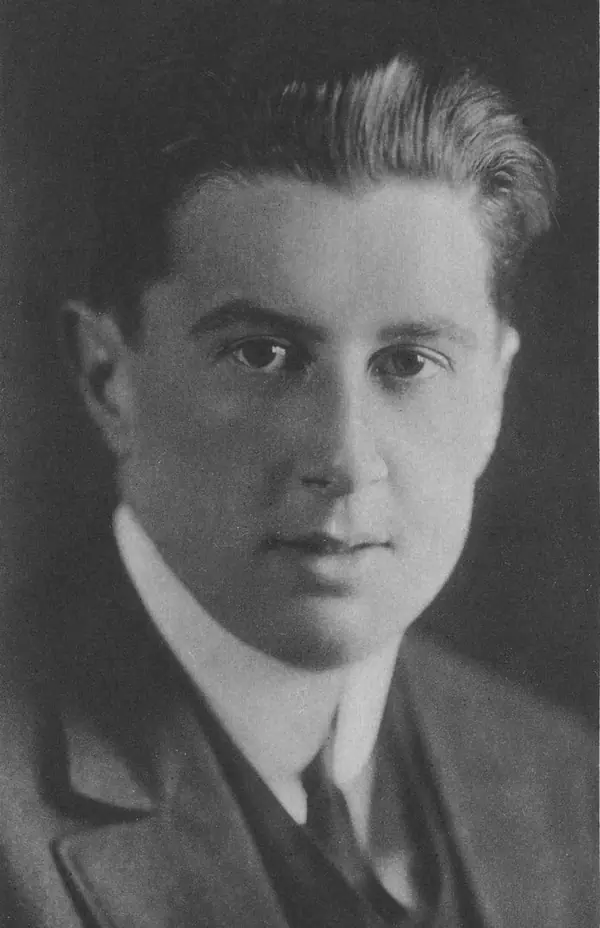
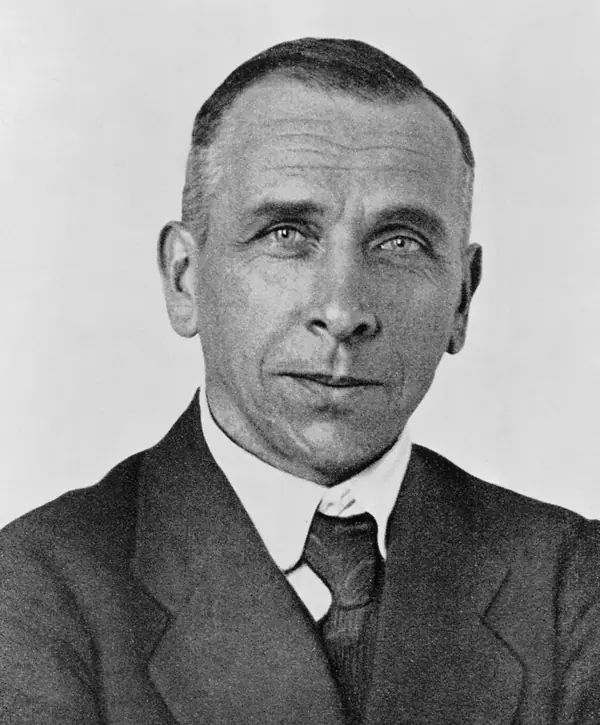
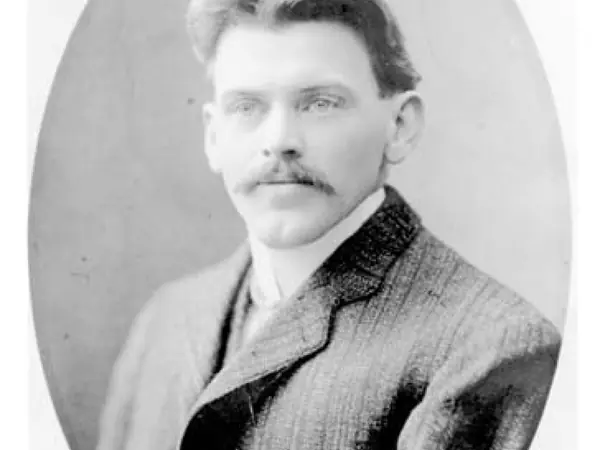
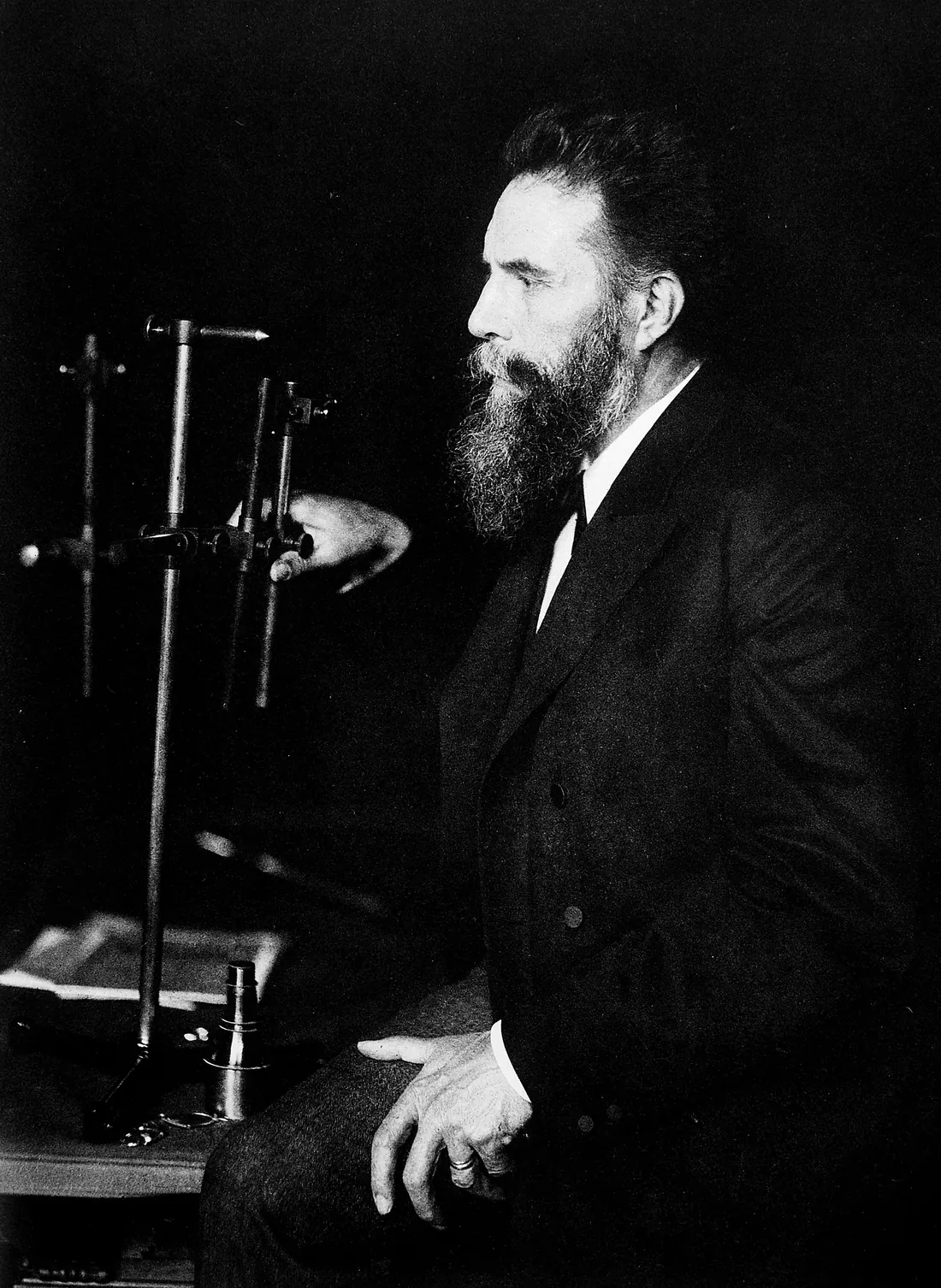
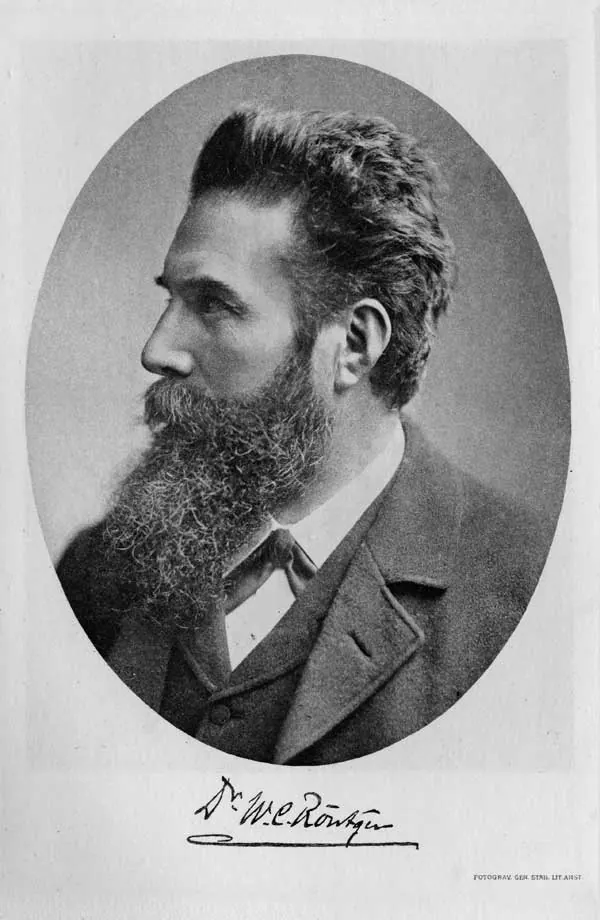
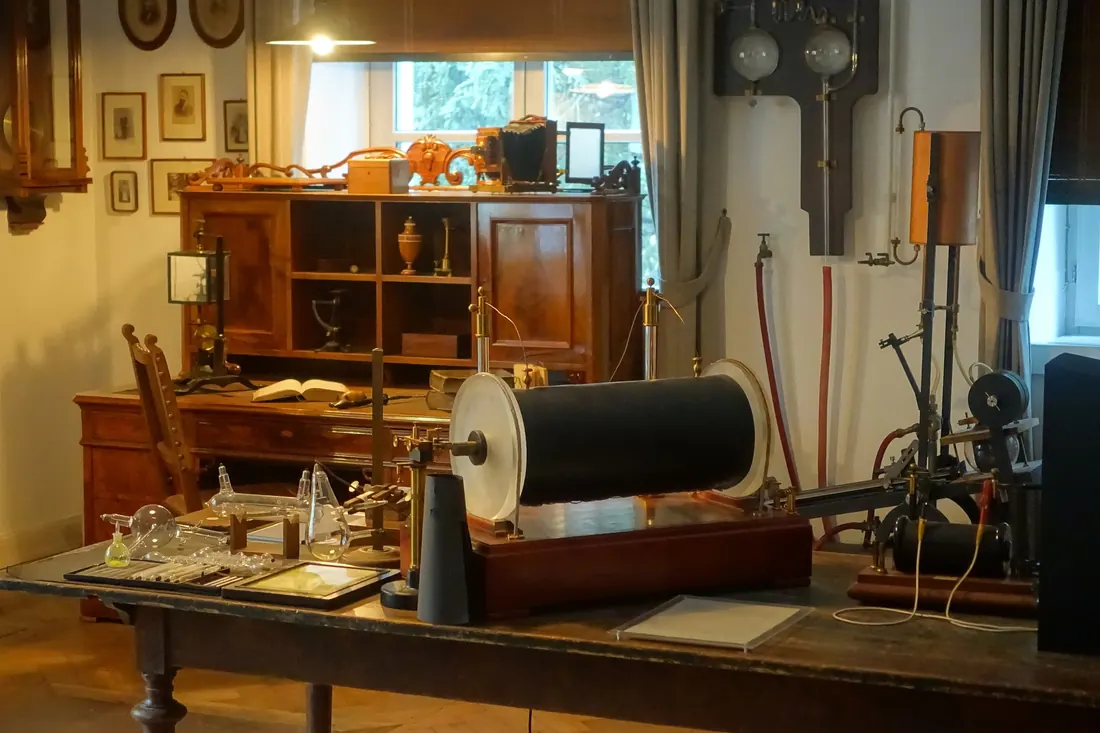
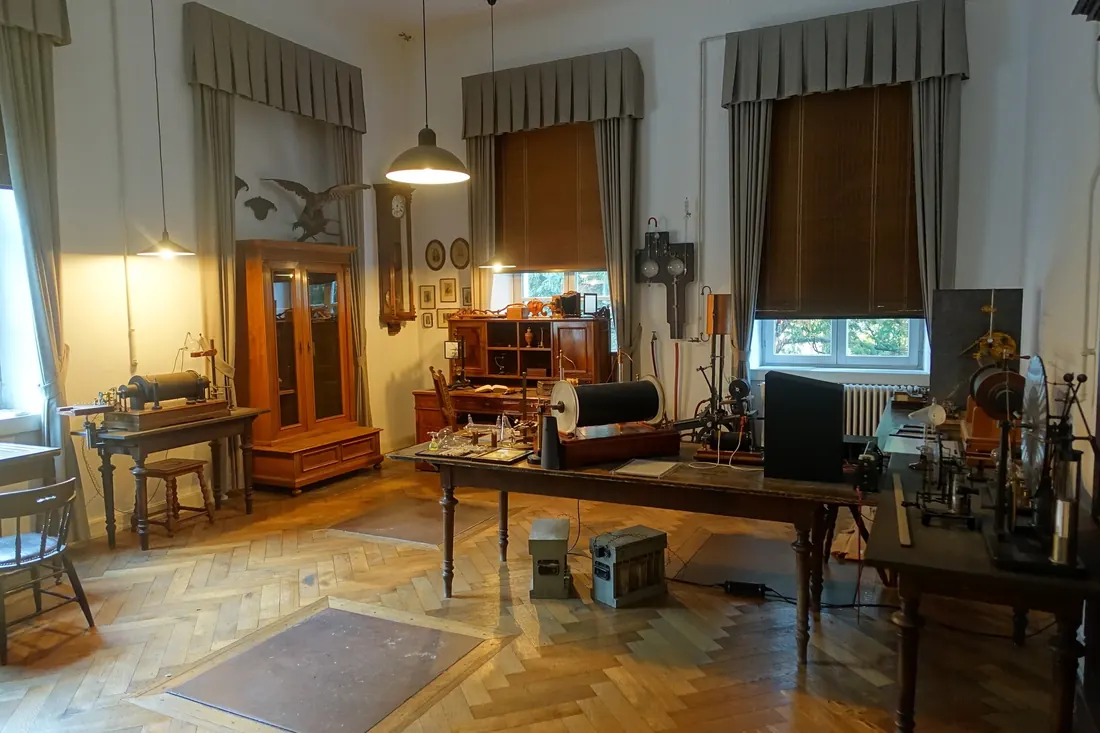
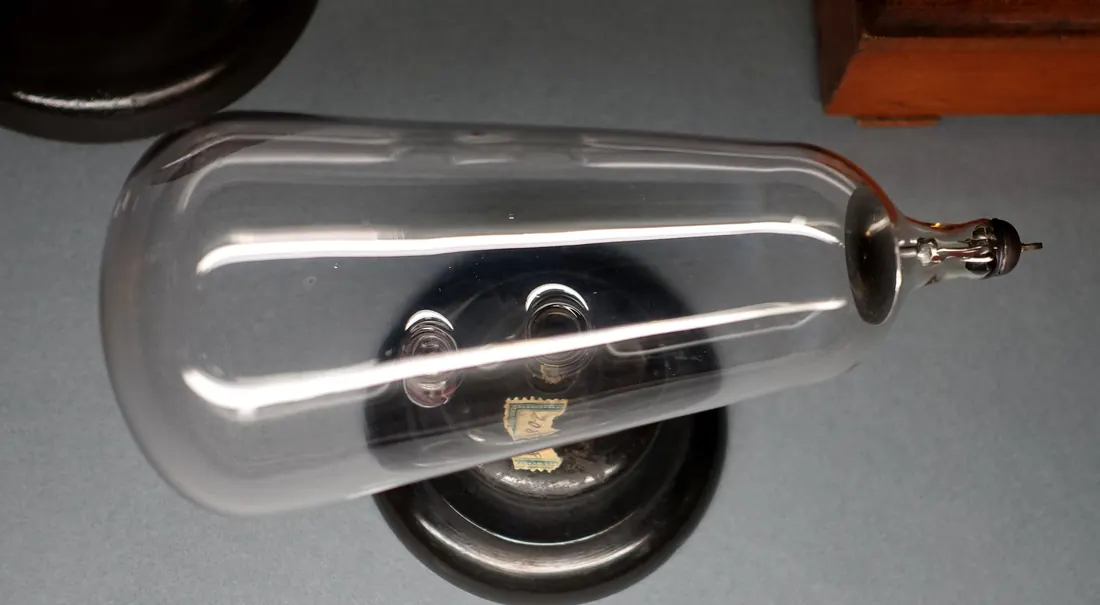
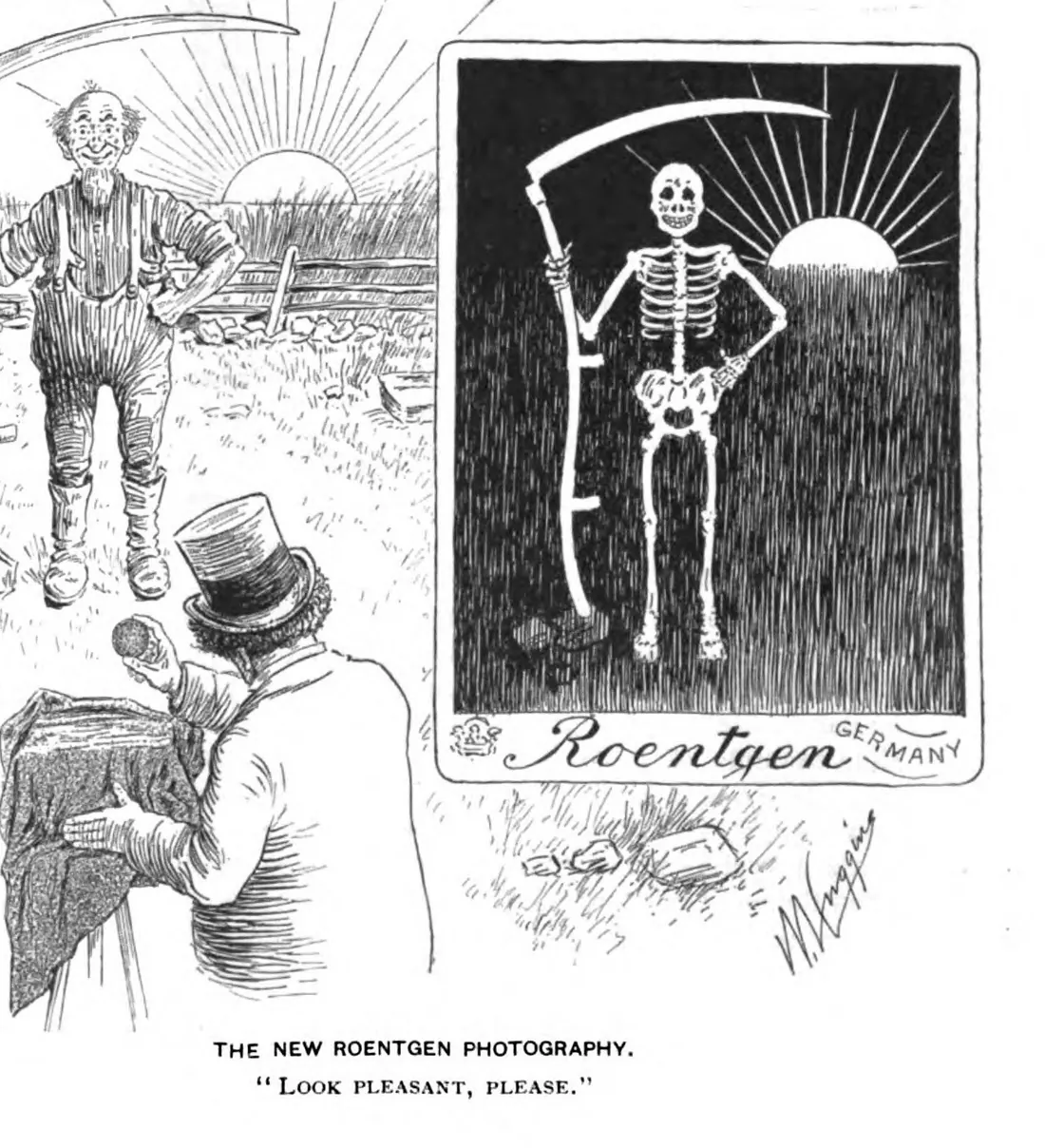
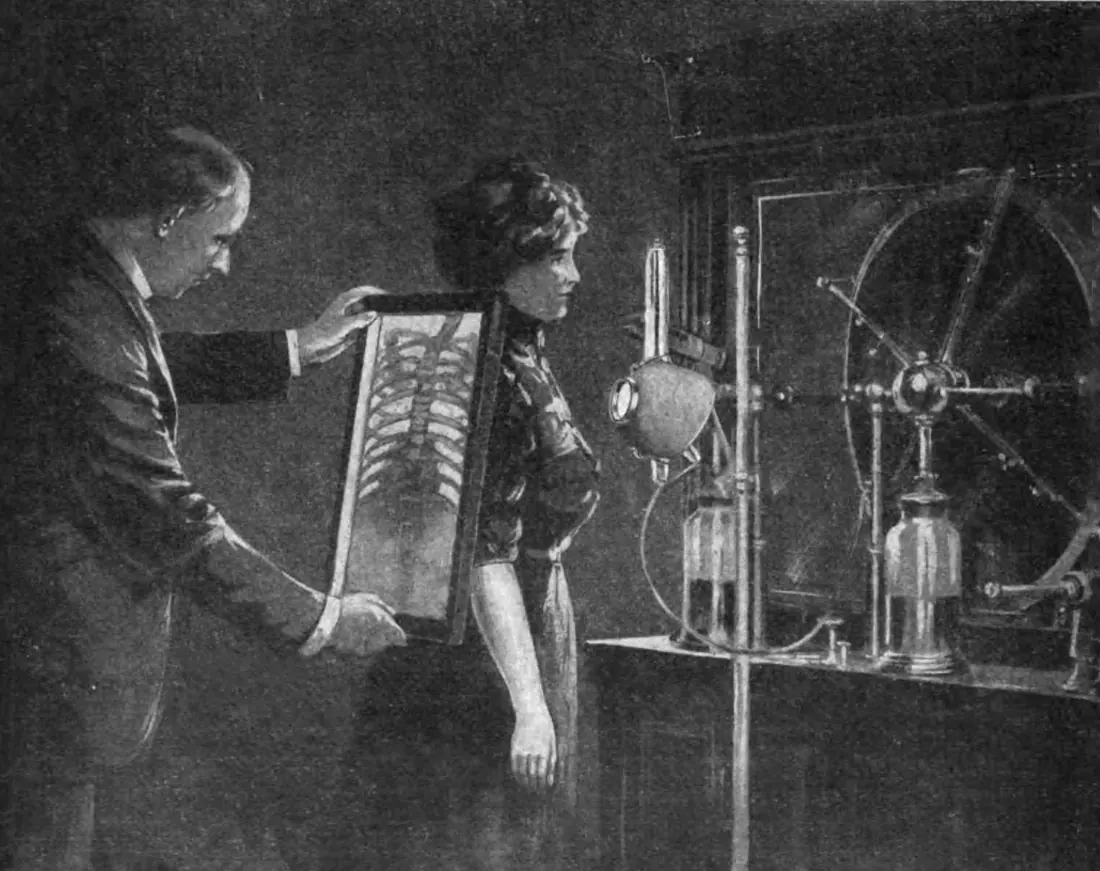
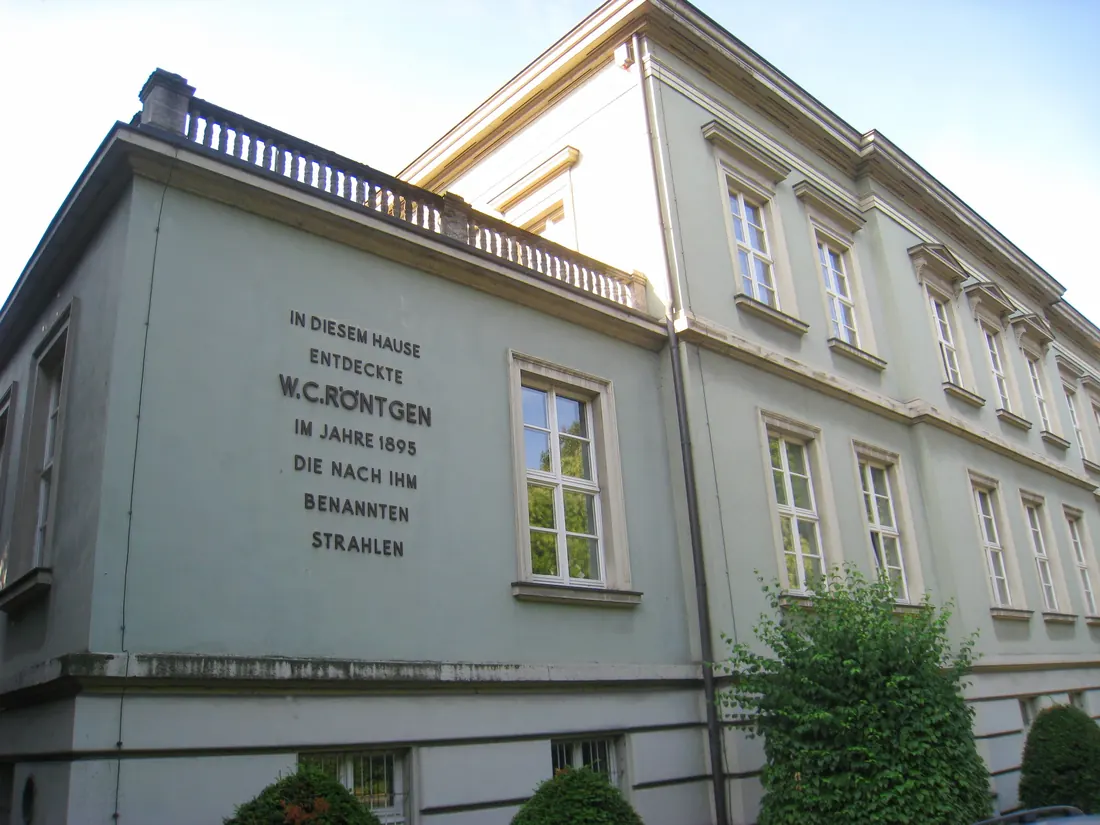
Pictures: the frontal portrait is a photogravure by the Photographische Gesellschaft, Berlin, and the profile beside X-ray apparatus is after a 1906 photograph by Nicola Perscheid, both in the Wellcome Collection; the oval portrait was printed in Les Prix Nobel 1901. The X-ray is Röntgen’s print of his wife’s hand, December 22, 1895, with its period inscription “Hand mit Ringen” and the stamp of the Würzburg physics institute (Wellcome Collection; restored by Yann Forget). Daderot photographed the physics institute in Würzburg, with its plaque about the 1895 discovery, in 2009, and, in 2016, the laboratory at the Röntgen Memorial Site as it is today, a Crookes tube of about 1896 there and his 1901 Nobel diploma. The glowing tube is a modern Crookes tube photographed by D-Kuru in 2007, not his. The first page of his paper is from 1895, the cartoon from Life magazine, February 1896, and the fluoroscopy examination, of unnamed people, from Popular Electricity magazine, 1908.
Photo credits
The archive photos in this story
The photographs and illustrations in this story are in the public domain or shared under open licenses; each one is credited below with its license. Tap one to enlarge it, or follow the link to its Wikimedia Commons page for the full record. The narration, captions and graphics in the Short are our own; its music and sound effects are credited below.
Music and sound effects
Music: Schumann, Kinderszenen, Op. 15: No. 1 'Of Foreign Lands and Peoples' (Musopen, public domain); Mussorgsky, Pictures at an Exhibition: IV. Bydlo (piano) (Musopen, public domain); Dvorak, Symphony No. 9 'From the New World': II. Largo (Musopen, public domain).
Sound effects: Freesound, CC0.