“Armstrong and Aldrin descended to the surface aboard the LM Eagle, landing in the Sea of Tranquility (Mare Tranquillitatis) on July 20 at 20:17 UTC,” Wikipedia says of Apollo 11. “Following the Apollo 11 historic July 20, 1969, moonwalk, Aldrin and Neil Armstrong were preparing to return to command from their lunar module when they discovered that a 1-inch engine arm circuit breaker switch had broken off the instrument panel,” History.com says. In his book Magnificent Desolation, Aldrin wrote: “There on the dust on the floor on the right side of the cabin, lay a circuit breaker switch that had broken off.” “The broken switch had snapped off from the engine-arm circuit breaker,” “the one vital breaker needed to send electrical power to the ascent engine that would lift Neil and me off the moon.”
“If the engine arm circuit breaker remained open, Armstrong and Aldrin likely would have been stuck, says NASA Chief Historian William Barry,” History.com reports, and Wikipedia says “There was a concern this would prevent firing the engine, stranding them on the Moon.” Aldrin radioed, in the Apollo Lunar Surface Journal’s transcript: “Houston, Tranquility. Do you have a way of showing the configuration of the engine arm circuit breaker? Over. (Pause) The reason I’m asking is because the end of it appears to be broken off.” Houston answered: “We want you to leave it open until it is nominally scheduled to be pushed in; which is later on.” But “after a fretful night trying to get some sleep, Houston had not figured out a solution the next morning,” History.com says.
“But since it was electrical, I decided not to put my finger in, or use anything that had metal on the end,” Aldrin wrote. “I had a felt-tipped pen in the shoulder pocket of my suit that might do the job.” In a letter that came with the 2026 sale, collectSPACE reports, he wrote: “While I could have stuck my finger in and reset the switch, there was electricity flowing through the breaker and I did not want to electrocute myself,” and “it fit into the breaker opening, so I pushed the marker pen into the circuit breaker, it clicked on, and we rearmed the Engine Arm circuit.” The pen “was a Duro-brand Rocket felt-tip marker,” collectSPACE says.
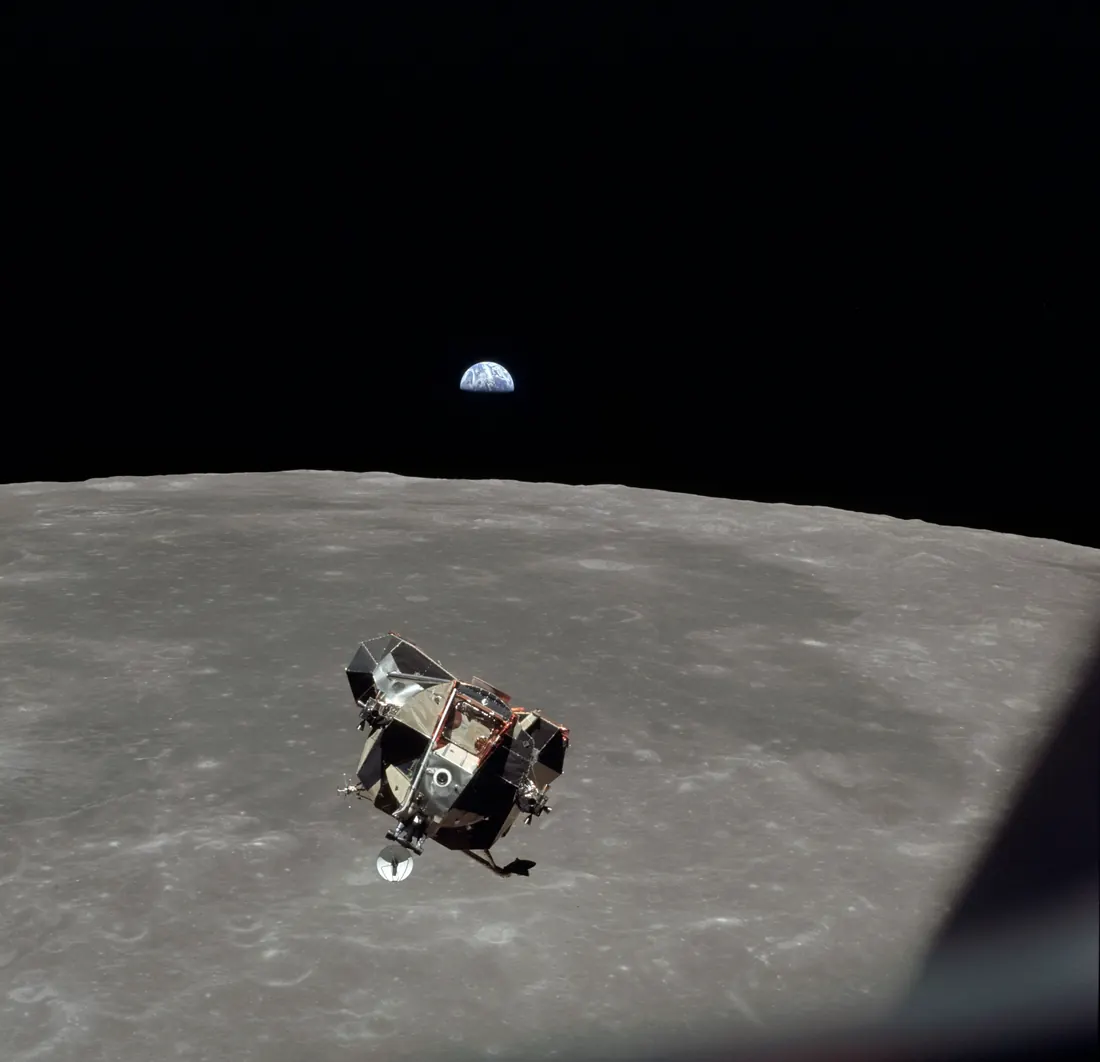
Before liftoff, Houston told him “the circuitry looks real fine on that ascent-engine-arm circuit breaker,” and Aldrin replied: “Roger. I don’t think I could get it out now if I wanted to.” Then, “at 17:54:00 UTC, the Apollo 11 crew on the surface safely lifted off in Eagle’s ascent stage to rejoin Collins aboard Columbia in lunar orbit,” Wikipedia says; the Apollo 11 Mission Report, quoted in the Apollo Lunar Surface Journal, records that “The engine arm circuit breaker was successfully closed when it was required for ascent.” It was “a serious situation—enough that on subsequent lunar modules a guard was installed over those circuit breakers to prevent a similar problem,” Barry told History.com.
“To this day I still have the broken circuit breaker switch and the felt-tipped pen I used to ignite our engines,” Aldrin wrote. For years the story was told on “the pamphlet packaged with every Fisher Space Pen sold until Aldrin pointed out that as an engineer, he would never insert a metal-tipped writing instrument into a live electrical socket,” collectSPACE says. On July 15, 2026, “A dried out felt-tip marker and a snapped off piece of molded black plastic sold for $857,600 at a Sotheby’s auction,” and “The $857,600 total includes the buyer’s premium.”
Fact check
The facts and where they come from
- He walked on the Moon, but a broken switch almost trapped him there. History.com: “Following the Apollo 11 historic July 20, 1969, moonwalk, Aldrin and Neil Armstrong were preparing to return to command from their lunar module when they discovered that a 1-inch engine arm circuit breaker switch had broken off the instrument panel.” collectSPACE: “one was the problem that almost stranded Neil Armstrong and Buzz Aldrin on the lunar surface and the other was the simple solution to saving the mission.” 14
- His name is Buzz Aldrin. Wikipedia: “Lunar Module Pilot Edwin ‘Buzz’ Aldrin.” 5
- In July 1969, he and Neil Armstrong landed in Eagle. Wikipedia: “Armstrong and Aldrin descended to the surface aboard the LM Eagle, landing in the Sea of Tranquility (Mare Tranquillitatis) on July 20 at 20:17 UTC.” 5
- After their moonwalk, he spotted something on the floor. History.com: “Aldrin recalls spotting something on the floor of the lunar module that didn’t belong there.” Aldrin’s book, quoted by History.com: “There on the dust on the floor on the right side of the cabin, lay a circuit breaker switch that had broken off.” 1
- A tiny switch had snapped off the panel. History.com: “a 1-inch engine arm circuit breaker switch had broken off the instrument panel.” Aldrin’s book: “The broken switch had snapped off from the engine-arm circuit breaker.” 1
- It armed the engine that would lift them off the Moon. Aldrin’s book: “the one vital breaker needed to send electrical power to the ascent engine that would lift Neil and me off the moon.” 1
- Without it, they could be stuck there. History.com: “If the engine arm circuit breaker remained open, Armstrong and Aldrin likely would have been stuck, says NASA Chief Historian William Barry.” Wikipedia: “There was a concern this would prevent firing the engine, stranding them on the Moon.” 15
- He radioed Houston: the end of it appears to be broken off. The Apollo Lunar Surface Journal, Aldrin: “Houston, Tranquility. Do you have a way of showing the configuration of the engine arm circuit breaker? Over. (Pause) The reason I’m asking is because the end of it appears to be broken off.” 24
- By morning, Mission Control still had no fix. History.com: “The broken switch was reported to Mission Control, but after a fretful night trying to get some sleep, Houston had not figured out a solution the next morning.” The Apollo Lunar Surface Journal, Houston: “We want you to leave it open until it is nominally scheduled to be pushed in; which is later on.” 12
- He didn’t dare use his finger or anything metal, because electricity ran through it. Aldrin’s book: “But since it was electrical, I decided not to put my finger in, or use anything that had metal on the end.” Aldrin’s letter (collectSPACE): “While I could have stuck my finger in and reset the switch, there was electricity flowing through the breaker and I did not want to electrocute myself.” 14
- But in his shoulder pocket, he had a felt-tip pen. Aldrin’s book: “I had a felt-tipped pen in the shoulder pocket of my suit that might do the job.” collectSPACE: “The pen he used and that was sold on Wednesday was a Duro-brand Rocket felt-tip marker.” Wikipedia: “a Duro felt-tip pen.” 145
- He pushed it into the hole, and it clicked on. Aldrin’s letter (collectSPACE): “it fit into the breaker opening, so I pushed the marker pen into the circuit breaker, it clicked on, and we rearmed the Engine Arm circuit.” Aldrin’s book: “I inserted the pen into the small opening where the circuit breaker switch should have been, and pushed it in; sure enough, the circuit breaker held.” The Apollo Lunar Surface Journal, Houston: “the circuitry looks real fine on that ascent-engine-arm circuit breaker.” 413
- Then the engine fired, and Eagle lifted off the Moon. Wikipedia: “at 17:54:00 UTC, the Apollo 11 crew on the surface safely lifted off in Eagle’s ascent stage to rejoin Collins aboard Columbia in lunar orbit.” The Apollo 11 Mission Report, quoted in the Apollo Lunar Surface Journal: “The engine arm circuit breaker was successfully closed when it was required for ascent.” 52
- Aldrin kept the pen and the broken switch. Aldrin’s book: “To this day I still have the broken circuit breaker switch and the felt-tipped pen I used to ignite our engines.” 1
- Decades later, they sold for more than $850,000. collectSPACE (July 15, 2026): “A dried out felt-tip marker and a snapped off piece of molded black plastic sold for $857,600 at a Sotheby’s auction on Wednesday (July 15)”; “The $857,600 total includes the buyer’s premium.” 4
Sources
- When Buzz Aldrin and Neil Armstrong Were Nearly Stranded on the Moon (Lesley Kennedy, December 3, 2019, updated March 2, 2025) History.com
- Apollo 11: Trying to Rest (Eric M. Jones, transcript and commentary) Apollo Lunar Surface Journal
- Apollo 11: The Return to Orbit (Eric M. Jones, transcript and commentary) Apollo Lunar Surface Journal
- Apollo 11’s broken switch and mission-saving pen sell for $860K at auction (July 15, 2026) collectSPACE
- Apollo 11 Wikipedia
Notes
Who broke it: the Apollo Lunar Surface Journal’s commentary says the breaker is on Aldrin’s side of the cabin, so “it has to have been Buzz who hit it” with his backpack; History.com and collectSPACE say he or Armstrong did. The Short doesn’t say who.
How it was found: his book says he spotted the switch on the floor; the transcript shows him reporting it during the checklist after the moonwalk. “By morning” is mission-time morning, after the rest period on the Moon (History.com: “the next morning”).
Which pocket: his book says “the shoulder pocket of my suit,” and his 2026 sale letter says “one of my suit pockets”; the Short follows the book. When he pushed it in: his book says he did it after “moving the countdown procedure up by a couple of hours in case it didn’t work,” while the Apollo Lunar Surface Journal says he closed it during the circuit-breaker changes before launch, and Houston confirmed it about an hour before liftoff.
“Could be stuck” follows History.com’s summary of NASA’s chief historian, who adds that Mission Control “would have worked hard to find other ways.”
The price: $857,600 includes the buyer’s premium (the hammer price was $670,000); collectSPACE’s headline rounds it to $860K, and one of its photo captions says $867,000, a slip. The Short says “more than eight hundred and fifty thousand dollars.”
Buzz Aldrin is alive. Only the mission record and his own words (his radio calls, his book and his letter for the sale) are used; nothing here goes into his private life.
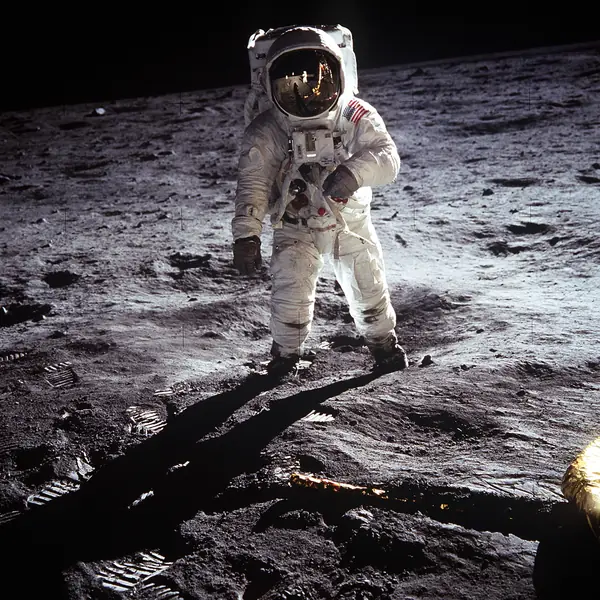
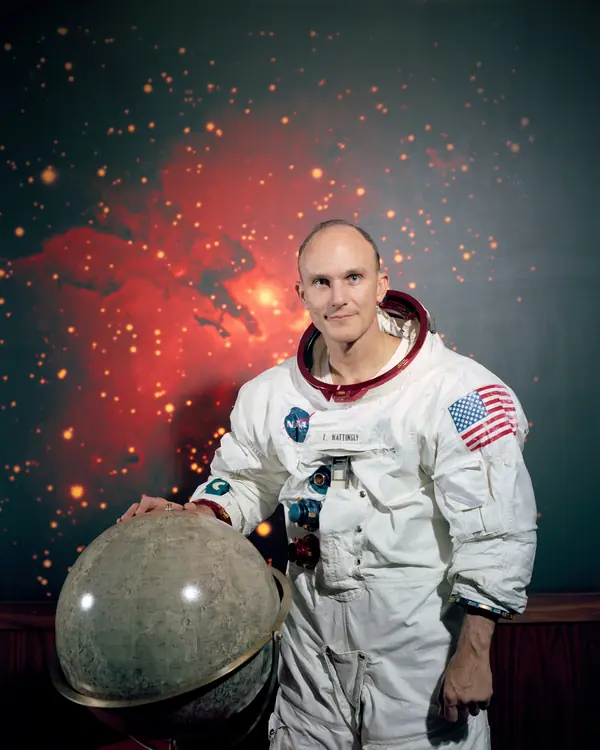
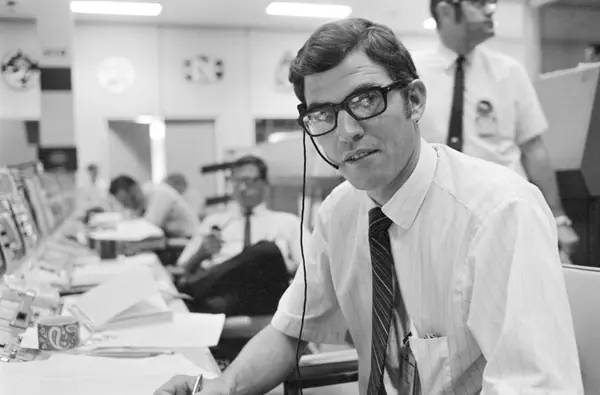
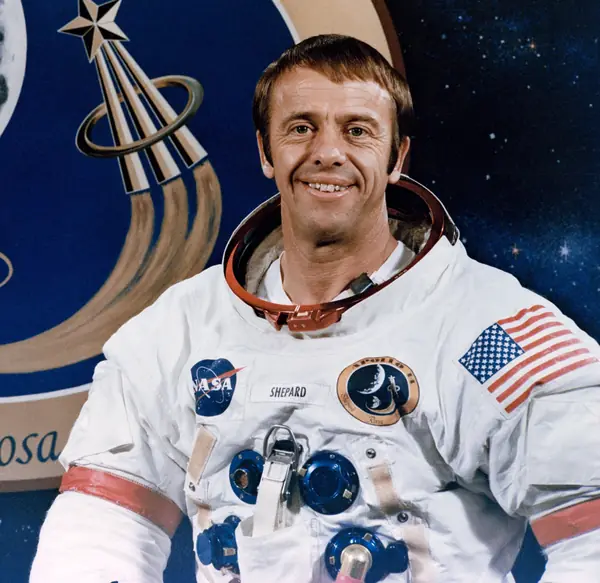
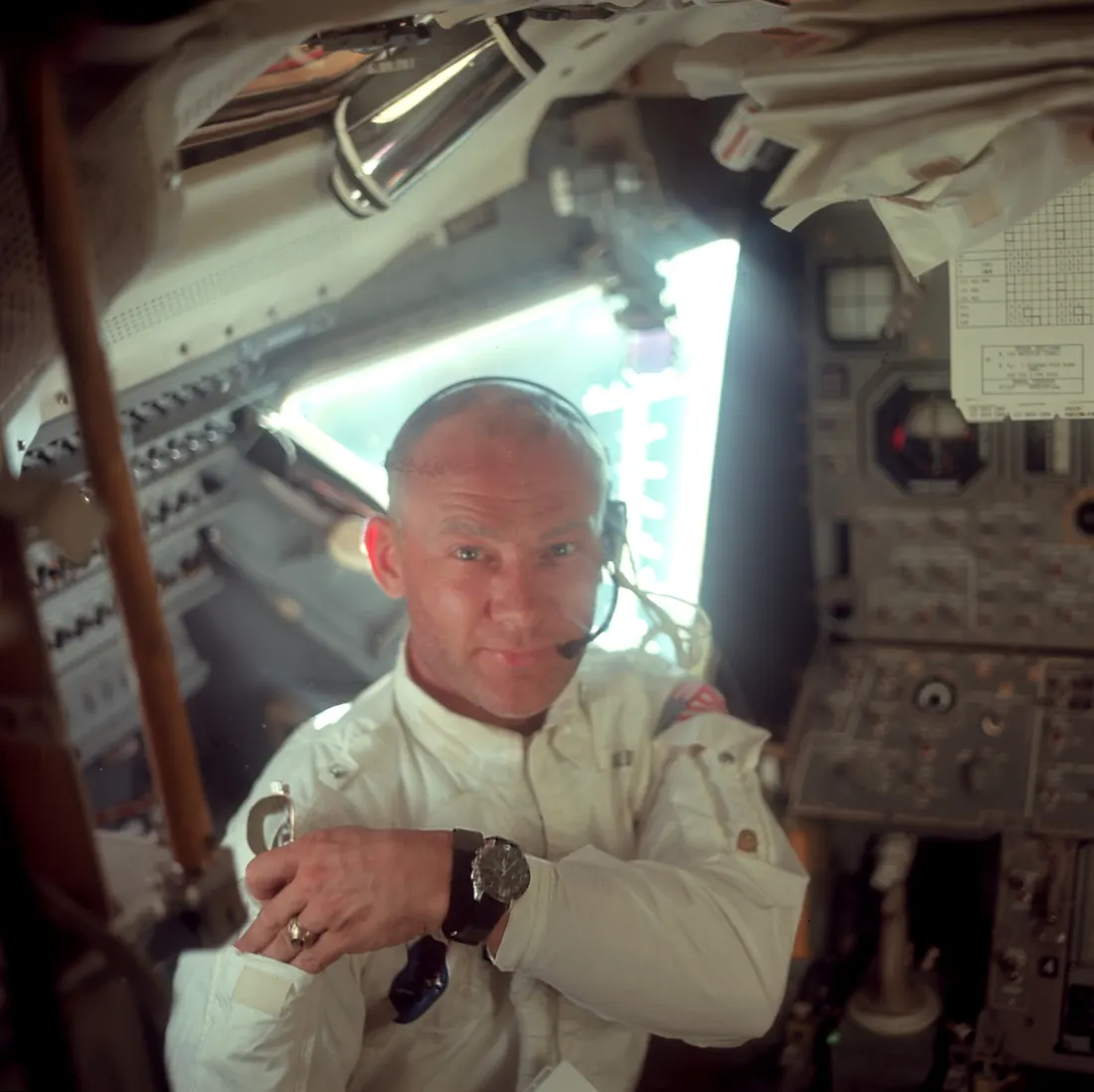
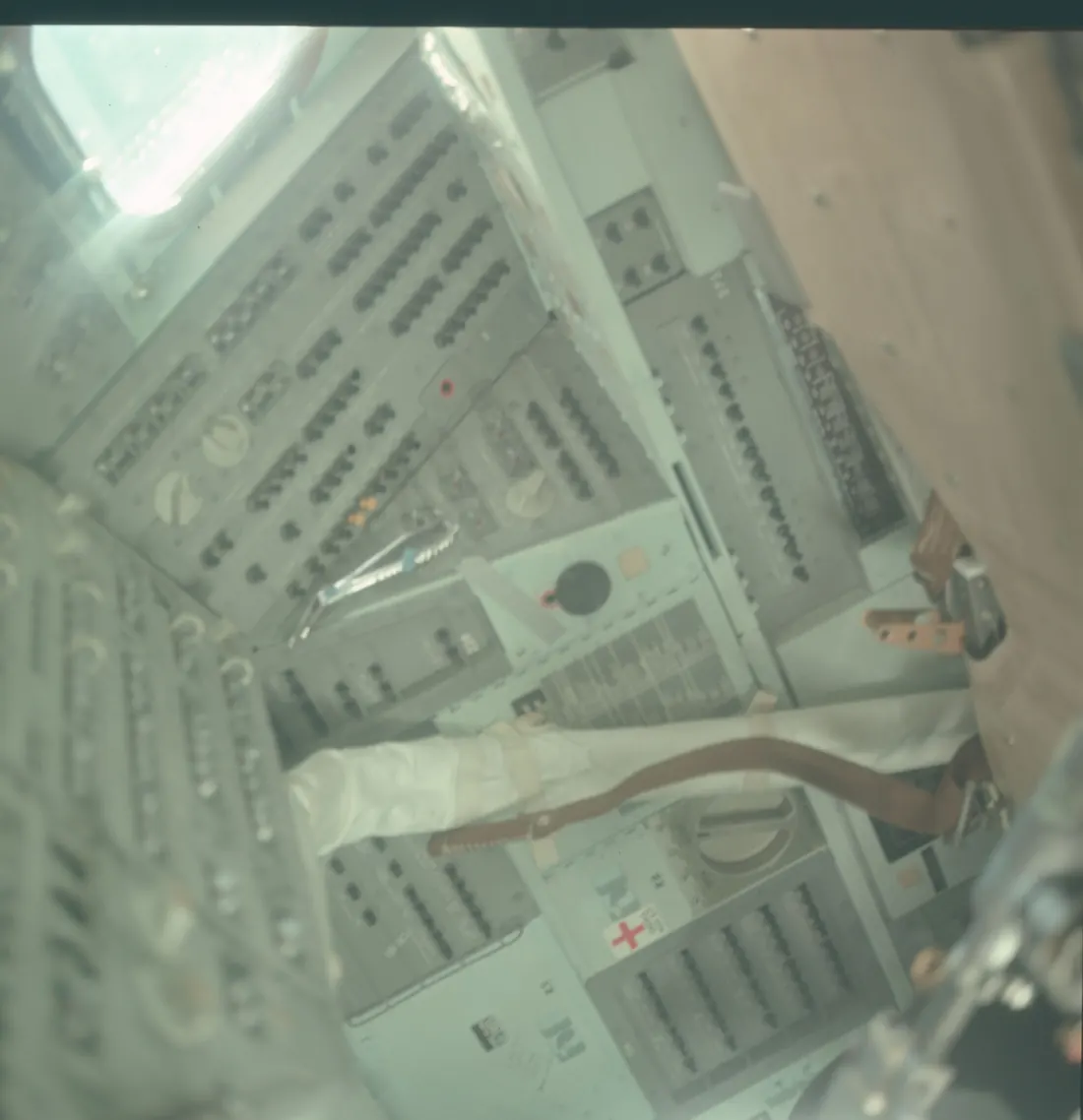
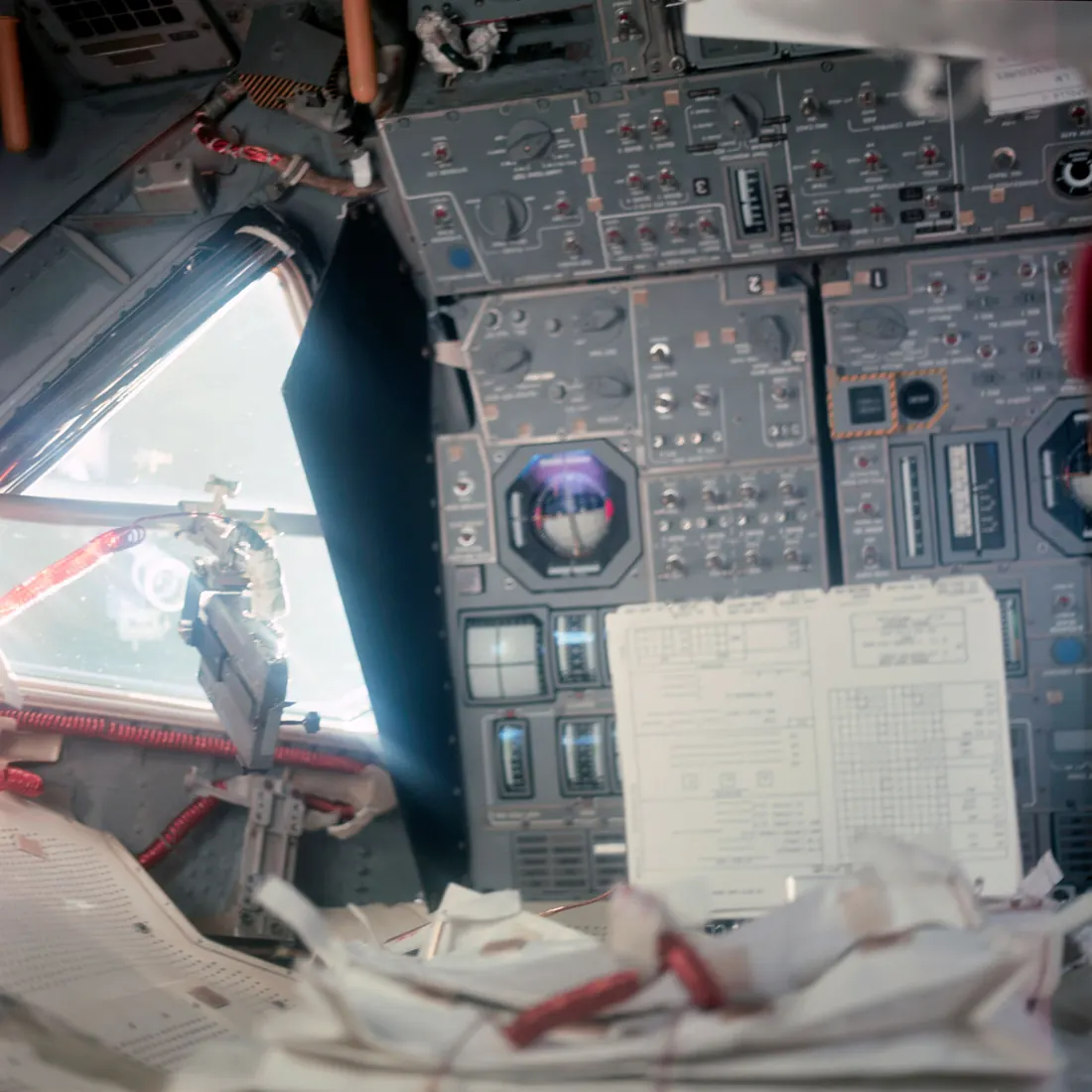
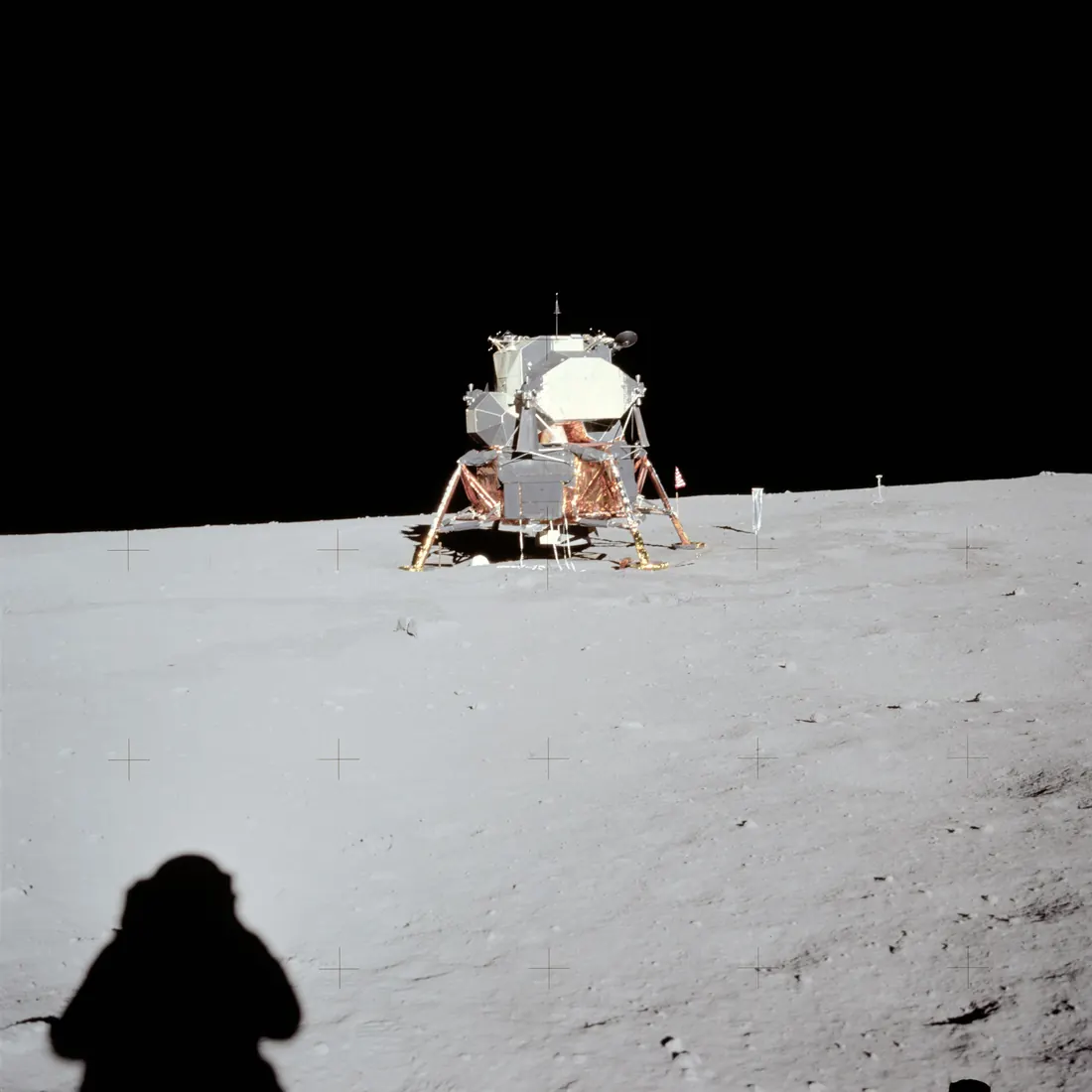
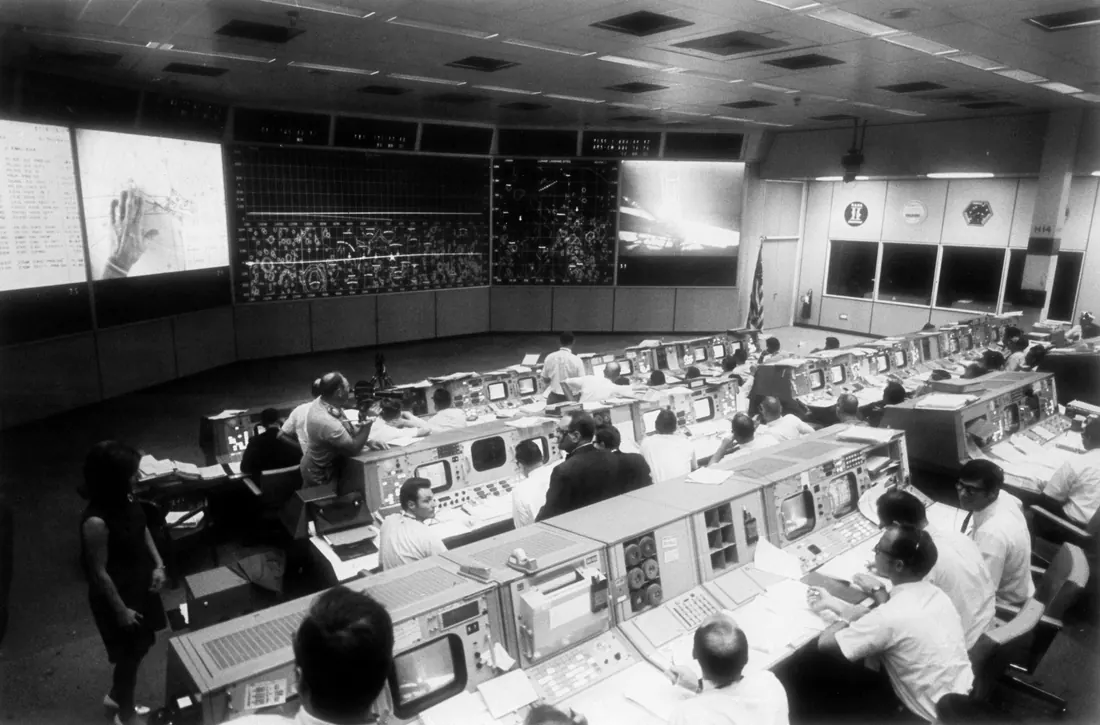
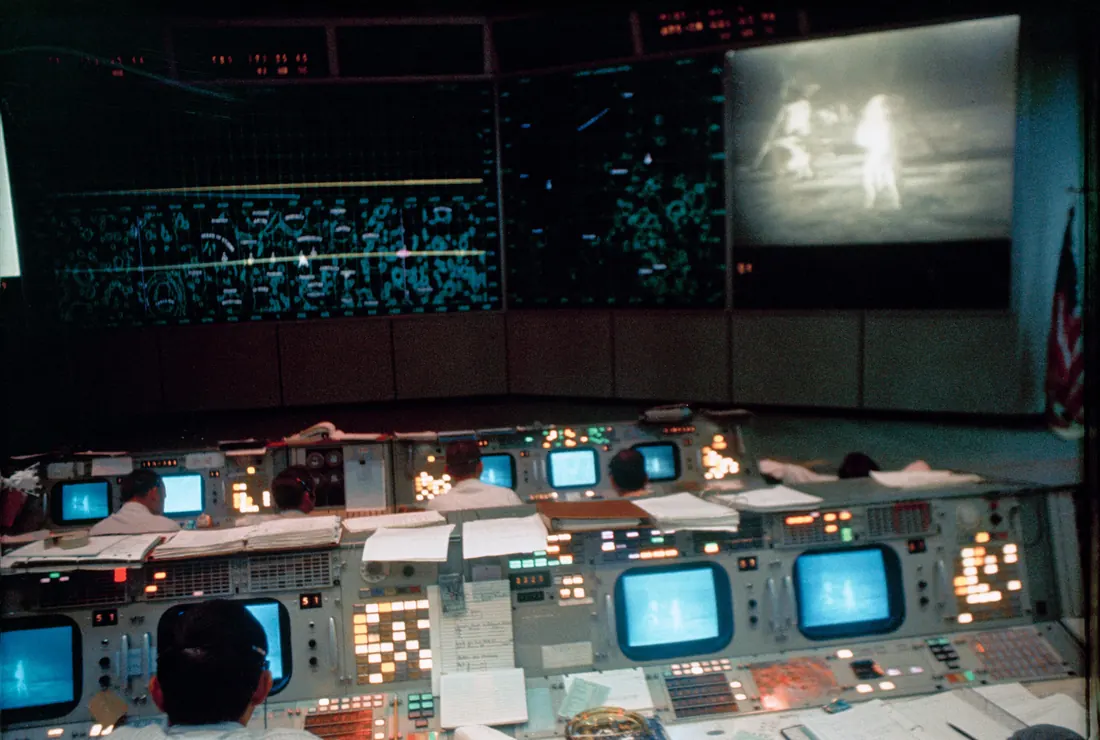
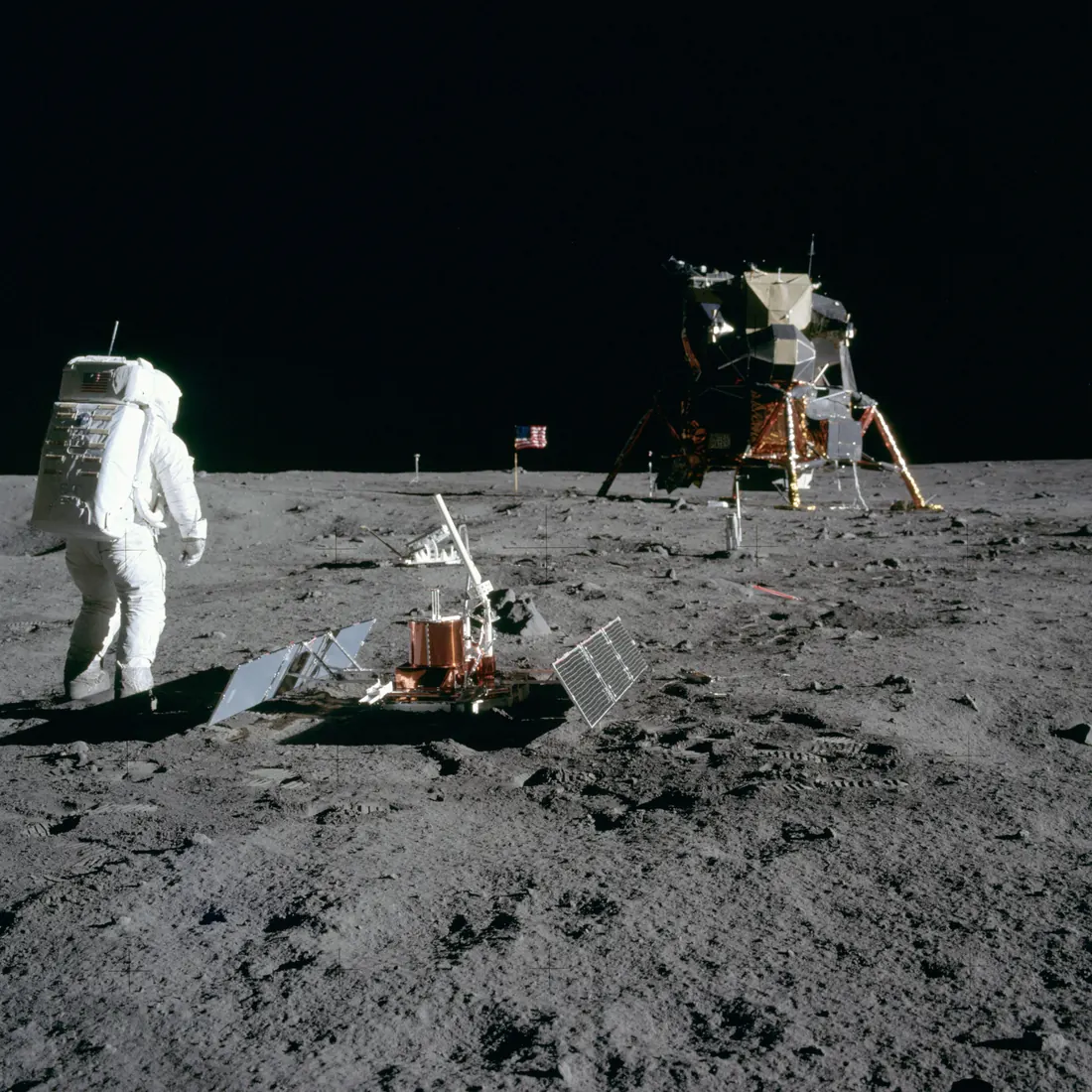
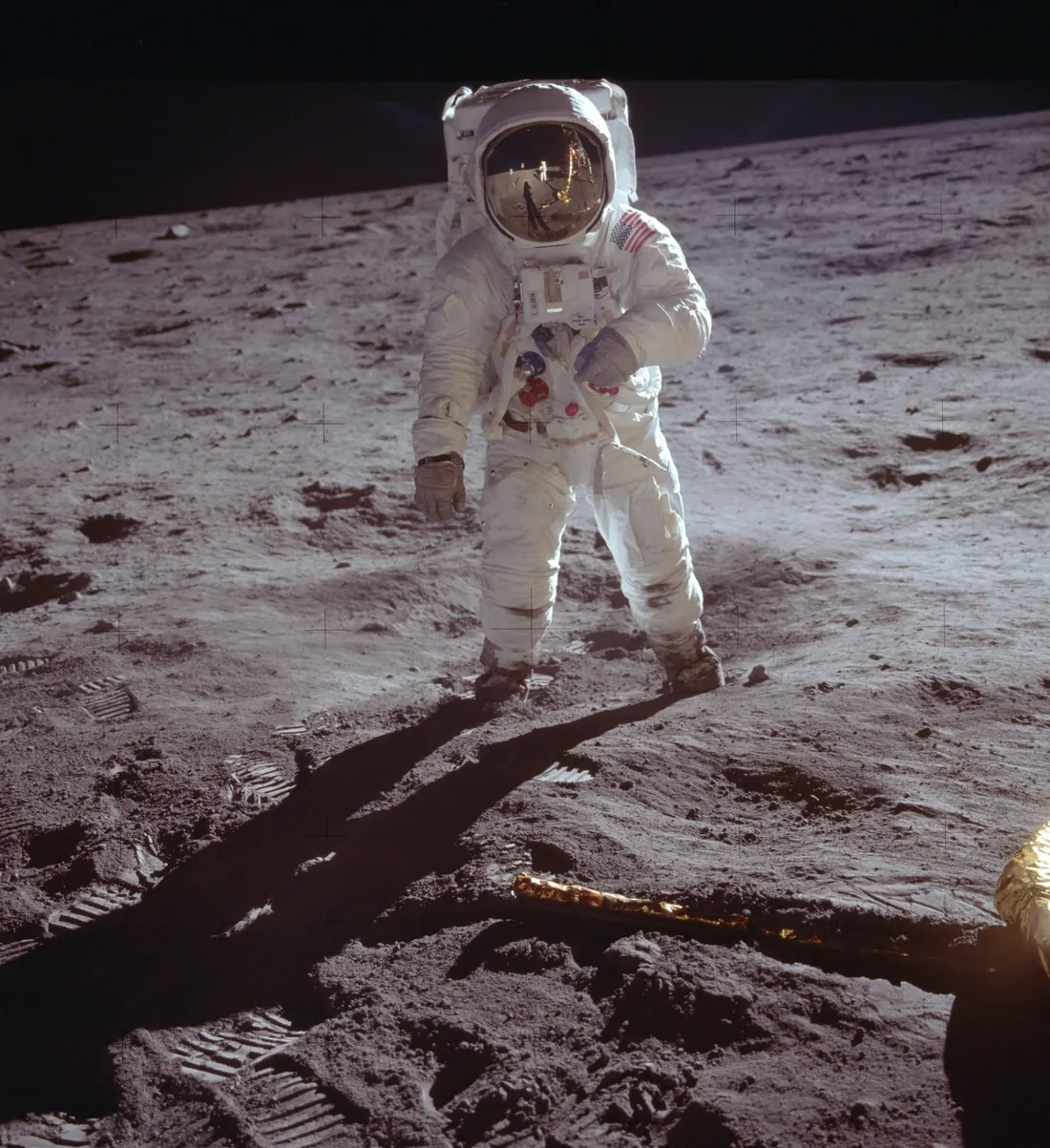
Pictures: all are NASA Apollo 11 photos in the public domain, except the 2019 portrait, an official White House photo. No free photo shows the pen or the broken switch. Buzz Aldrin is inside Eagle’s cabin in a photo Neil Armstrong took before the landing, not when he found the switch; inside Eagle after the moonwalk; on the Moon in Armstrong’s visor photo of July 20, 1969; and beside the seismometer with Eagle behind him, also photographed by Armstrong that day. Eagle stands at Tranquility Base with Armstrong’s shadow in front, July 20, 1969. Eagle’s circuit-breaker panels and its displays and controls were photographed in the cabin before the landing; they show the real cabin, not the broken switch. Mission Control in Houston is seen during the moonwalk on July 20, 1969, not during the night after it. Eagle’s ascent stage rising to meet Columbia, with the Earth on the horizon, was photographed by Michael Collins on July 21, 1969. Buzz Aldrin is also in an official White House photo of February 5, 2019. The other people in these photos are not named.
Photo credits
The archive photos in this story
All the photographs and illustrations in this story are in the public domain. Tap one to enlarge it, or follow the link to its Wikimedia Commons page for the full record. The narration, captions and graphics in the Short are our own; its music and sound effects are credited below.


Music and sound effects
Music: Schumann, Kinderszenen, Op. 15: No. 1 'Of Foreign Lands and Peoples' (Musopen, public domain); Mussorgsky, Pictures at an Exhibition: IV. Bydlo (piano) (Musopen, public domain); Dvorak, Symphony No. 9 'From the New World': II. Largo (Musopen, public domain).
Sound effects: Freesound, CC0.