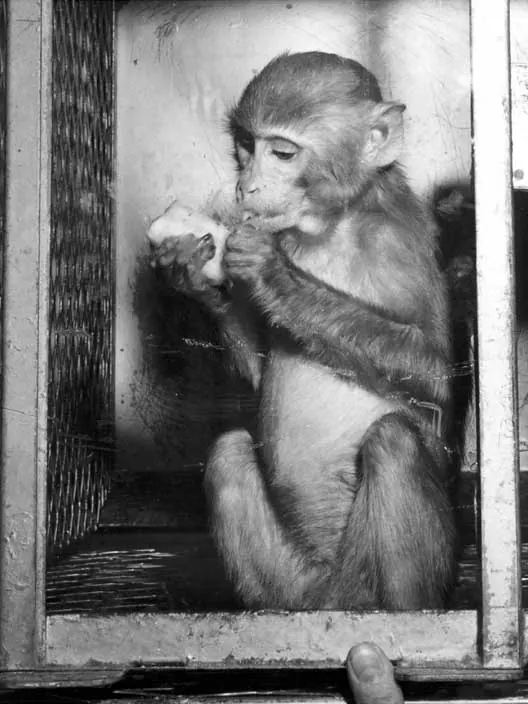
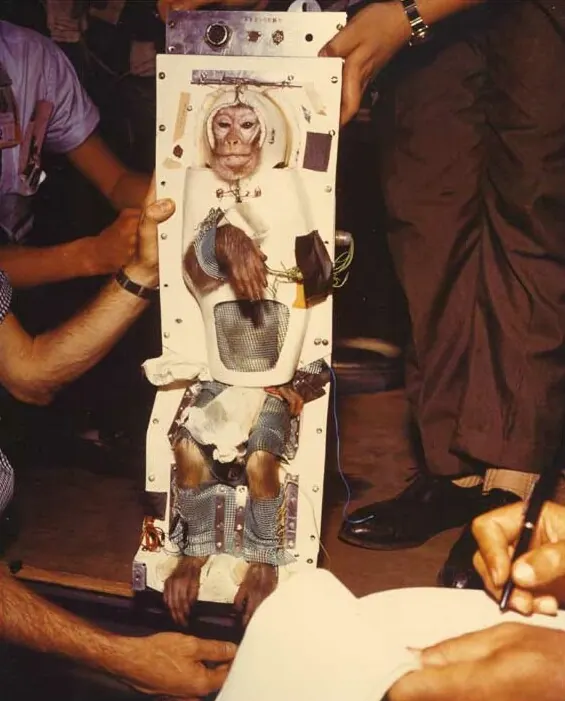
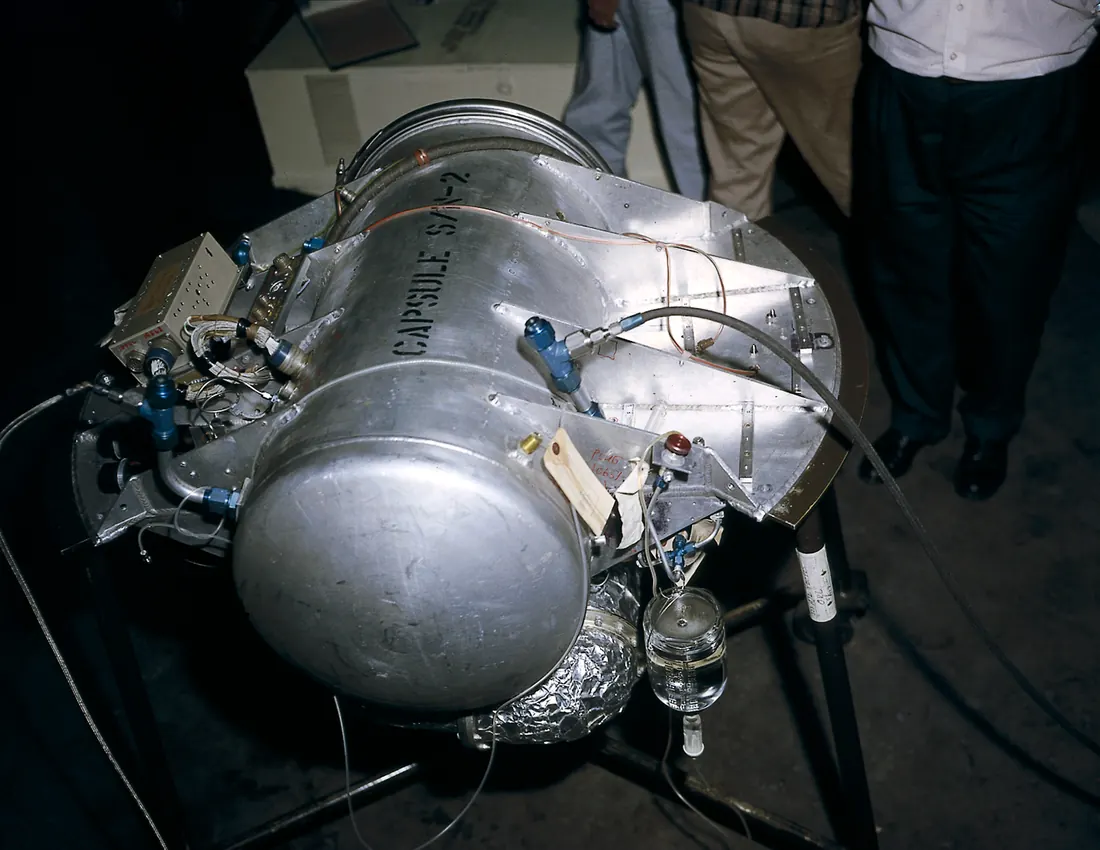
“Able, an American-born rhesus monkey, and Baker, a South American squirrel monkey, followed on May 28, 1959, aboard an Army Jupiter missile,” NASA History says. “This is Able, a preserved female rhesus monkey. Born in Independence, Kansas,” the Smithsonian’s National Air and Space Museum says; Guinness World Records calls her “a seven-pound female rhesus monkey” and Baker “a one-pound female squirrel monkey.” Baker’s capsule surprised the captain of the recovery ship, NPR reported: “It was about the size of a large thermos bottle,” he said.
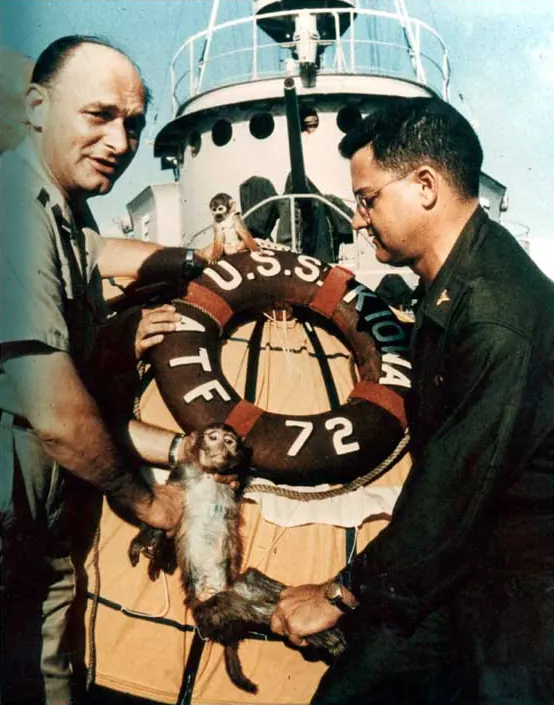
Before them, NPR says, “For over a decade, all monkey flights failed for one reason or another,” and “One monkey mission saw the animals return home safely, but their vehicle hadn’t traveled high enough for them to actually reach space.” This time, “Launched in the nose cone, the two animals were carried to a 300-mile altitude, and both were recovered unharmed.” “Launched from Cape Canaveral, they reached a maximum altitude of 300 miles,” the Smithsonian says, “at speeds reaching 10,000 mph.” At sea, “a lookout spotted the nose cone bobbing in the water, and they struggled to get it on board. Military personnel on the ship checked on the monkeys and then sent out a message: ‘Able Baker perfect. No injuries or other difficulties.’”
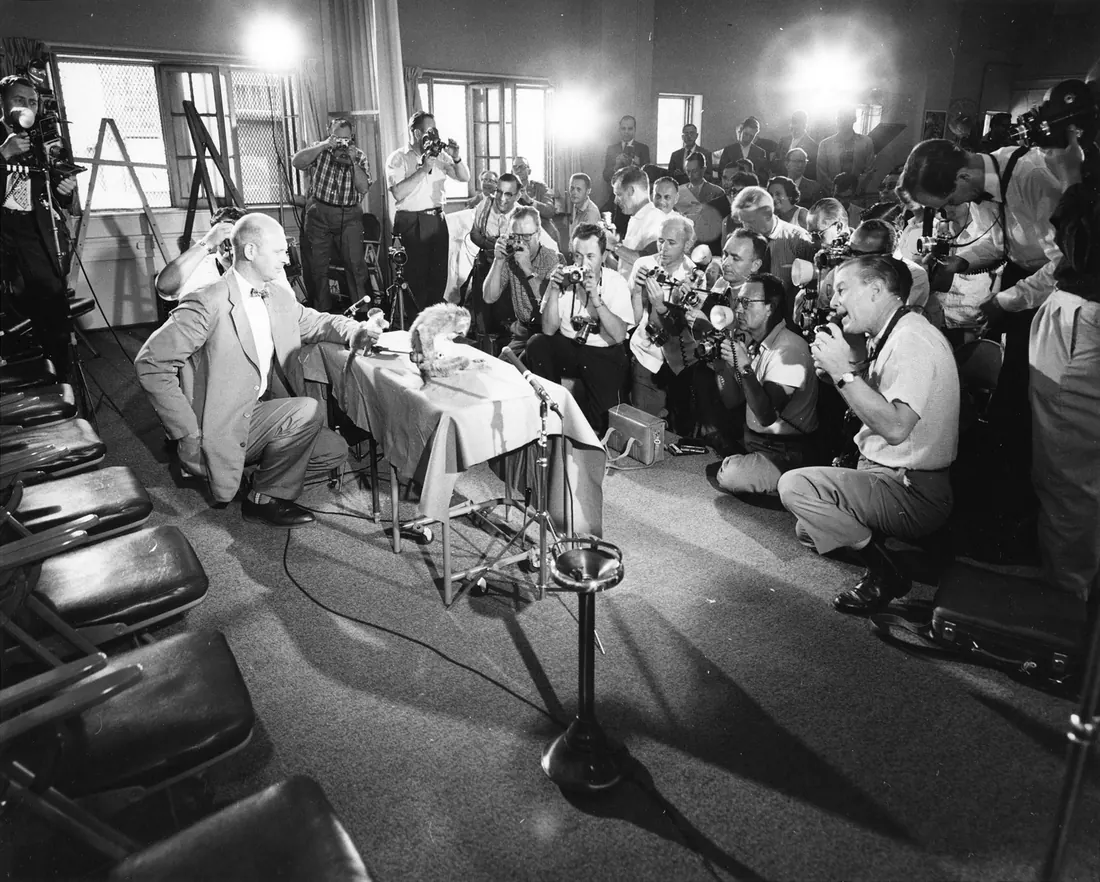
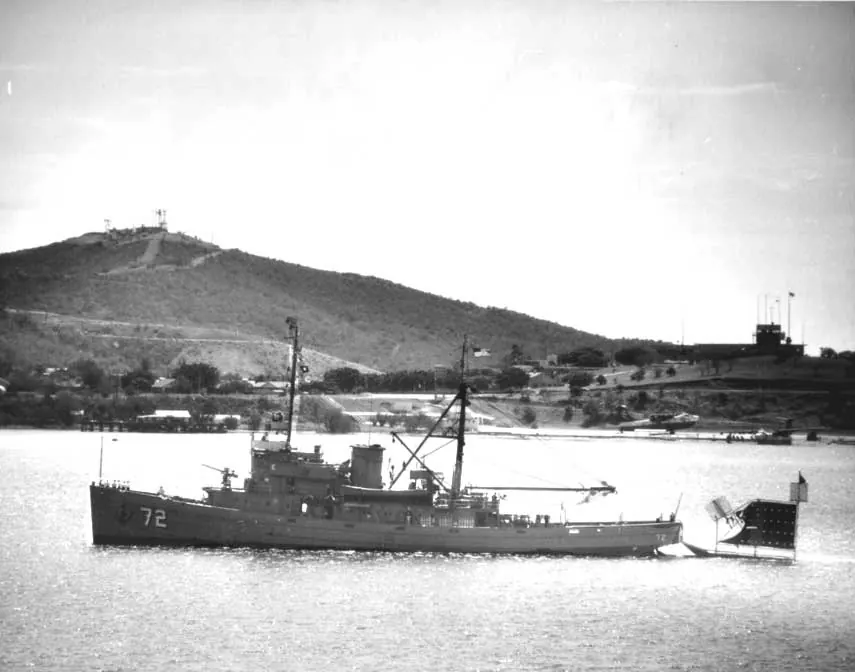
“After recovery by the naval ship USS Kiowa, the primate space travelers were reported as unhurt and in good spirits.” “After recovery, the two monkeys were flown to Washington, DC for a press conference, where they were treated like celebrities,” and there, news correspondents “pushed each other and clambered over chairs to get closer,” The New York Times reported.
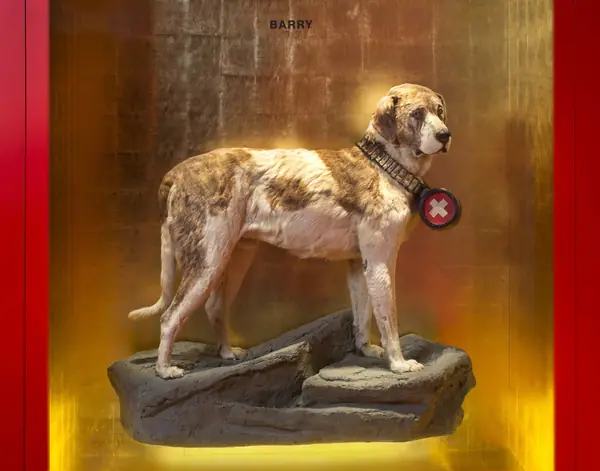
Then Able “was having an Electroencephalography (EED) electrode removed, a routine procedure,” the Smithsonian says. “While under the anesthesia, her heart abruptly stopped. Extensive measures were taken to save her, to no avail.” NASA History says, “Able died June 1 on the operating table from effects of anesthesia”; in the Smithsonian’s words, “Able died on the operating table at Armored Medical Research Laboratory (AMRL) in Fort Knox just four days after her space flight.” “The Army transferred Able to NASM in 1960 and the National Museum of Natural History preserved her.”
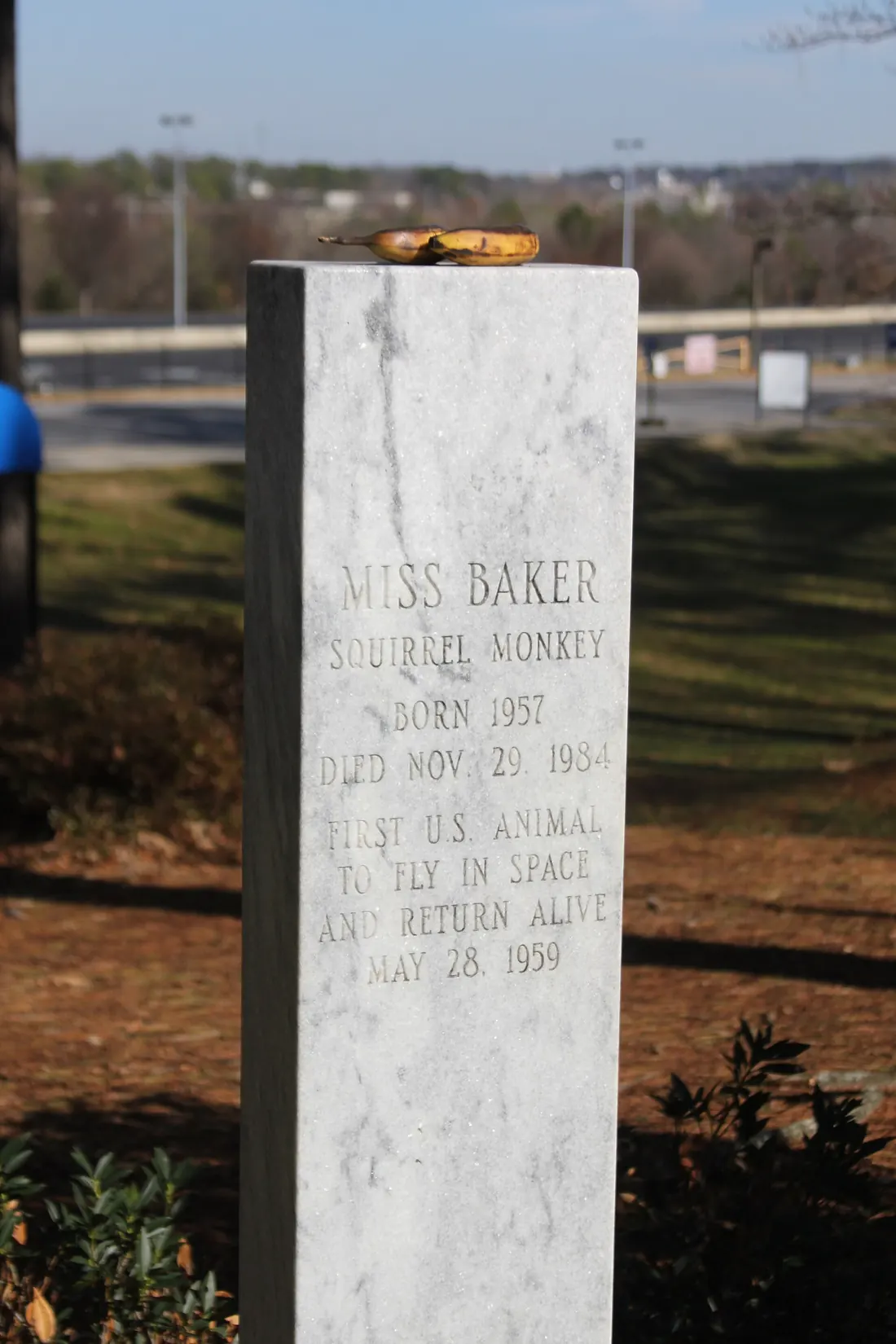
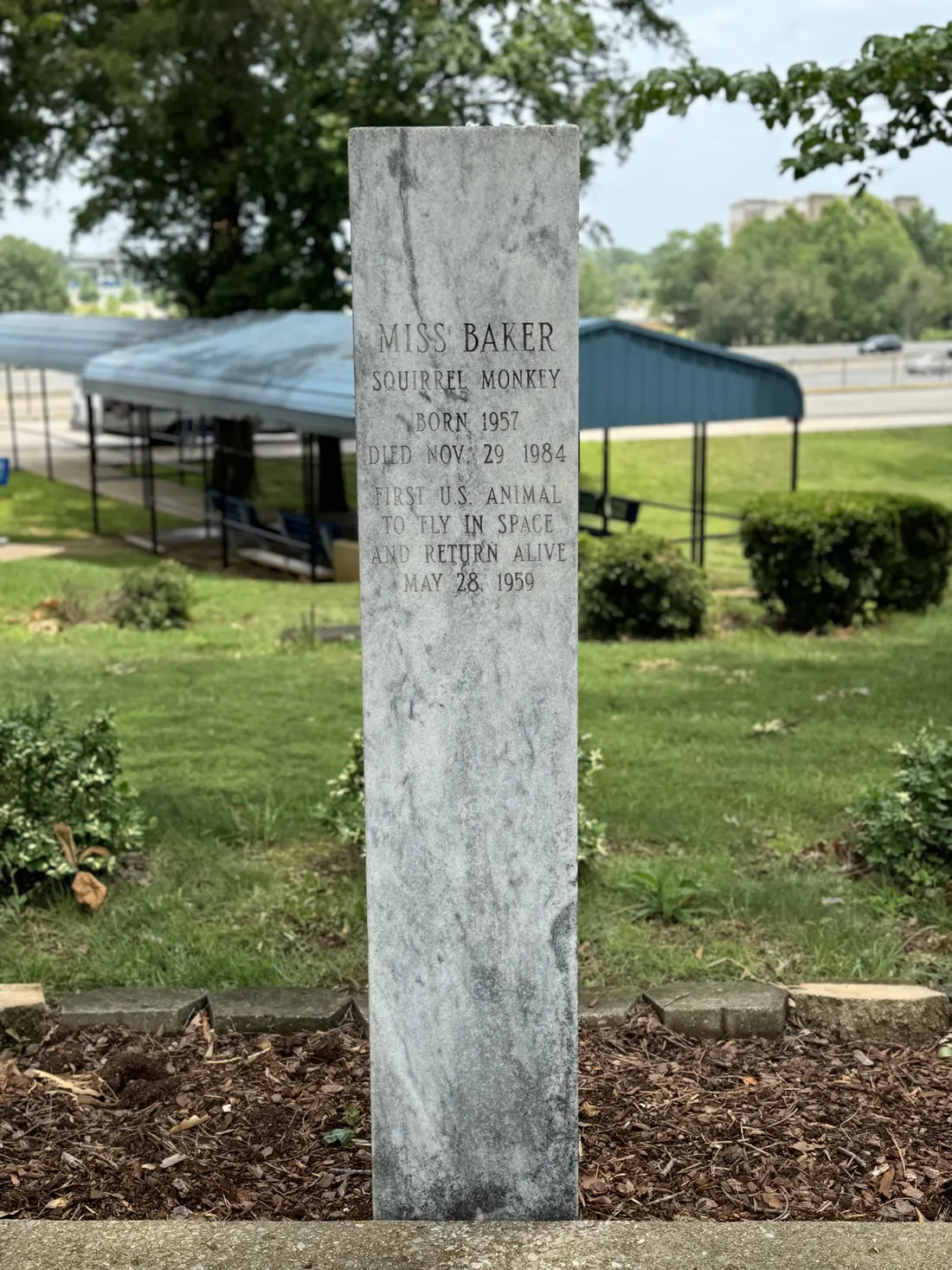
Baker lived on. “She would get 100 to 150 letters a day from schoolchildren,” Ed Buckbee, a former director of the center, told NPR. “Baker died of kidney failure in 1984 at age 27,” NASA History says, and by then, Yellowhammer News says, “she had already set a world record for the longest living squirrel monkey known to exist.” “More than 300 people attended Baker’s funeral service,” and “She is buried on the grounds at the U.S. Space & Rocket Center.” In Huntsville, NPR wrote in 2009, “instead of flowers, people sometimes leave bananas,” and in 2024 Yellowhammer News reported that “visitors continue to leave bananas on the monument that marks her grave today.”
Fact check
The facts and where they come from
- These two monkeys came back from space alive, but four days later, one was dead. NASA History: “Launched in the nose cone, the two animals were carried to a 300-mile altitude, and both were recovered unharmed.” The Smithsonian: “Both monkeys survived the trip well, but Able died from the anesthesia during a routine post-flight operation”; “Able died on the operating table at Armored Medical Research Laboratory (AMRL) in Fort Knox just four days after her space flight.” 123
- Their names were Able and Baker. Guinness World Records: “The first monkeys to survive a space flight were Miss Able and Miss Baker, a rhesus and a tiny squirrel monkey, on 28 May 1959.” 51
- Every monkey sent into space before them had died. NPR: “For over a decade, all monkey flights failed for one reason or another”; “One monkey mission saw the animals return home safely, but their vehicle hadn’t traveled high enough for them to actually reach space.” Wikipedia: Gordo, in December 1958, “was killed due to mechanical failure of the parachute recovery system.” 412
- Able was a rhesus monkey, born in Kansas. The Smithsonian: “This is Able, a preserved female rhesus monkey. Born in Independence, Kansas.” Kansas Historical Society: “Able was a rhesus monkey born in the Ralph Mitchell Zoo in Independence, Kansas.” 29
- Baker was a squirrel monkey who weighed one pound. Guinness World Records: “South American-born Miss Baker was a one-pound female squirrel monkey.” Wikipedia gives her weight as “1 pound (0.45 kg).” 510
- Her capsule was the size of a thermos bottle. NPR: the captain of USS Kiowa “was floored to see how tiny Baker’s capsule was. ‘It was about the size of a large thermos bottle,’ he says.” 4
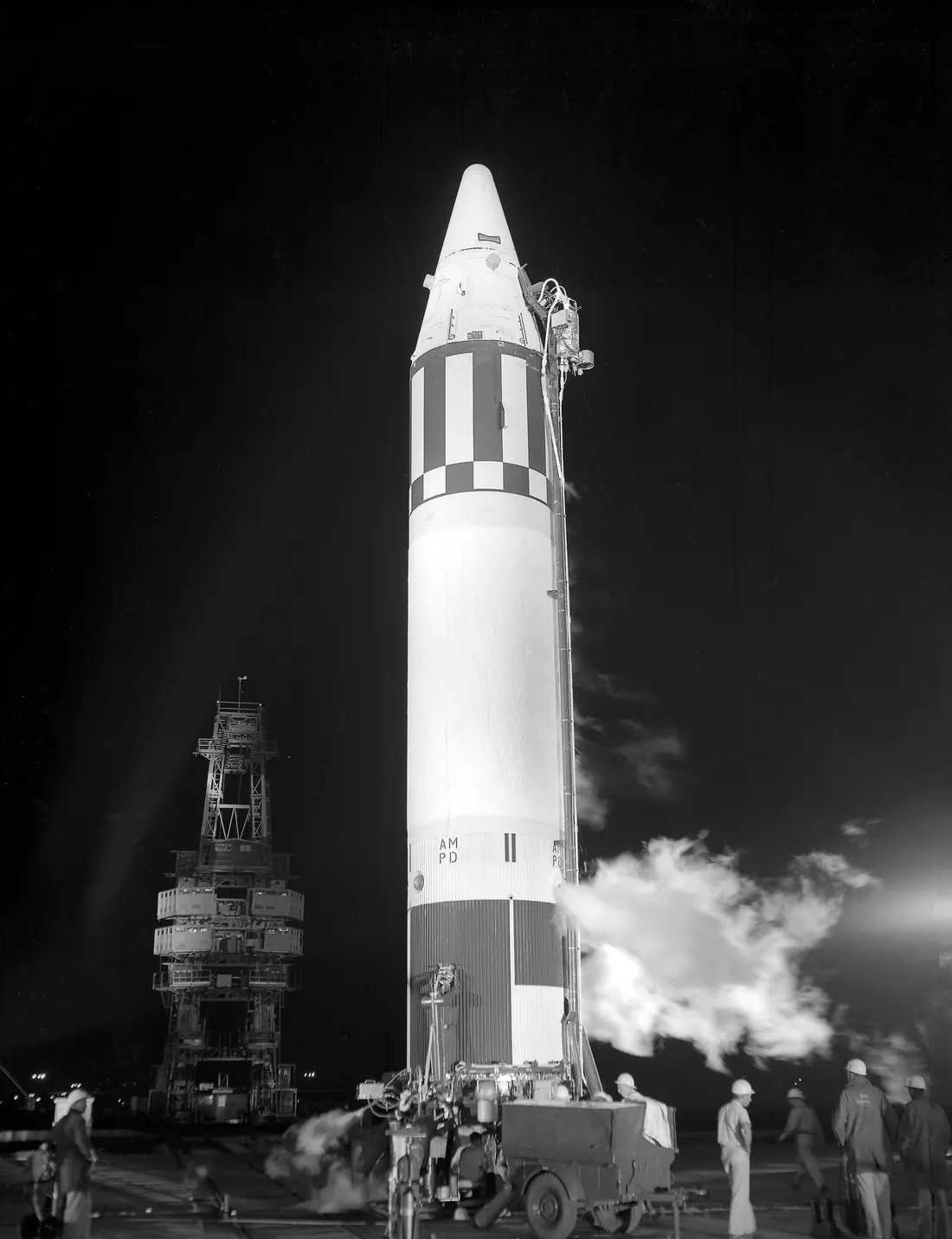
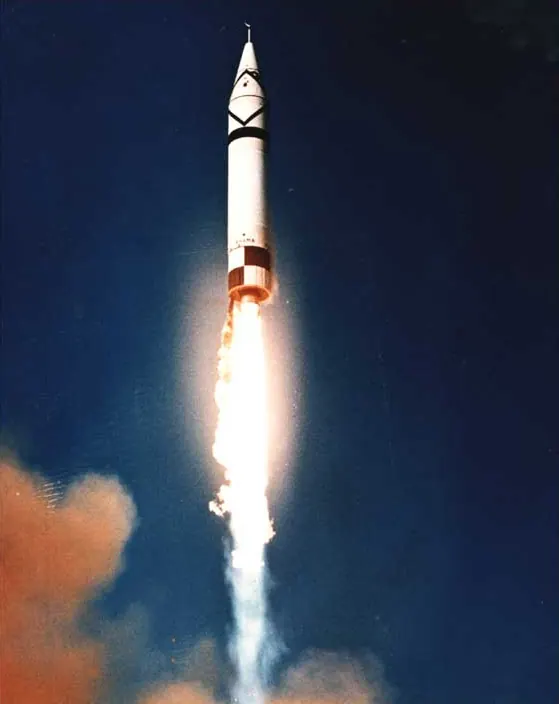
- In May 1959, a Jupiter missile blasted them 300 miles up. NASA History: “followed on May 28, 1959, aboard an Army Jupiter missile. Launched in the nose cone, the two animals were carried to a 300-mile altitude.” The Smithsonian: “Launched from Cape Canaveral, they reached a maximum altitude of 300 miles.” 12
- A Navy ship pulled them from the sea and sent word: Able Baker perfect. NPR: “a lookout spotted the nose cone bobbing in the water, and they struggled to get it on board. Military personnel on the ship checked on the monkeys and then sent out a message: ‘Able Baker perfect. No injuries or other difficulties.’” The Smithsonian: “After recovery by the naval ship USS Kiowa, the primate space travelers were reported as unhurt and in good spirits.” 43
- Reporters climbed over chairs to see them. NPR: “at a press conference, news correspondents ‘pushed each other and clambered over chairs to get closer,’ reported The New York Times.” The Smithsonian: “After recovery, the two monkeys were flown to Washington, DC for a press conference, where they were treated like celebrities.” 43
- Then Able had a routine operation, to remove an electrode. The Smithsonian: “She was having an Electroencephalography (EED) electrode removed, a routine procedure.” NASA History: “as doctors were about to remove an electrode from under her skin.” 31
- Under the anesthetic, her heart stopped. The Smithsonian: “While under the anesthesia, her heart abruptly stopped. Extensive measures were taken to save her, to no avail.” Wikipedia: “Able died four days after the flight from a highly unusual cardiac fibrillation in reaction to anesthesia to remove electrodes.” 310
- Her body went to the Smithsonian. The Smithsonian: “The Army transferred Able to NASM in 1960 and the National Museum of Natural History preserved her.” 2
- Baker lived to 27, a record for a squirrel monkey. NASA History: “Baker died of kidney failure in 1984 at age 27.” Yellowhammer News: “she had already set a world record for the longest living squirrel monkey known to exist.” The Smithsonian: “making her the oldest living squirrel monkey in captivity.” 173
- Children sent her up to 150 letters a day. NPR: “‘She would get 100 to 150 letters a day from schoolchildren,’ says Ed Buckbee, a former director of the center.” 4
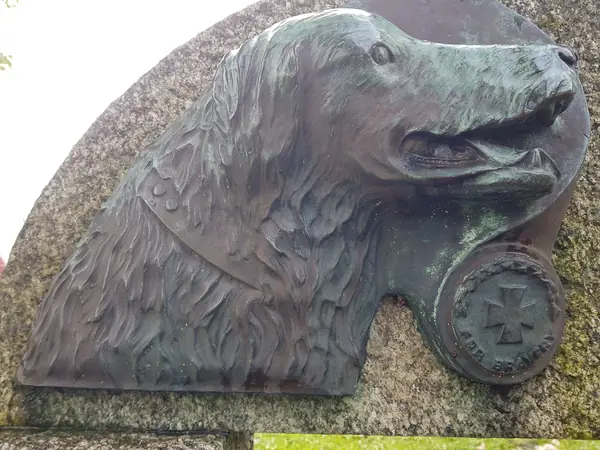
- On her grave, instead of flowers, people still leave bananas. NPR (2009): “In Huntsville, Ala., there is an unusual grave site where, instead of flowers, people sometimes leave bananas.” WAFF (2023): “Her gravestone sits outside of the U.S. Space and Rocket Center where people often leave flowers and bananas.” Yellowhammer News (2024): “visitors continue to leave bananas on the monument that marks her grave today.” 487
Sources
- A Brief History of Animals in Space NASA History
- Monkey, Able (collection object A19840869000) Smithsonian National Air and Space Museum
- Blazing the Trail in Space (Elpers, June 25, 2014) Smithsonian National Air and Space Museum
- After 50 Years, Space Monkeys Not Forgotten (Greenfieldboyce, May 28, 2009) NPR
- First monkeys to survive a space flight Guinness World Records
- Able and Baker: The First Primates to Survive Spaceflight in Photos (Bartels, 2021) Space.com
- Miss Baker, Huntsville’s space pioneer, launched 65 years ago today (May 28, 2024) Yellowhammer News
- Meet Miss Baker, Huntsville’s first lady in space (Mahan, January 30, 2023) WAFF 48
- Able Kansas Historical Society (Kansapedia)
- Miss Baker Wikipedia
- Miss Able Wikipedia
- Monkeys and apes in space Wikipedia
Notes
“First”: Guinness World Records and Space.com call them the first monkeys to survive a space flight, and Baker’s gravestone reads “FIRST U.S. ANIMAL TO FLY IN SPACE AND RETURN ALIVE,” but NASA History calls Yorick, in 1951, “the first monkey to live through a space flight.” His flight reached 236,000 feet (72 km), below the 100 km line, and he died two hours after landing, so the page never says “first.”
Before them: in Wikipedia’s list, Albert II and Albert IV died in 1949 when their parachutes failed, and Gordo in December 1958; Yorick (1951) and Patricia and Mike (1952) came back alive from flights that stayed below space, and Yorick died two hours later. That is why the Short says every monkey sent into space before them had died.
Altitude: NASA and the Smithsonian say 300 miles; NPR, the Kansas Historical Society and Guinness World Records say about 360 or 359 miles. The page uses 300.
How Able died: the Smithsonian says her heart stopped under the anesthesia, and Wikipedia’s article on Miss Baker says cardiac fibrillation; Space.com and Wikipedia’s article on Miss Able say she stopped breathing, and the cause was never fully explained. The page follows the Smithsonian. Today the Smithsonian lists her as not on display.
Baker’s age: her stone says she was born in 1957, and she died on November 29, 1984; NASA gives her age as 27. Her record is the one she held when she died; it may have been beaten since. The bananas are reported by NPR (2009), the Smithsonian (2014), WAFF (2023) and Yellowhammer News (2024), and the 2011 photo shows one.
Left out: the monkey Able replaced shortly before the launch, Baker’s two “weddings” and the forces of the flight, which only one source gives. None is needed for this story. No children are shown; the people beside Baker in her enclosure were cropped out.
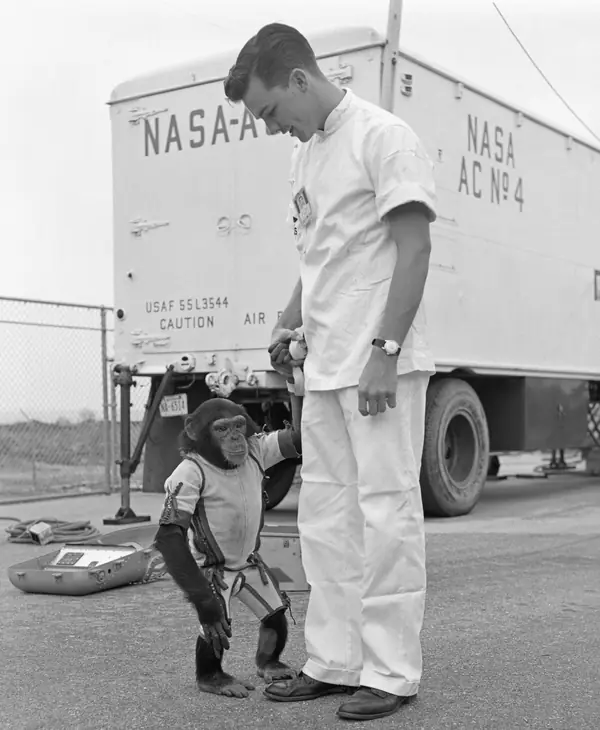
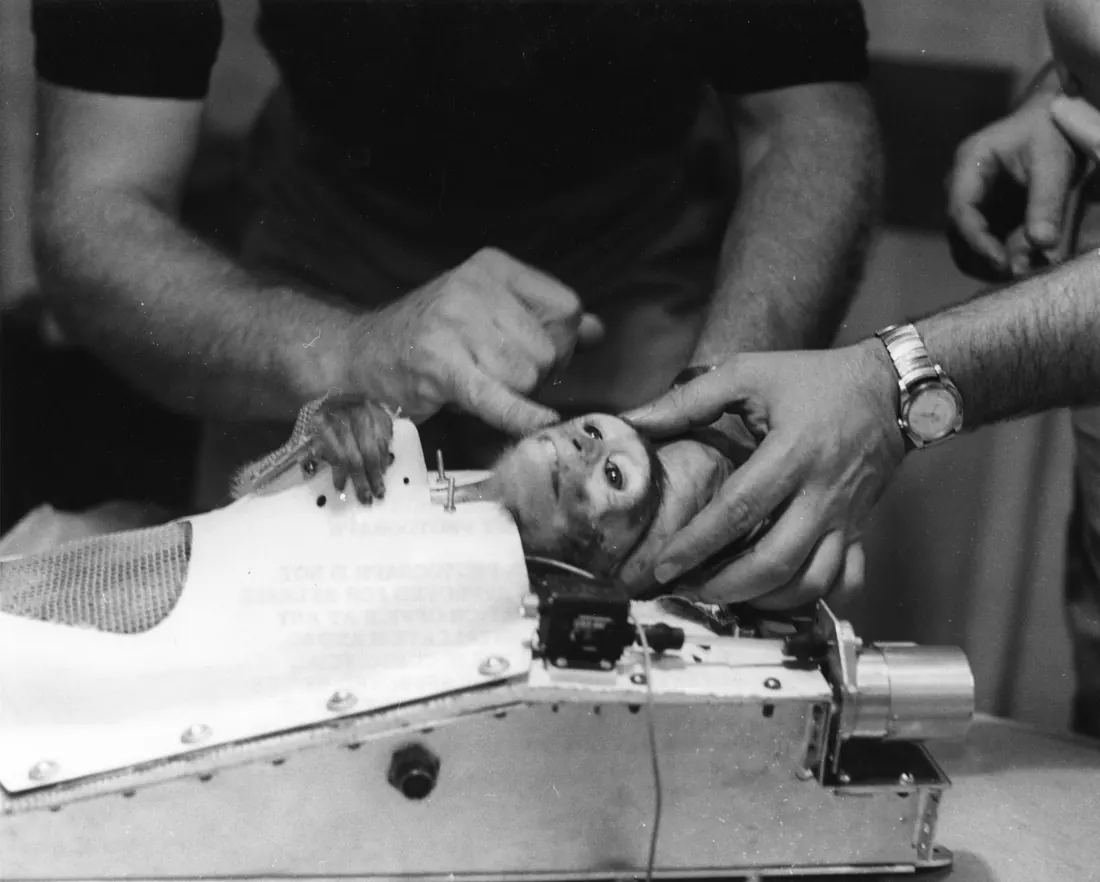
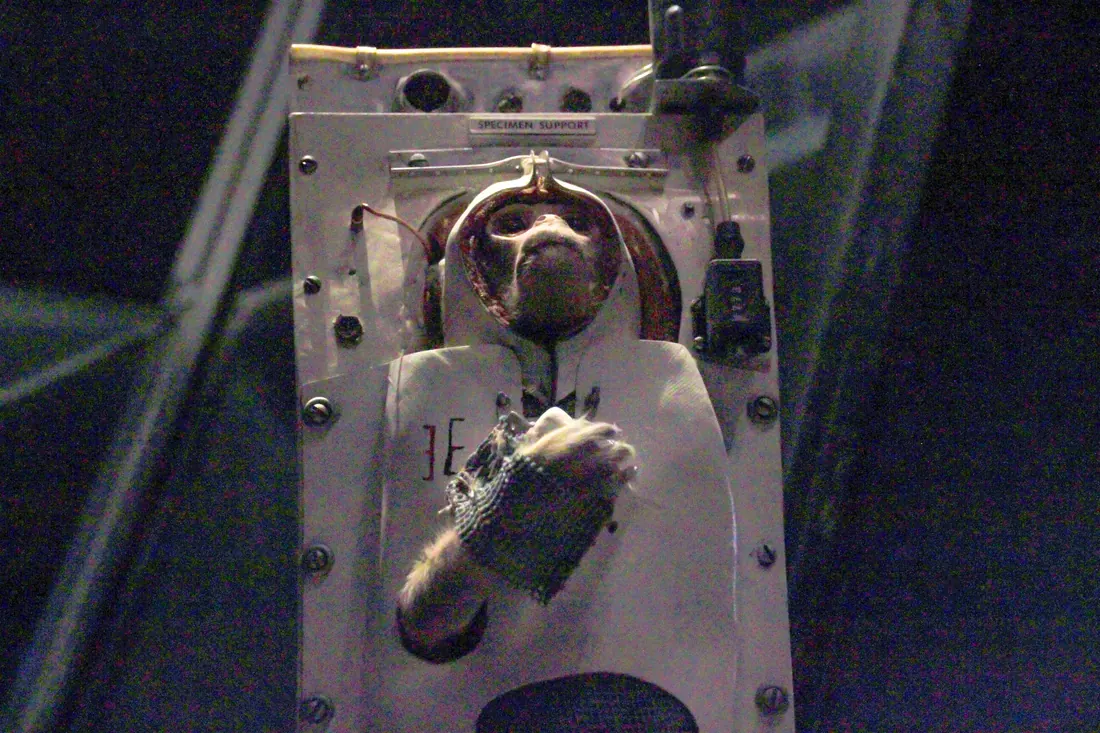
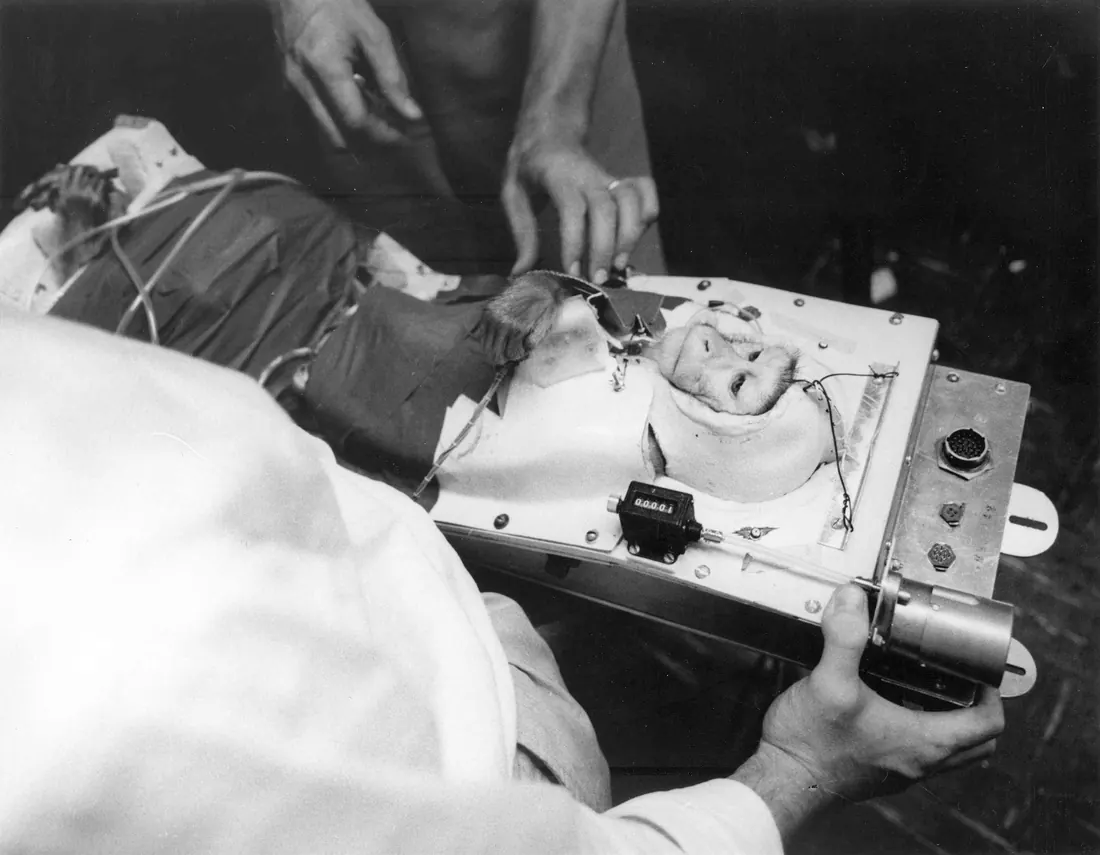
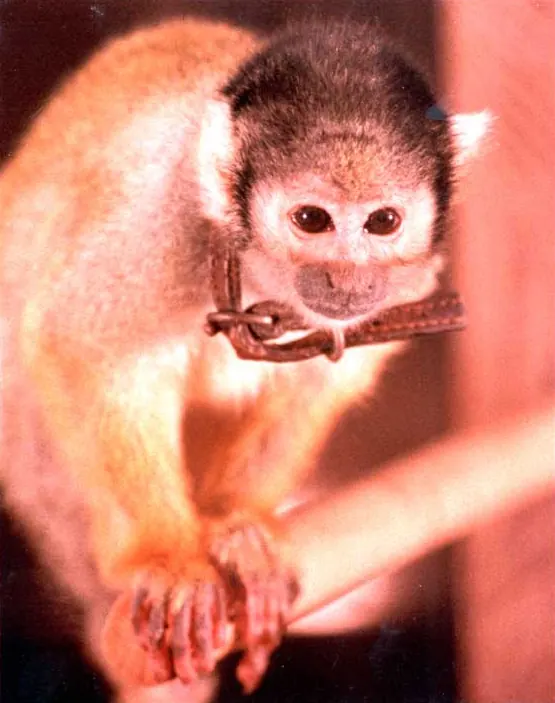
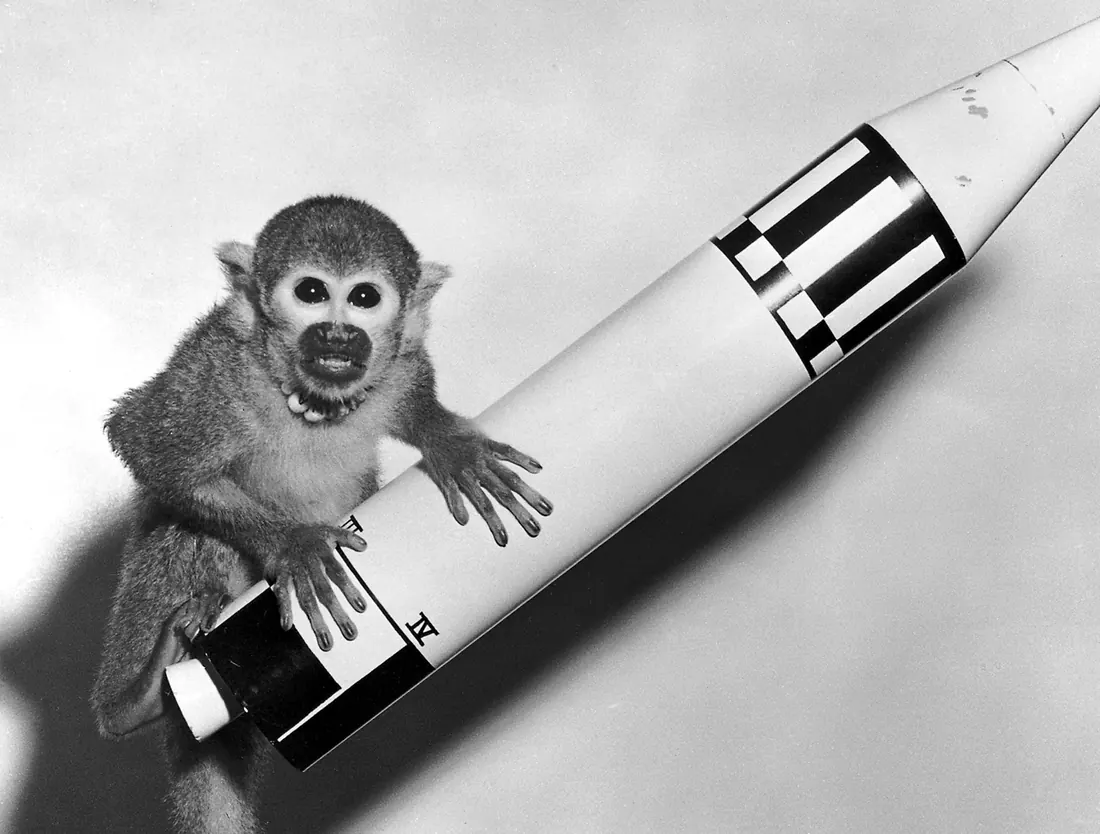
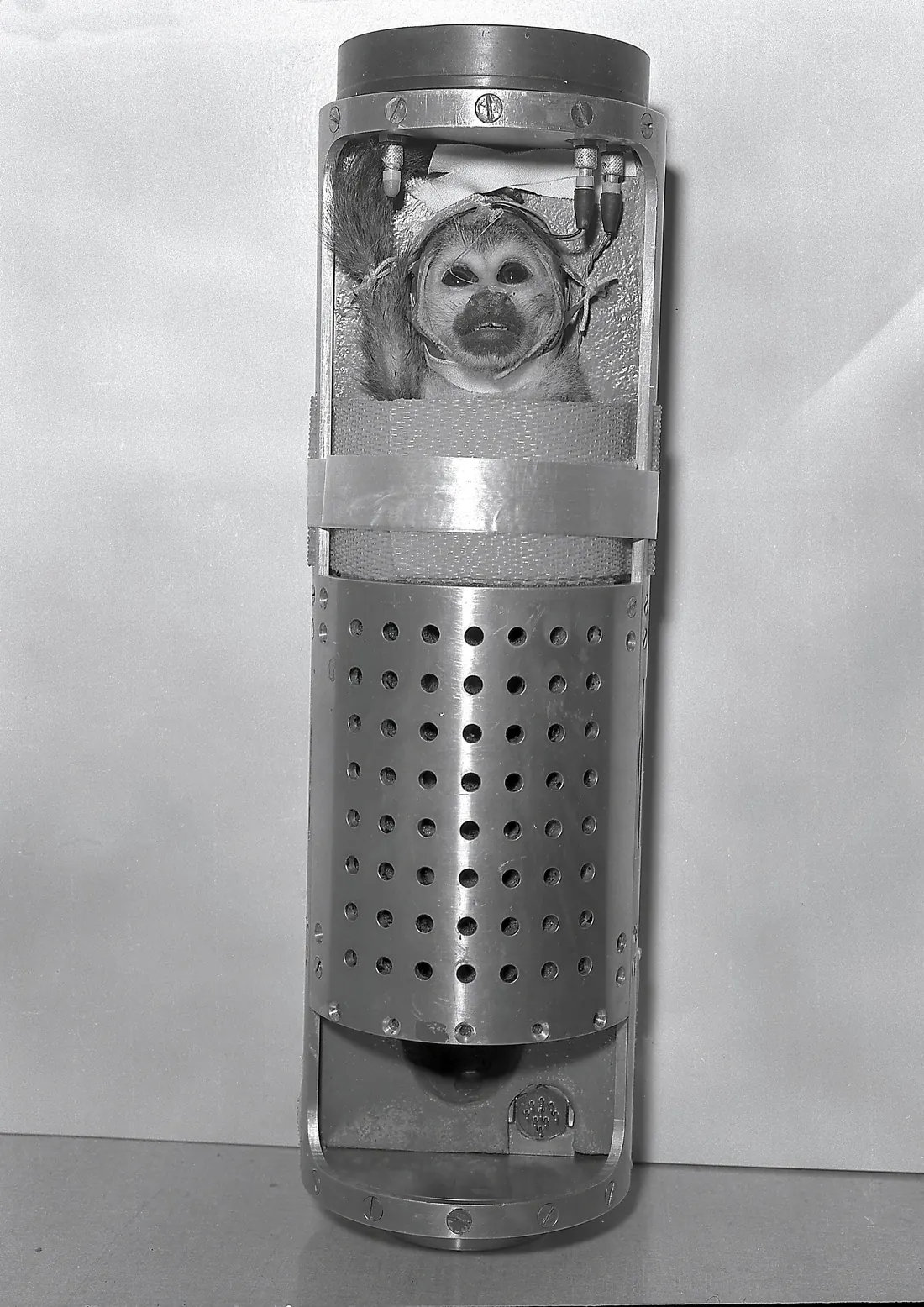
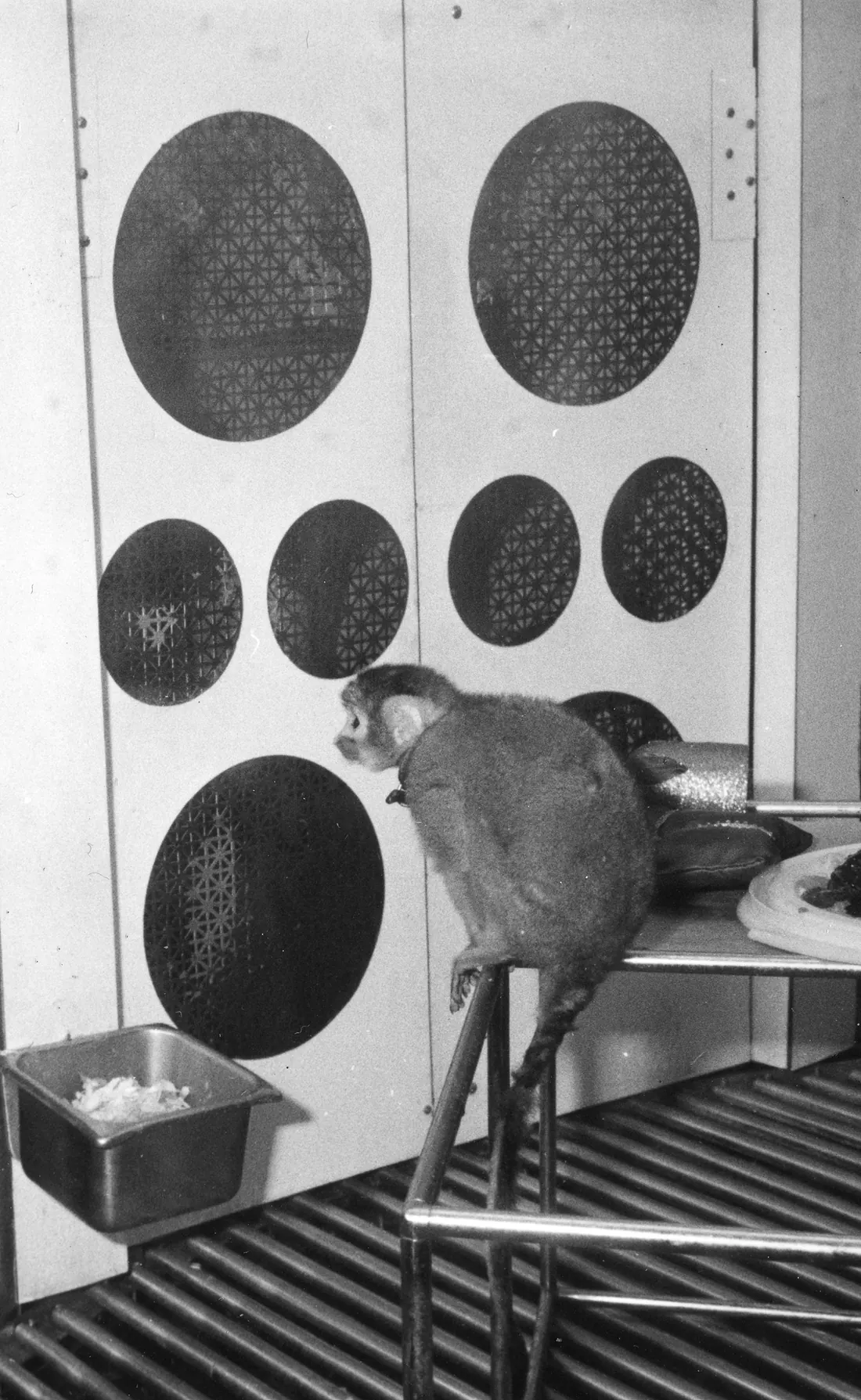
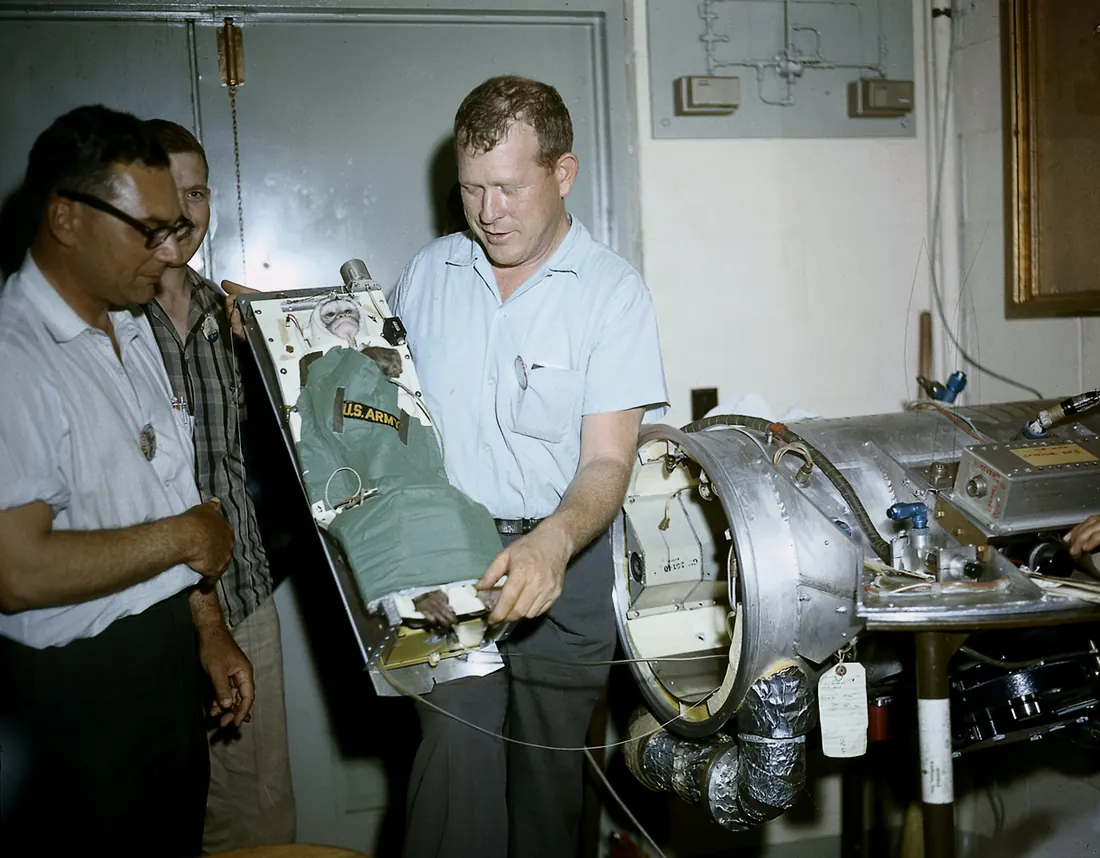
Pictures: the 1959 photos are US Army (Army Ballistic Missile Agency; Lt Cecil W. Stoughton) and NASA Marshall Space Flight Center photos, in the public domain. Able is shown just after she was released from her capsule after the flight on May 28, 1959; in her cage and in her flight couch in 1959; in her US ARMY jacket being readied for a capsule test on May 18, 1959; and being secured in her contour cradle before the launch. Baker is shown in 1959, on a model Jupiter on May 29, 1959, in her bio-pack capsule in May 1959, and in later life in her enclosure at the Space and Rocket Center (our crop of a NASA photo). Both monkeys are shown aboard USS Kiowa after the recovery, and at the press conference of May 30, 1959, where Donald Stullken introduced them; the other men are not named. The capsule is shown before it went into the nose cone, May 18, 1959, and the Jupiter AM-18 on the pad before the launch. The rocket in flight is an earlier Jupiter launch, not theirs, and USS Kiowa was photographed off Guantanamo Bay on February 27, 1963. Able’s preserved body was photographed at the National Air and Space Museum by William Pei Yuan in 2016, and Baker’s grave in Huntsville by James E. Scarborough on December 28, 2011, with a banana on top, and by Wcamp9 on June 2, 2024.
Photo credits
The archive photos in this story
The photographs and illustrations in this story are in the public domain or shared under open licenses; each one is credited below with its license. Tap one to enlarge it, or follow the link to its Wikimedia Commons page for the full record. The narration, captions and graphics in the Short are our own; its music and sound effects are credited below.
Music and sound effects
Music: Schumann, Kinderszenen, Op. 15: No. 1 'Of Foreign Lands and Peoples' (Musopen, public domain); Mussorgsky, Pictures at an Exhibition: IV. Bydlo (piano) (Musopen, public domain); Dvorak, Symphony No. 9 'From the New World': II. Largo (Musopen, public domain).
Sound effects: Freesound, CC0.