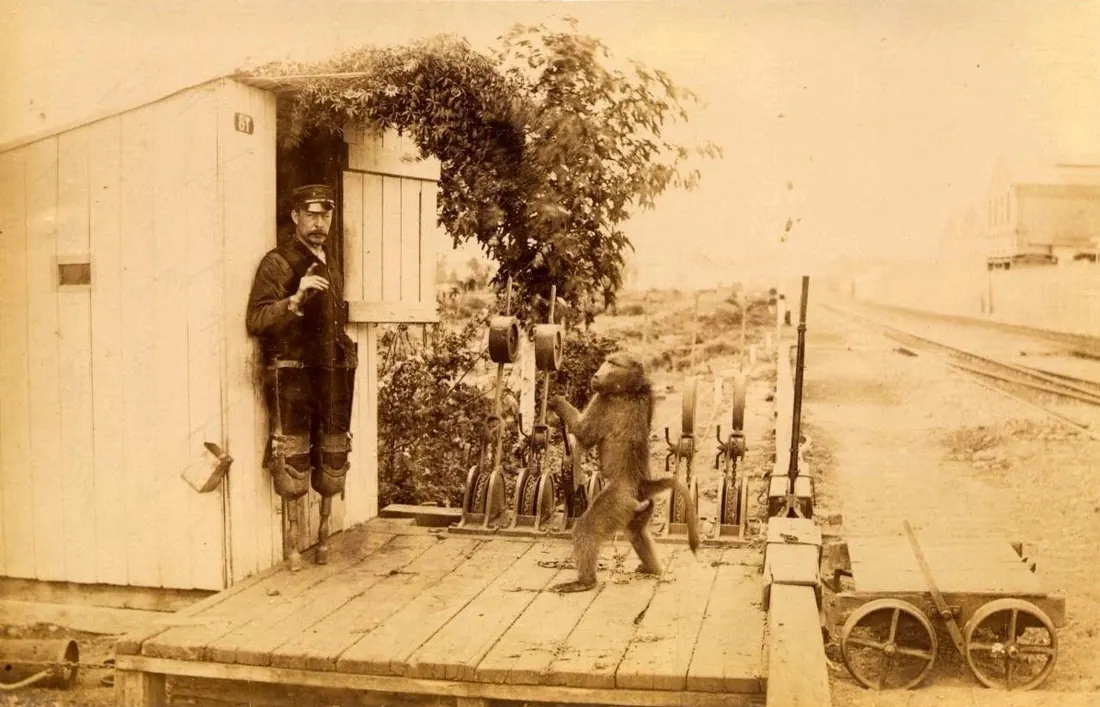
“A railway guard named James Edwin Wide was knocked down by a train in 1877, and both legs were severed at the knees,” wrote F. W. FitzSimons, director of the Port Elizabeth Museum, in 1919, after Wide had “corrected my notes and supplied additional facts.” “He was subsequently given the job of gatekeeper, and afterwards promoted to signalman,” and “One day he saw a half-grown baboon on the market and bought him.” “The baboon, who answered to the name of Jack,” was a chacma baboon; Wikipedia says “Wide first encountered Jack at the Uitenhage market in 1881.”
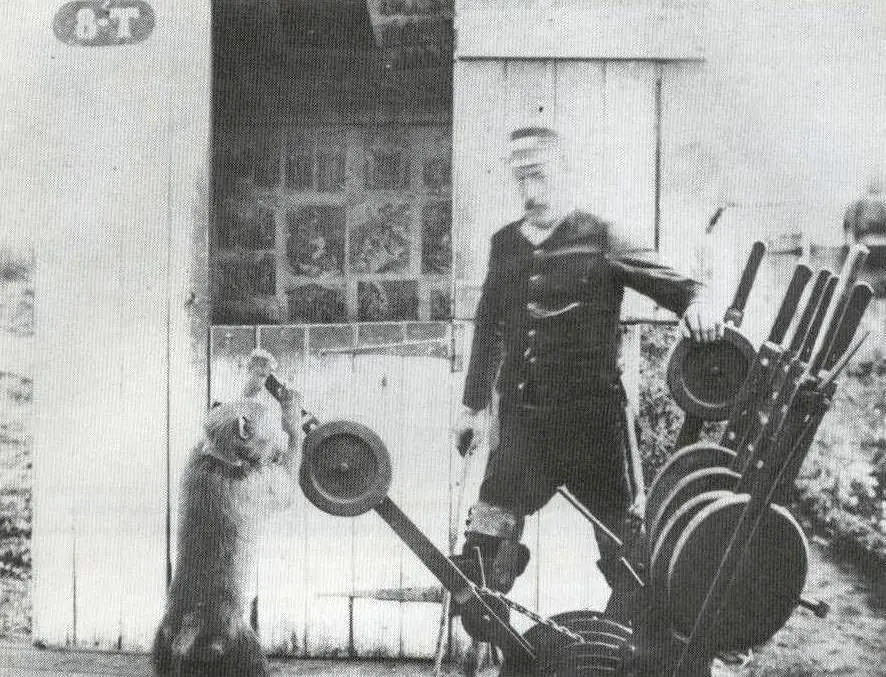
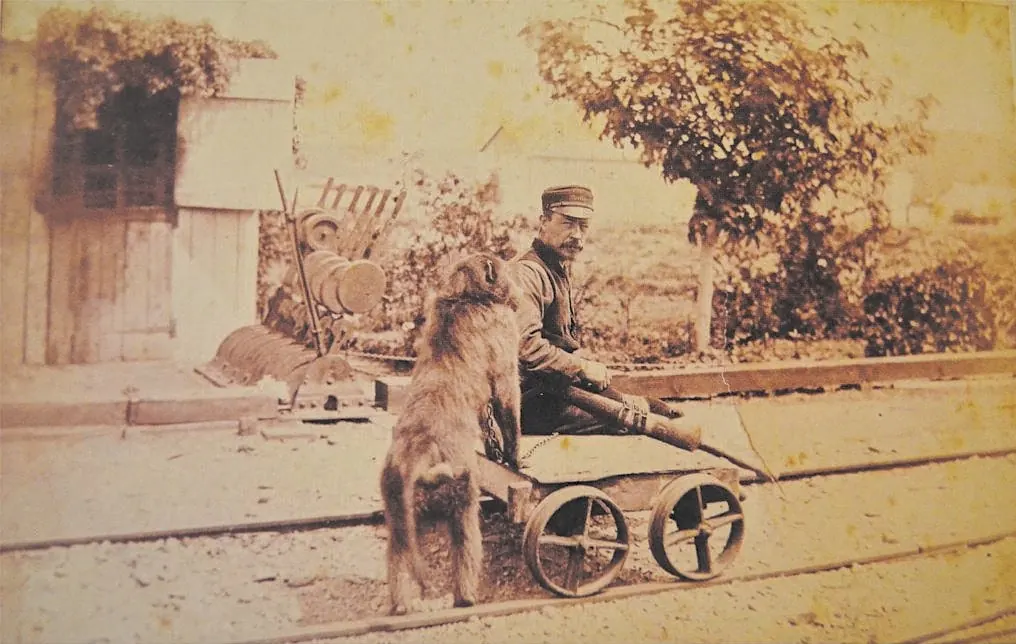
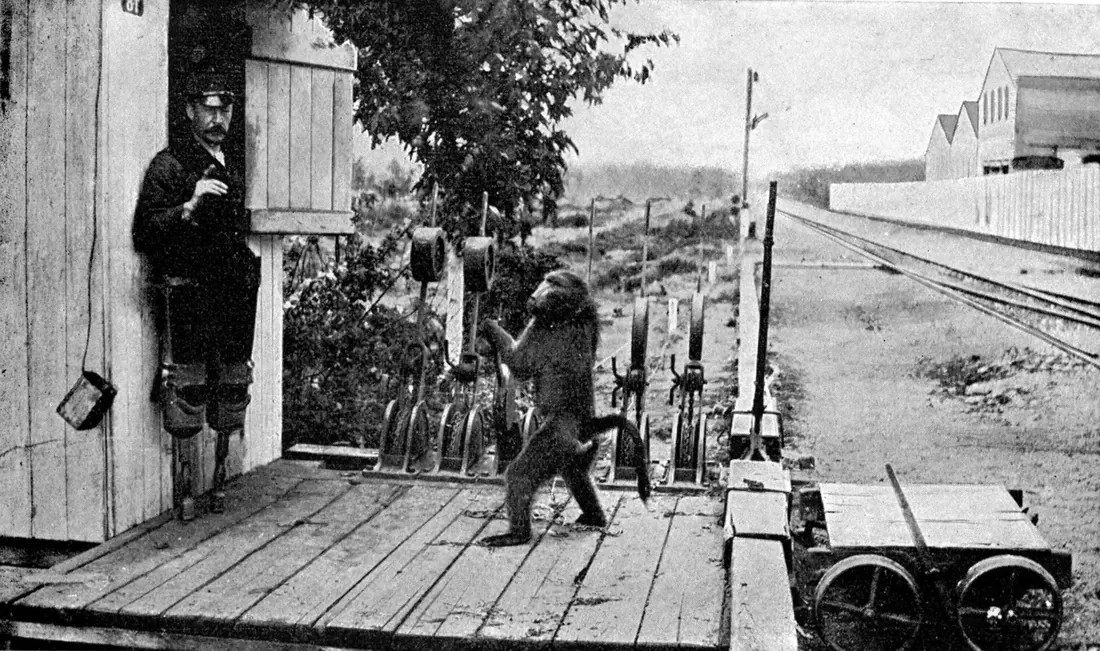
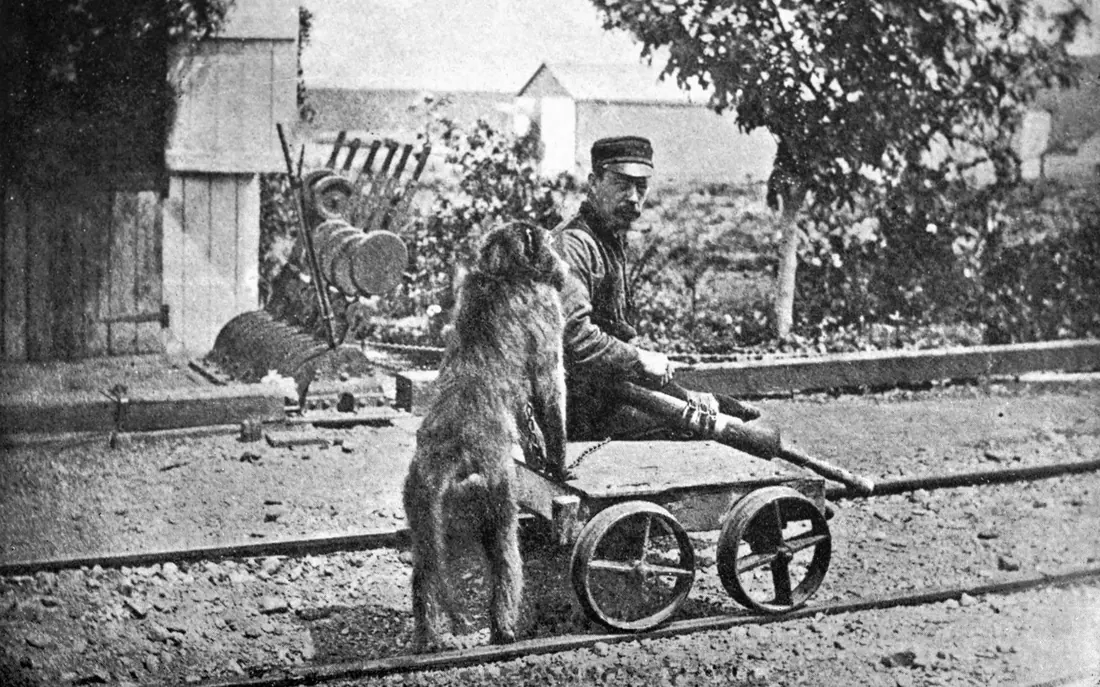
“Jack was up early, and began the day by carrying water and performing various household duties. The lonely signalman and Jack partook of an early breakfast together, and then set off to work,” FitzSimons wrote, and “Jack gripped the back of the vehicle and pushed it along to the signal-box.” Wide “had a tame baboon which he taught not only to know each lever by name, but to pull them as required”: “He had only to call out the name of the lever, and the baboon instantly pulled it.” Wide also kept “the key of the padlock which locked a pair of points off the Graaff Reinet line which led to the coal-yard,” and “The instant the four whistles sounded, Jack raced for the key.”
“When Jack was first employed to work the levers at the signal station, passengers raised a strong protest on the score of risk of accident,” FitzSimons wrote. What happened next comes only from later retellings: “After testing the baboon’s skills, the railway decided to employ him, and his position became official. Jack was paid twenty cents a day, and half a bottle of beer each week,” Wikipedia says, and Mental Floss writes, “Rather than fire Wide, the railway managers decided to resolve the complaint by testing the baboon’s abilities. They came away astounded.”
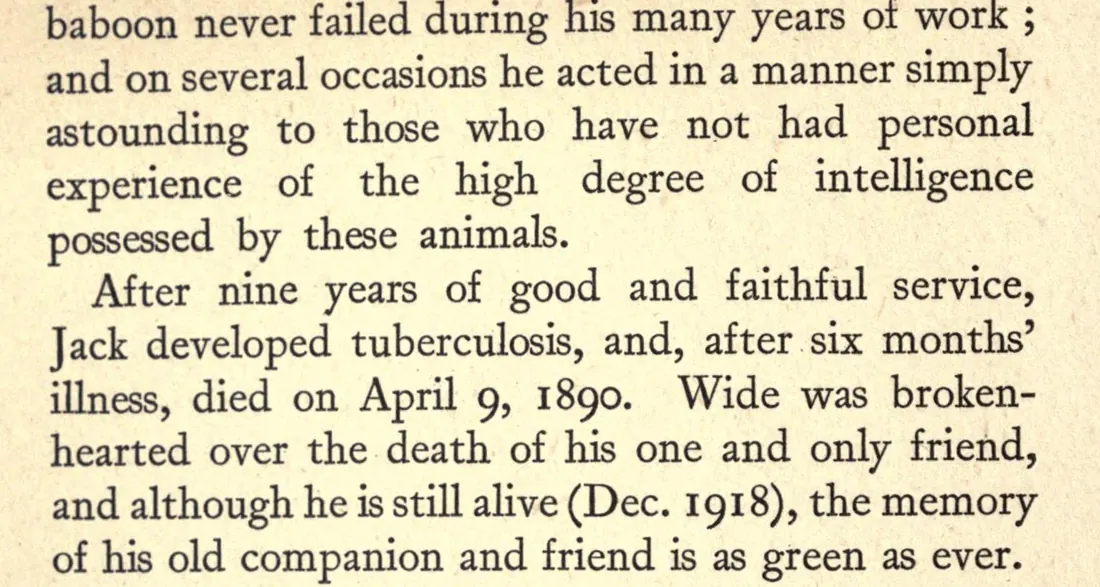
“The baboon never failed during his many years of work,” FitzSimons wrote. “After nine years of good and faithful service, Jack developed tuberculosis,” and “after six months’ illness, died on April 9, 1890.”
Wide was “still alive (Dec. 1918)” when FitzSimons wrote, and as he told the story, “the old man was repeatedly overcome by his feelings. Tears streamed down his careworn cheeks, and he sobbed aloud in the intensity of his grief,” remembering “what, he declared, was the happiest time of his life, when he and Jack were chums whom nothing but cruel death could separate.” In 1920 The Barrier Miner reported that he “cannot even now refer to his memory without tears.”
Fact check
The facts and where they come from
- This baboon worked the railway signals for nine years, because his owner had no legs. FitzSimons (1919): “Jack was taught by his master to work the levers of the signals”; “After nine years of good and faithful service, Jack developed tuberculosis”; his master’s “both legs were severed at the knees.” Wikipedia: “in his nine years of employment with the railway company.” 14
- His name was Jack, a chacma baboon in South Africa. Wikipedia: “Jack (died 1890) was a chacma baboon who assisted a disabled railway signalman, James Wide, in South Africa.” FitzSimons (1919): “The baboon, who answered to the name of Jack.” 41
- His owner, James Wide, had been run over by a train. FitzSimons (1919): “A railway guard named James Edwin Wide was knocked down by a train in 1877, and both legs were severed at the knees.” FitzSimons (1911): “My new master had been run over by a train some years before, and both his legs were cut off.” 12
- The railway kept him on as a signalman. FitzSimons (1919): “He was subsequently given the job of gatekeeper, and afterwards promoted to signalman”; “An old pointsman at Uitenhage.” The Barrier Miner (1920): he “became a signalman about 1880.” Wikipedia: “changing railway signals at Uitenhage near Port Elizabeth.” 134
- Then he bought a young baboon at the market. FitzSimons (1919): “One day he saw a half-grown baboon on the market and bought him.” Wikipedia: “Wide first encountered Jack at the Uitenhage market in 1881.” 14
- Each morning, Jack pushed him to work on a trolley. FitzSimons (1919): “Jack was up early, and began the day by carrying water and performing various household duties. The lonely signalman and Jack partook of an early breakfast together, and then set off to work”; “Jack gripped the back of the vehicle and pushed it along to the signal-box.” 1
- Wide called out a lever’s name, and Jack pulled it. FitzSimons (1919): “He had a tame baboon which he taught not only to know each lever by name, but to pull them as required”; “He had only to call out the name of the lever, and the baboon instantly pulled it.” 1
- When a train whistled four times, Jack fetched the coal-yard key. FitzSimons (1919): Wide kept “the key of the padlock which locked a pair of points off the Graaff Reinet line which led to the coal-yard”; “The instant the four whistles sounded, Jack raced for the key.” 1
- Then passengers saw a baboon at the levers, and protested. FitzSimons (1919): “When Jack was first employed to work the levers at the signal station, passengers raised a strong protest on the score of risk of accident.” 1
- The railway reportedly tested him, then hired him for pay and beer. Wikipedia: “After testing the baboon’s skills, the railway decided to employ him, and his position became official. Jack was paid twenty cents a day, and half a bottle of beer each week.” Mental Floss: “Rather than fire Wide, the railway managers decided to resolve the complaint by testing the baboon’s abilities. They came away astounded”; “Jack was reportedly given an official employment number, and was paid 20 cents a day and half a bottle of beer weekly.” Amusing Planet tells it the same way. 456
- In all those years, he never once failed. FitzSimons (1919): “the baboon never failed during his many years of work.” The Barrier Miner (1920) says he was never once known to fail “throughout a period of nearly eight years.” 13
- Then in 1890, Jack caught tuberculosis, and died. FitzSimons (1919): “Jack developed tuberculosis, and, after six months’ illness, died on April 9, 1890.” Wikipedia: “Jack died of tuberculosis in 1890.” 14
- Almost thirty years later, Wide still cried when he spoke of him. FitzSimons, writing while Wide was “still alive (Dec. 1918)”: “the old man was repeatedly overcome by his feelings. Tears streamed down his careworn cheeks, and he sobbed aloud in the intensity of his grief.” The Barrier Miner (1920): he “cannot even now refer to his memory without tears,” nearly 30 years after Jack’s death. 13
- He said his years with Jack were the happiest of his life. FitzSimons (1919): “what, he declared, was the happiest time of his life, when he and Jack were chums whom nothing but cruel death could separate.” 1
Sources
- The Natural History of South Africa, vol. 1: Mammals (F. W. FitzSimons, Longmans, Green and Co., 1919), pp. 60–67, “Jack the Signalman” Internet Archive
- The Monkeyfolk of South Africa (F. W. FitzSimons, Longmans, 1911), pp. 38–39 Internet Archive
- Intelligent Baboon Acts as a Signalman (The Barrier Miner, Broken Hill, April 10, 1920, p. 3) Trove, National Library of Australia
- Jack (baboon) Wikipedia
- Signalman Jack: The Baboon Who Worked for the Railroad—and Never Made a Mistake (Lucas Reilly, October 11, 2018) Mental Floss
- Jack The Baboon Signalman (Kaushik Patowary, August 26, 2019) Amusing Planet
Notes
Nine years: FitzSimons, whose notes Wide checked, says nine years of service, from the time Wide bought Jack (1881, Wikipedia) to his death in 1890; The Barrier Miner says Jack worked the signals for “nearly eight years,” having learned the work in a year or two. The Short says nine years, as FitzSimons and Wikipedia do.
The test, the hiring, the pay and the beer appear only in modern retellings (Wikipedia, Mental Floss, Amusing Planet, and a 2012 Knoxville Daily Sun column that says “monthly rations” instead of pay); FitzSimons mentions only the passengers’ protest. So the Short says “reportedly,” and the employee number is left out. “Twenty cents a day” is the retellings’ figure, but the Cape Colony used pounds, shillings and pence, so the Short says only “pay.”
How Wide lost his legs: Wikipedia and the retellings say he fell while jumping between moving cars; FitzSimons says he was “knocked down by a train,” and his 1911 book “run over by a train.” The Short follows the 1911 wording. Where Jack was bought: Wikipedia says the Uitenhage market; the 1911 book, written as a first-person “monkey memoir,” names Grahamstown and other owners first. The Short says only “at the market.”
Left out: the dog that pulled the trolley before Jack, Jack’s height and the distance to the far signal (all in FitzSimons, but not in the Short), a quote in Mental Floss for which no original was found, and where his skull is said to be kept, because the museum’s own pages were not found.
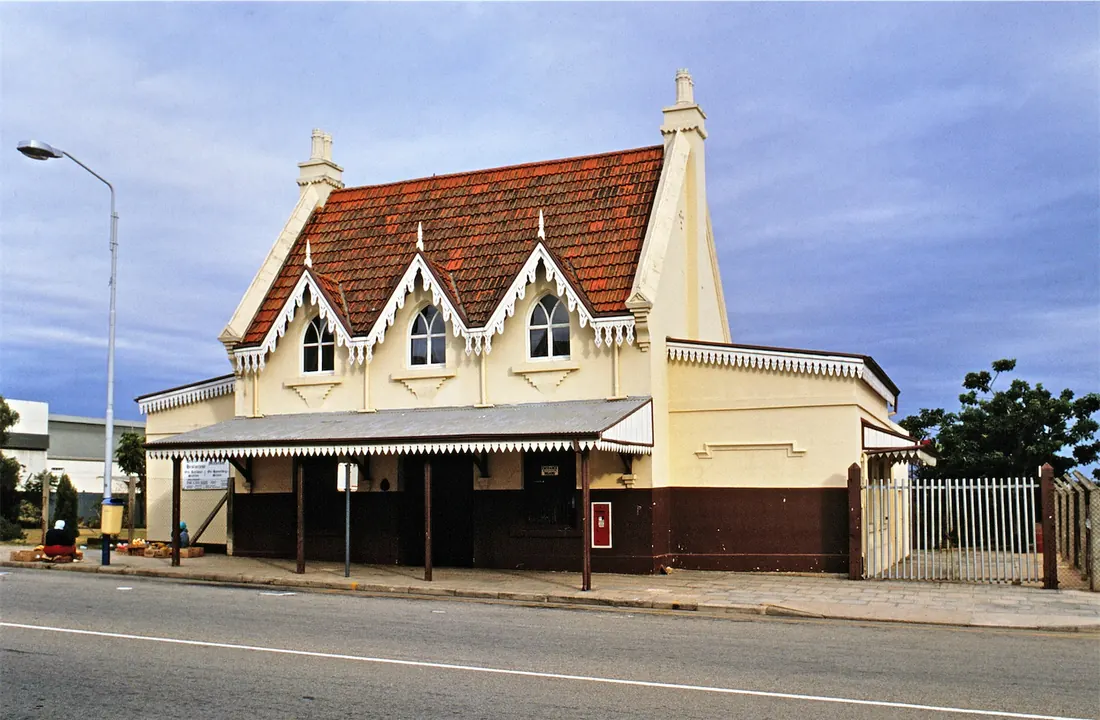
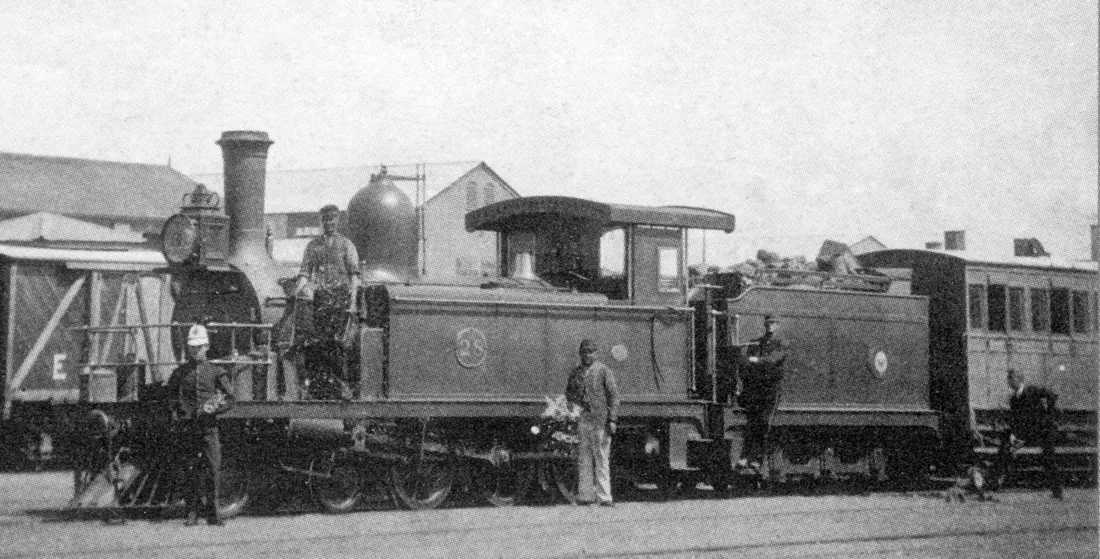
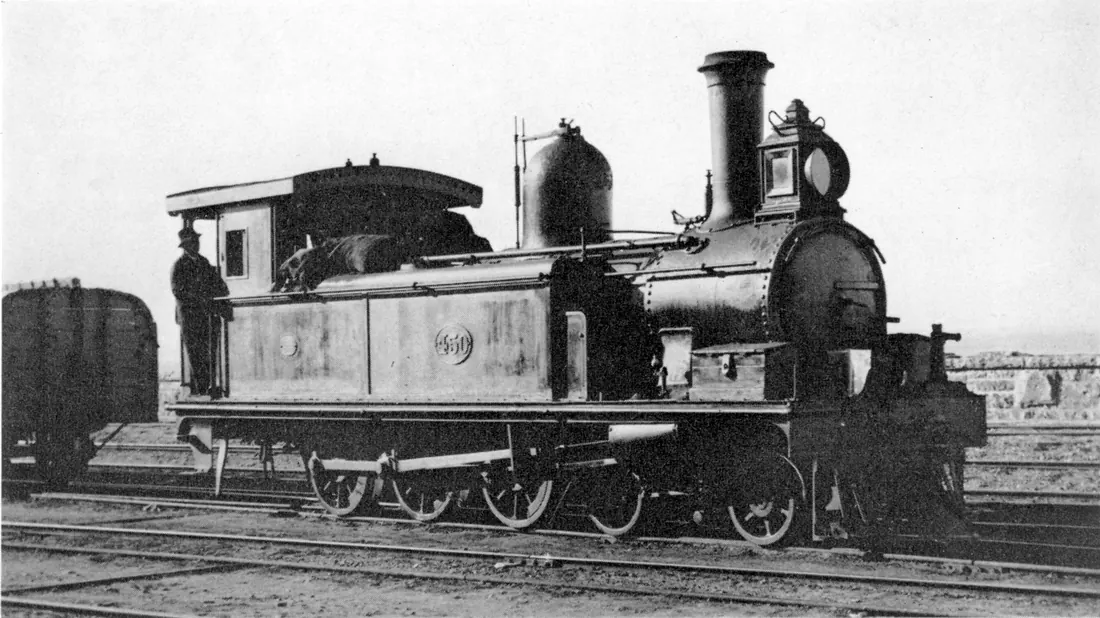
Pictures: only three photos of Jack are known, all from the 1880s by unknown photographers: Jack at the lever frame with Wide, on his peg legs, in the hut door (shown twice, once as the plate printed in FitzSimons’s 1911 book); Jack pulling a lever with Wide behind him, Uitenhage, February 1884; and Jack pushing Wide on his trolley (shown twice, once as the plate in the 1919 book, captioned “Jack and his master about to depart for home after a tiring day’s work”). The two page crops are FitzSimons’s own printed words, from page 66 of the 1919 book. The locomotives are Cape Government Railways engines of the time, no. E28 of about 1880 and no. M50 photographed by F. W. Neave about 1896, not the train that hit Wide. The Old Railway Station in Uitenhage, built in 1875, was photographed by Janek Szymanowski in 1988.
Photo credits
The archive photos in this story
The photographs and illustrations in this story are in the public domain or shared under open licenses; each one is credited below with its license. Tap one to enlarge it, or follow the link to its archive page for the full record. The narration, captions and graphics in the Short are our own; its music and sound effects are credited below.
Music and sound effects
Music: Schumann, Kinderszenen, Op. 15: No. 1 'Of Foreign Lands and Peoples' (Musopen, public domain); Mussorgsky, Pictures at an Exhibition: IV. Bydlo (piano) (Musopen, public domain); Dvorak, Symphony No. 9 'From the New World': II. Largo (Musopen, public domain).
Sound effects: Freesound, CC0.