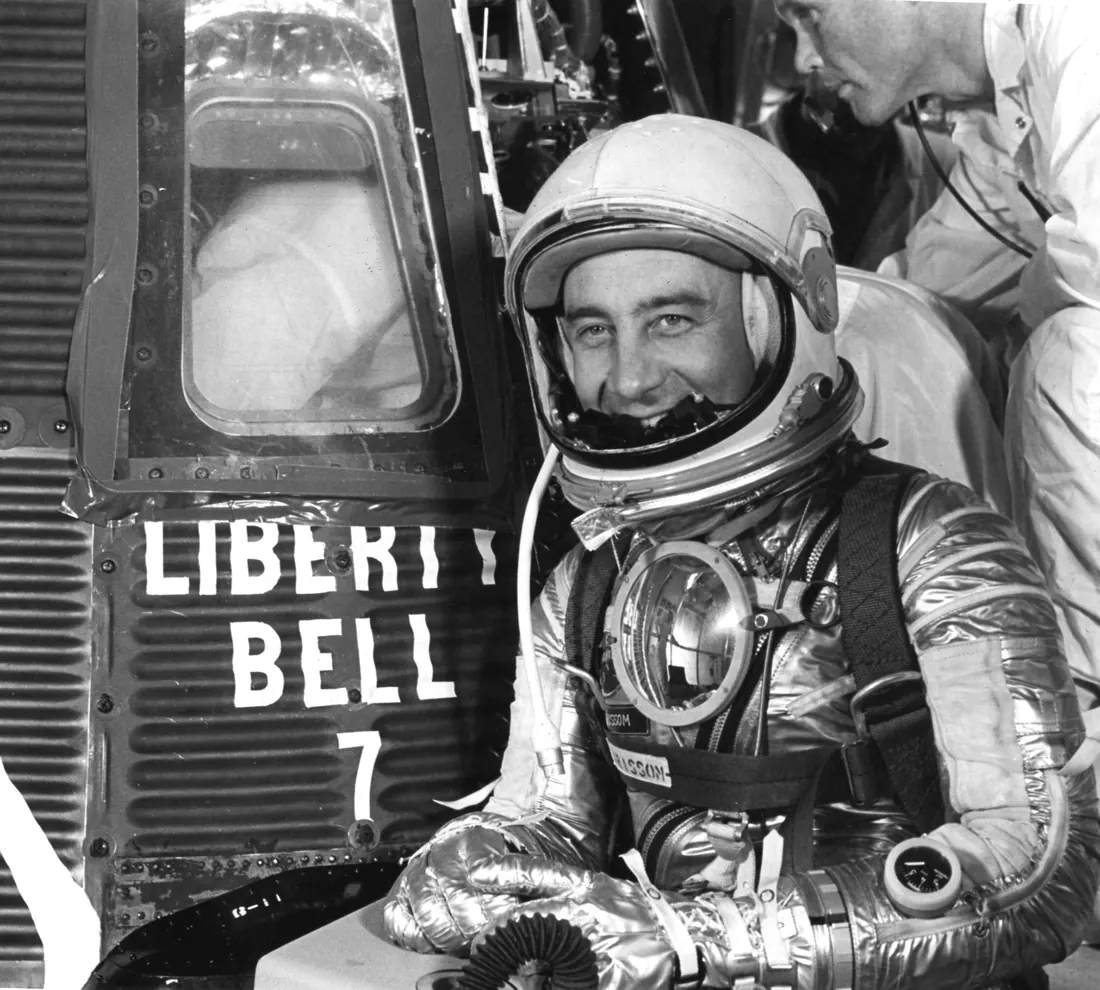
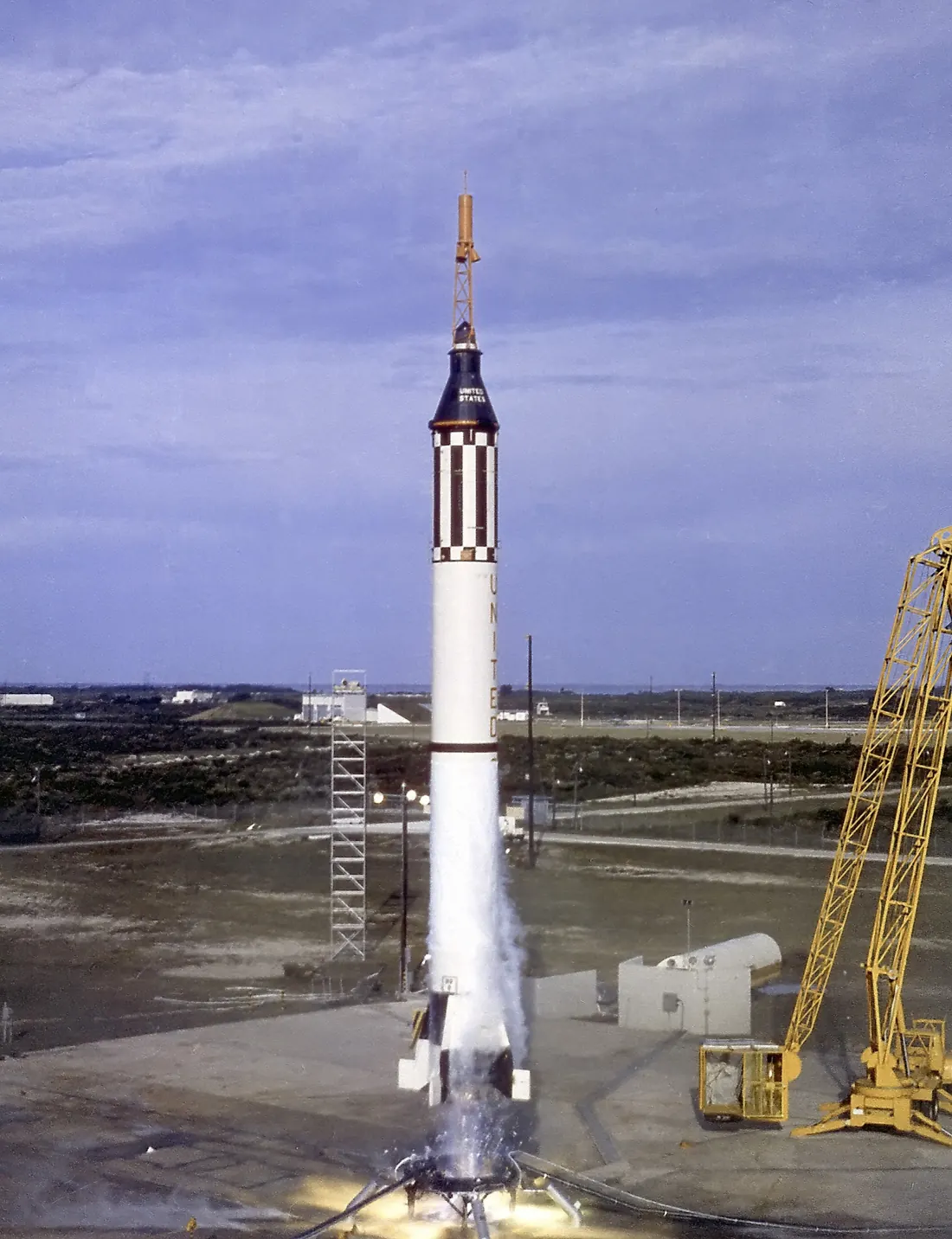
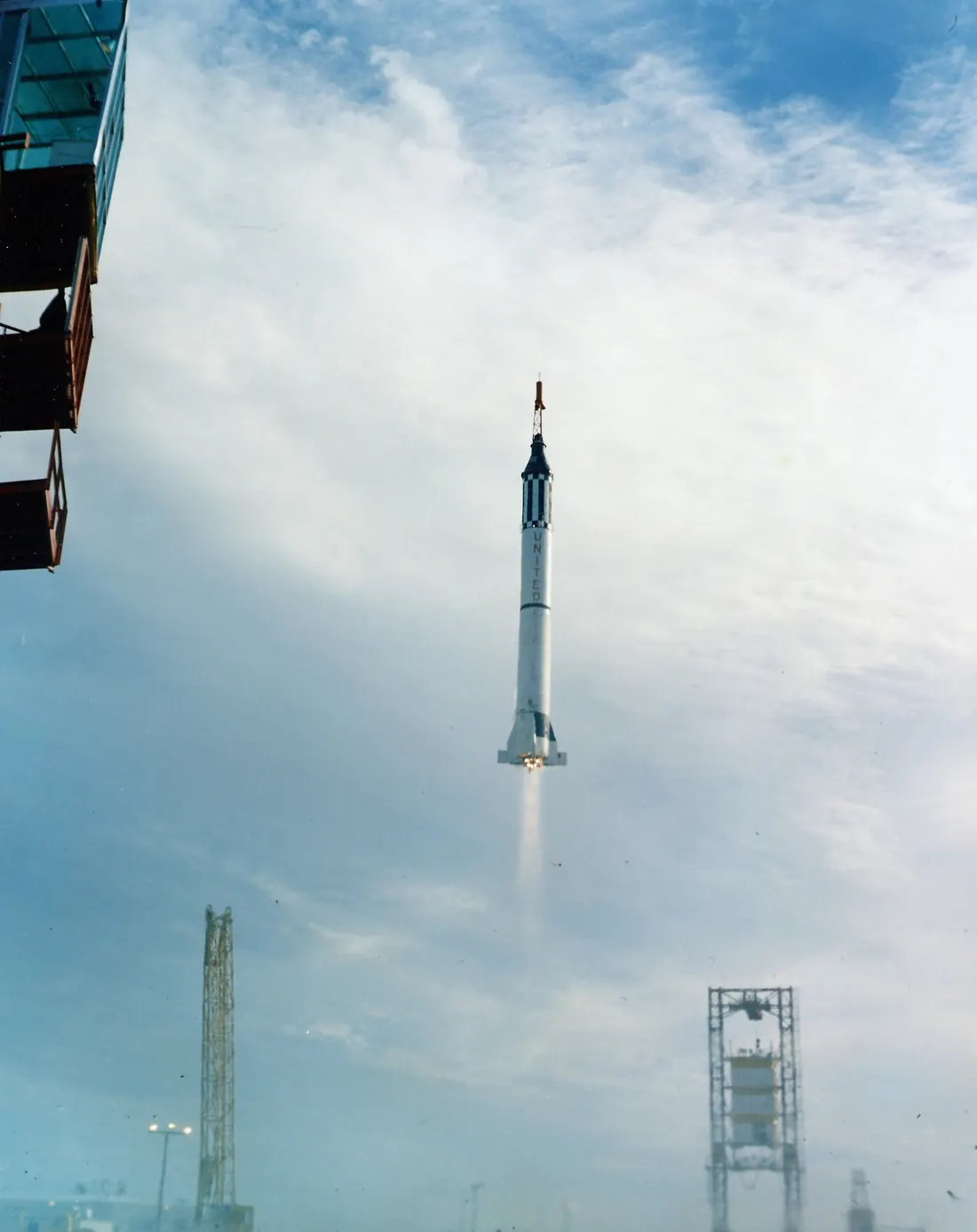
“Picked as one of the first seven astronauts in 1959, he made the further cut to the three who would make the initial flights,” Michael J. Neufeld of the Smithsonian’s National Air and Space Museum writes of Gus Grissom. “On July 21, 1961, with a 15-minute suborbital flight of the Mercury spacecraft Liberty Bell 7, Gus Grissom became the second American in space,” the Cosmosphere says. Lifting off from Cape Canaveral, he coasted “in weightlessness up to an altitude of 118 miles (190 km)” and “landed in the ocean 15 minutes and 37 seconds after liftoff.”
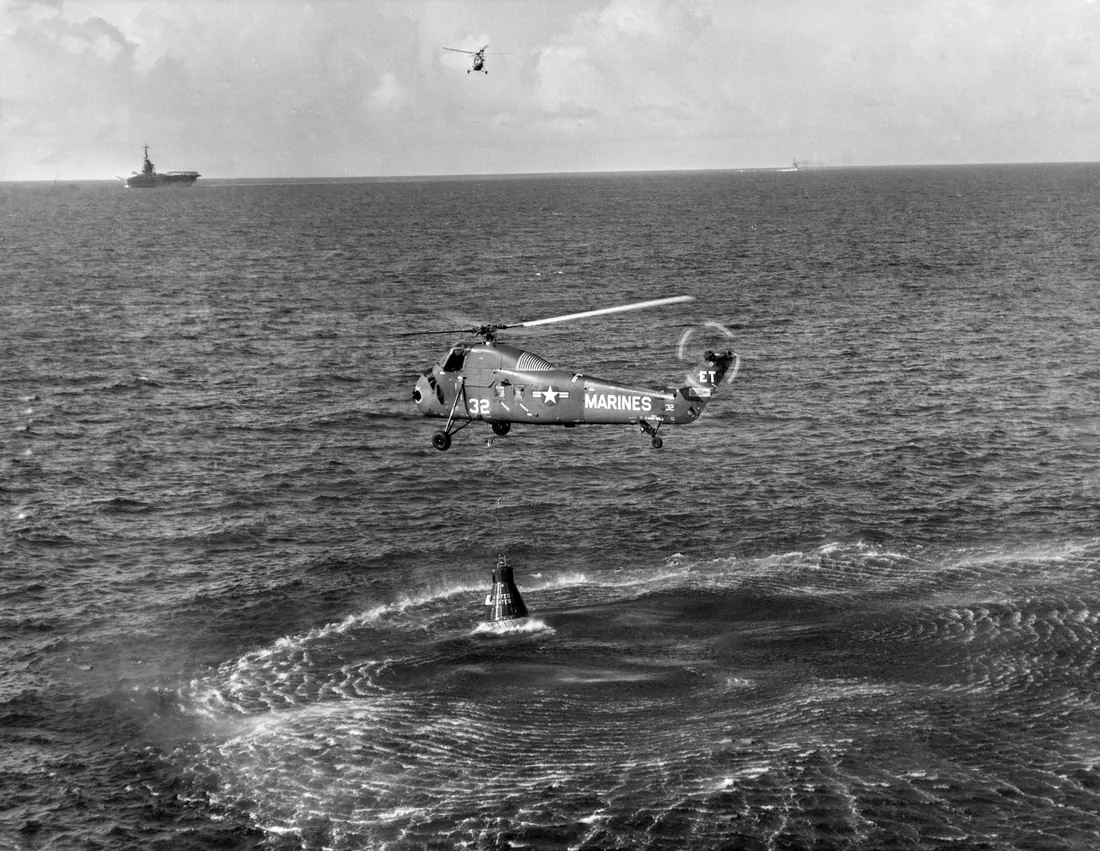
“It was not long after splashdown that things suddenly went bad,” Neufeld writes. “A Marine helicopter from the carrier USS Randolph came in to initiate the pickup of Grissom and his capsule.” “As the crewman reached down with an extension cutter, like those used to trim tree branches, the hatch of the spacecraft below suddenly blew off. Seawater began pouring over the hatch rim.” “Grissom instantly threw himself out the hatch and swam away from the sinking spacecraft.” But he “had forgotten, or did not have the time, to close the oxygen vent on his suit torso,” and “As water leaked in through the oxygen inlet, he gradually got lower and lower in the water.”
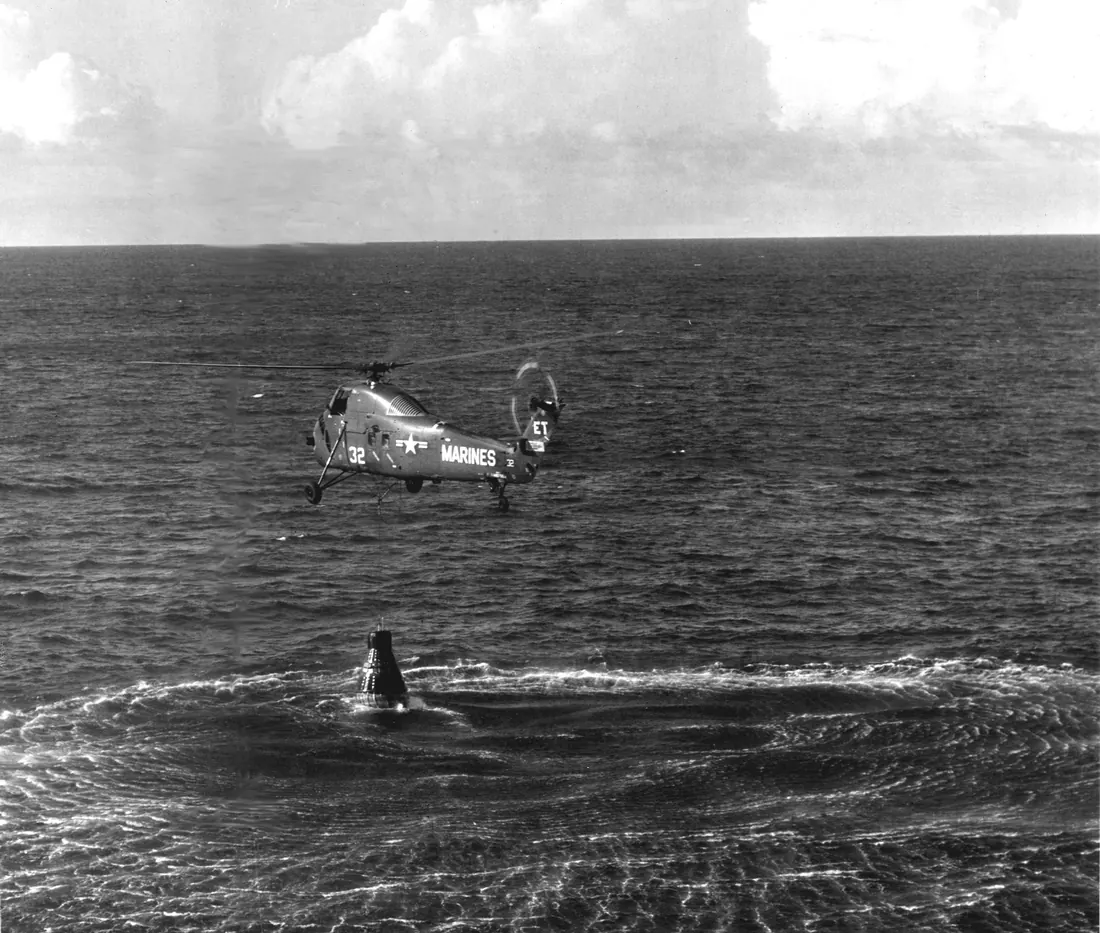
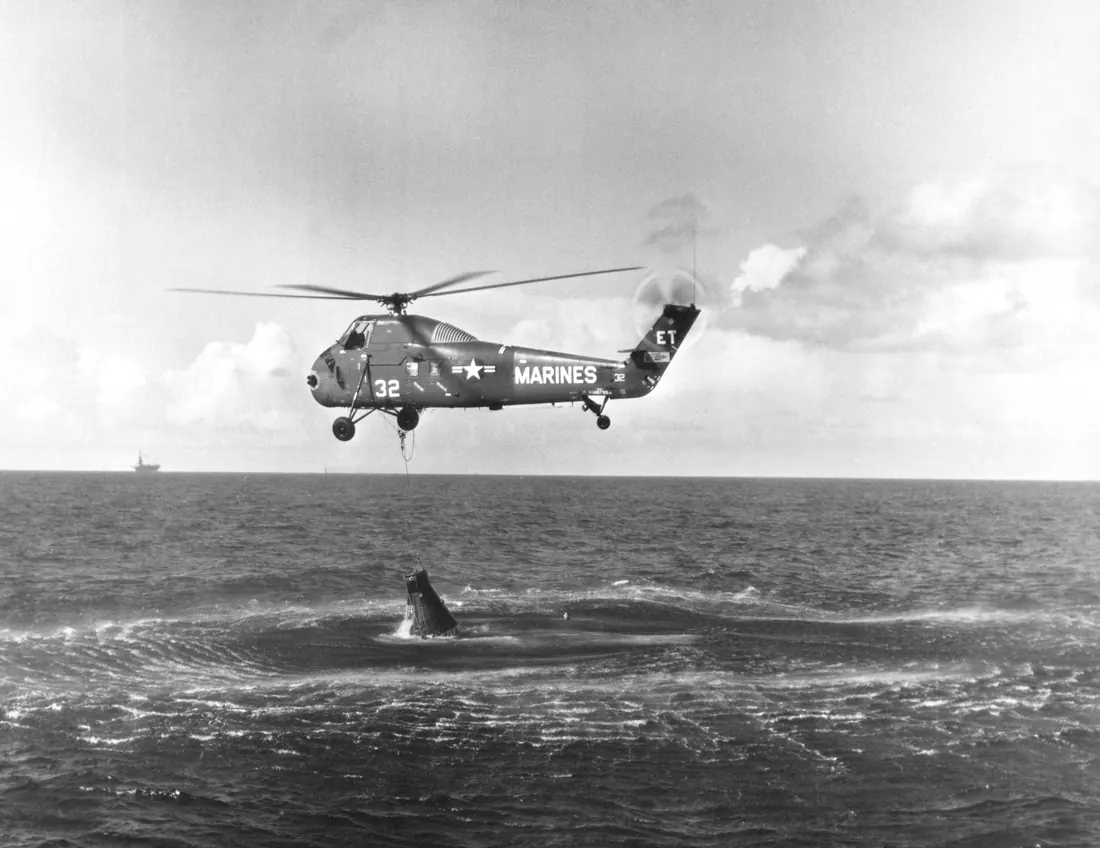
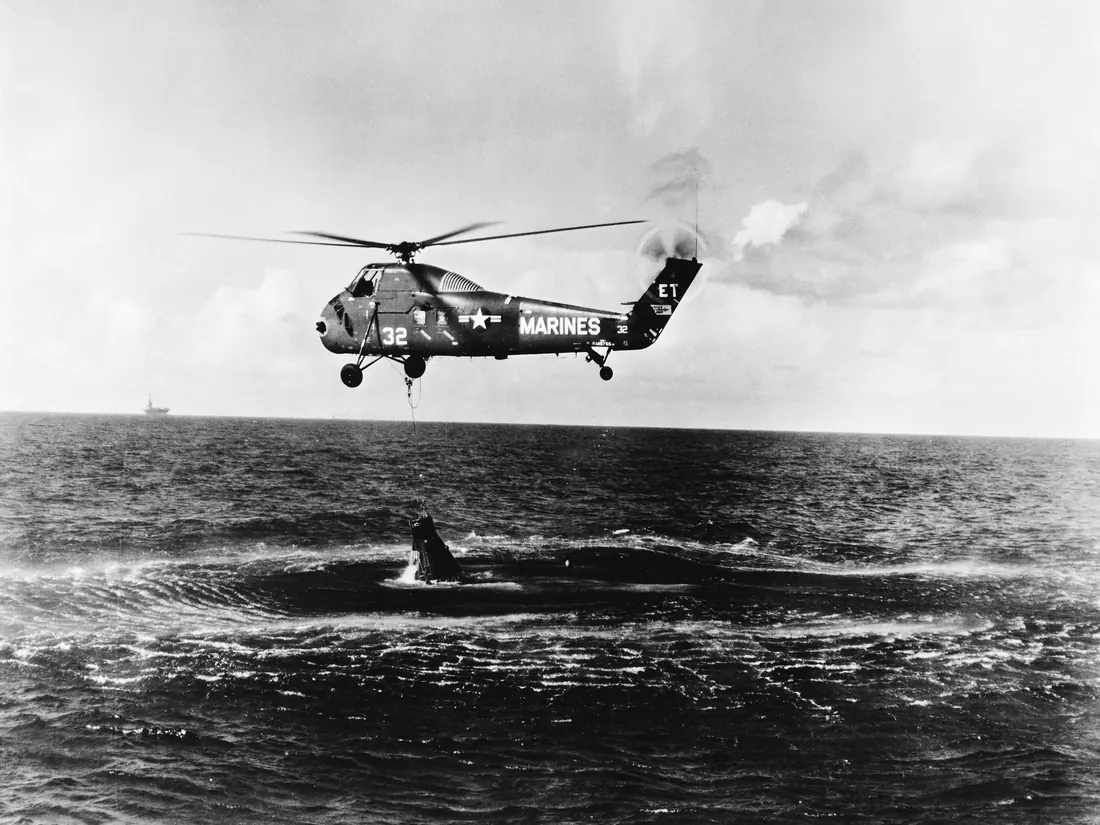
“The helicopter crew, thinking he was ok and following their training, moved in to hook on to Liberty Bell 7.” “But the water flowing into the capsule made it too heavy for the helicopter, which at one point had all three wheels in the water. The pilots got an engine overheating warning light. Forced to unhook, the crew watched the capsule slip beneath the waves.” Liberty Bell 7 “sank nearly three miles to the bottom of the Atlantic and stayed there for 38 years,” the Cosmosphere says, “more than 16,000 feet deep—deeper than the Titanic,” whose wreck lies at “a depth of about 12,500 feet,” Wikipedia says.
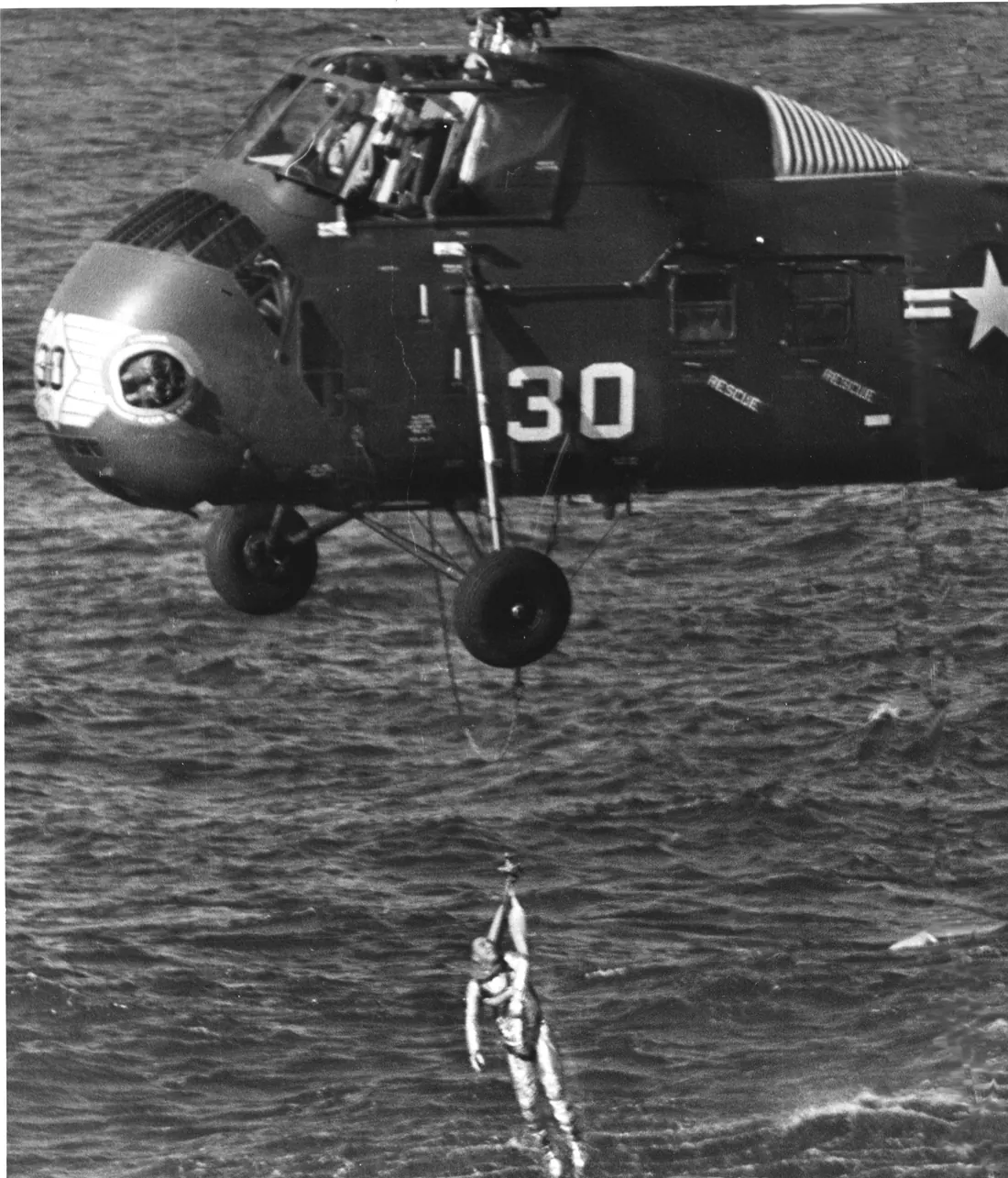
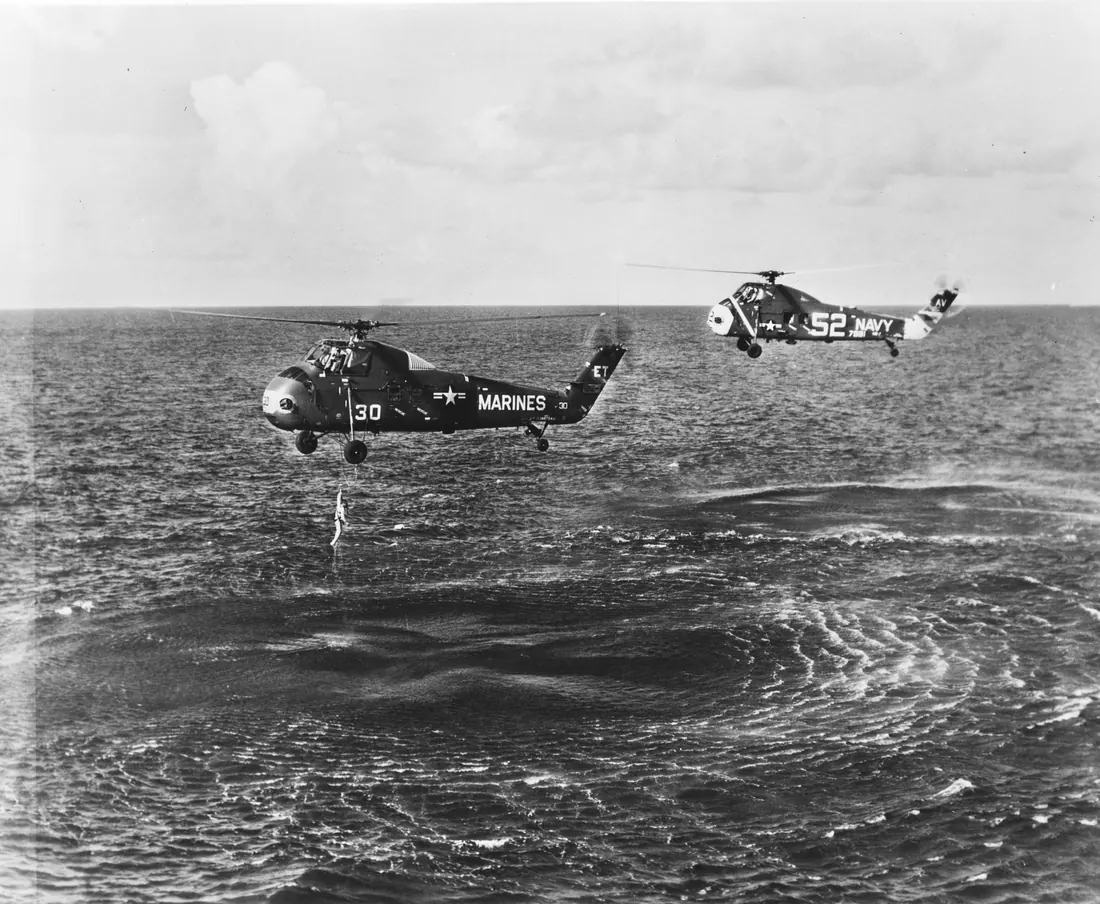
“Grissom, meanwhile, found himself slowly sinking too.” “Blasted by the rotor wash, Grissom waved frantically to the helicopter.” “After Liberty Bell 7 sank, and fortunately before Grissom did, the crew came back and lowered the sling,” Neufeld writes, and NASA’s photo caption reads: “Marine helicopter has astronaut Virgil I. Grissom in harness and is bringing him up out of the water. The Liberty Bell 7 spacecraft has just sunk below the water.” He had been in the water “for a period of only four or five minutes, ‘although it seemed like an eternity to me,’ as he said afterward,” Wikipedia says. Later, “rumors circulated that Gus Grissom had panicked and triggered the hatch himself. He repeatedly testified that he was lying in his couch waiting for the helicopter when it ‘just blew,’” and Neufeld wrote in 2021 that “Rotor wash can create a static charge on helicopters, which may have discharged through the spacecraft and tripped the explosive in the hatch seal.”
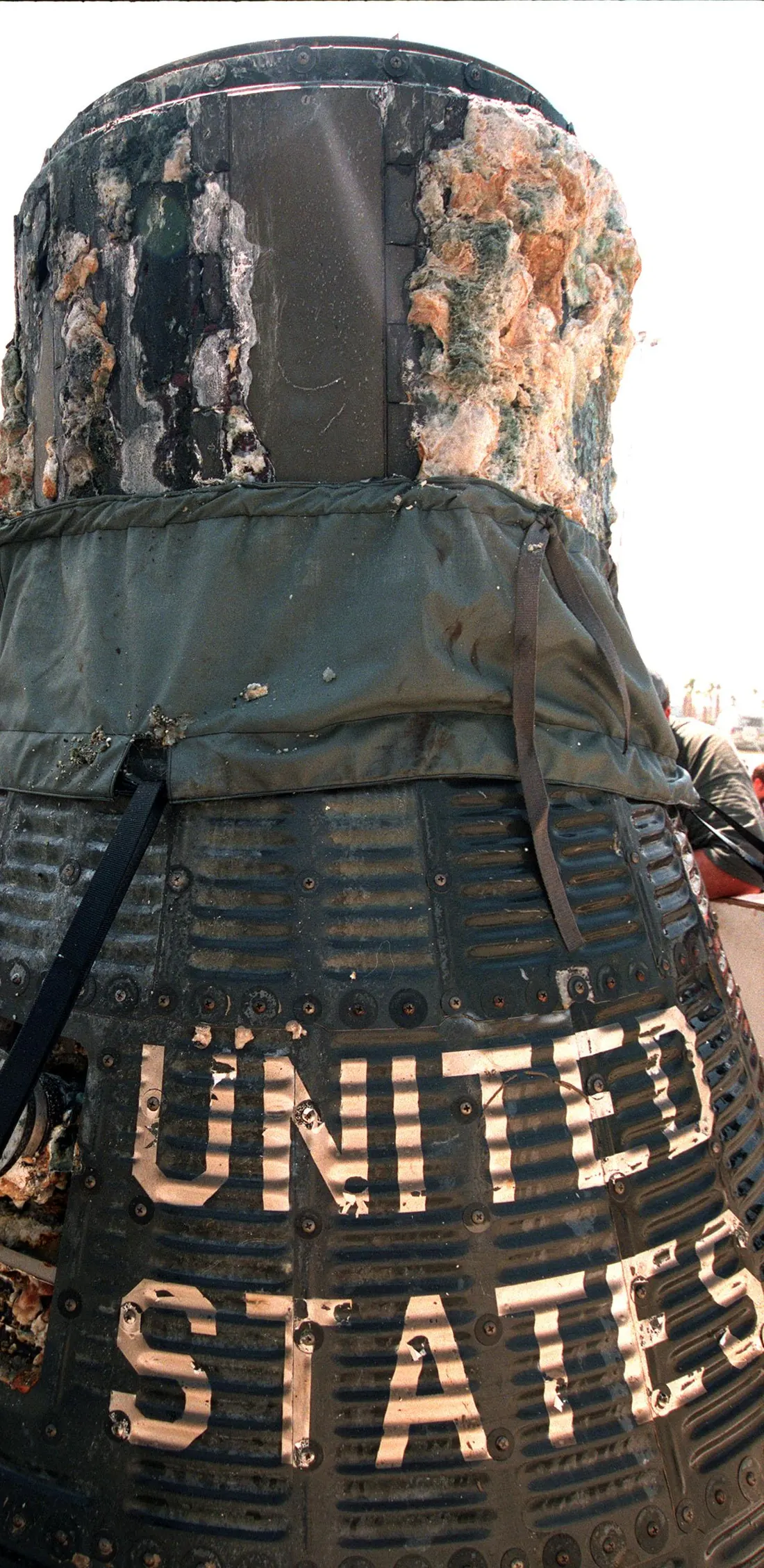
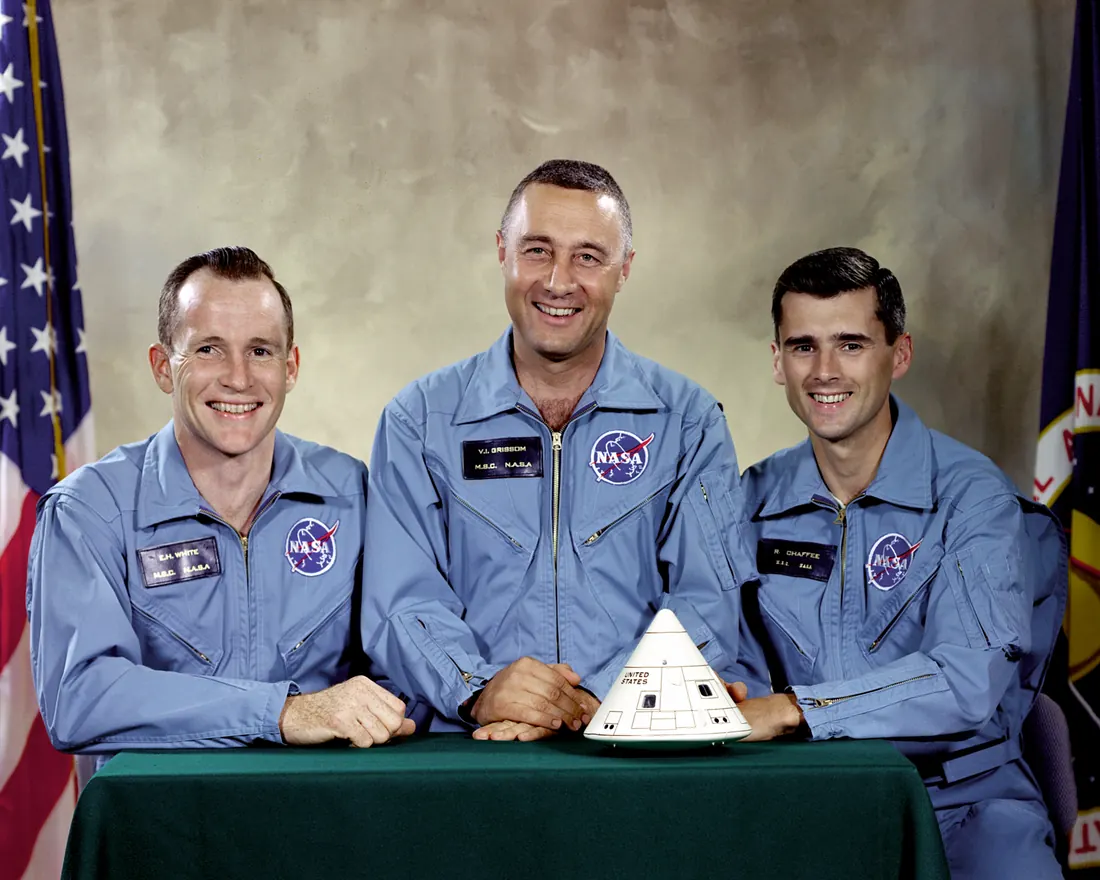
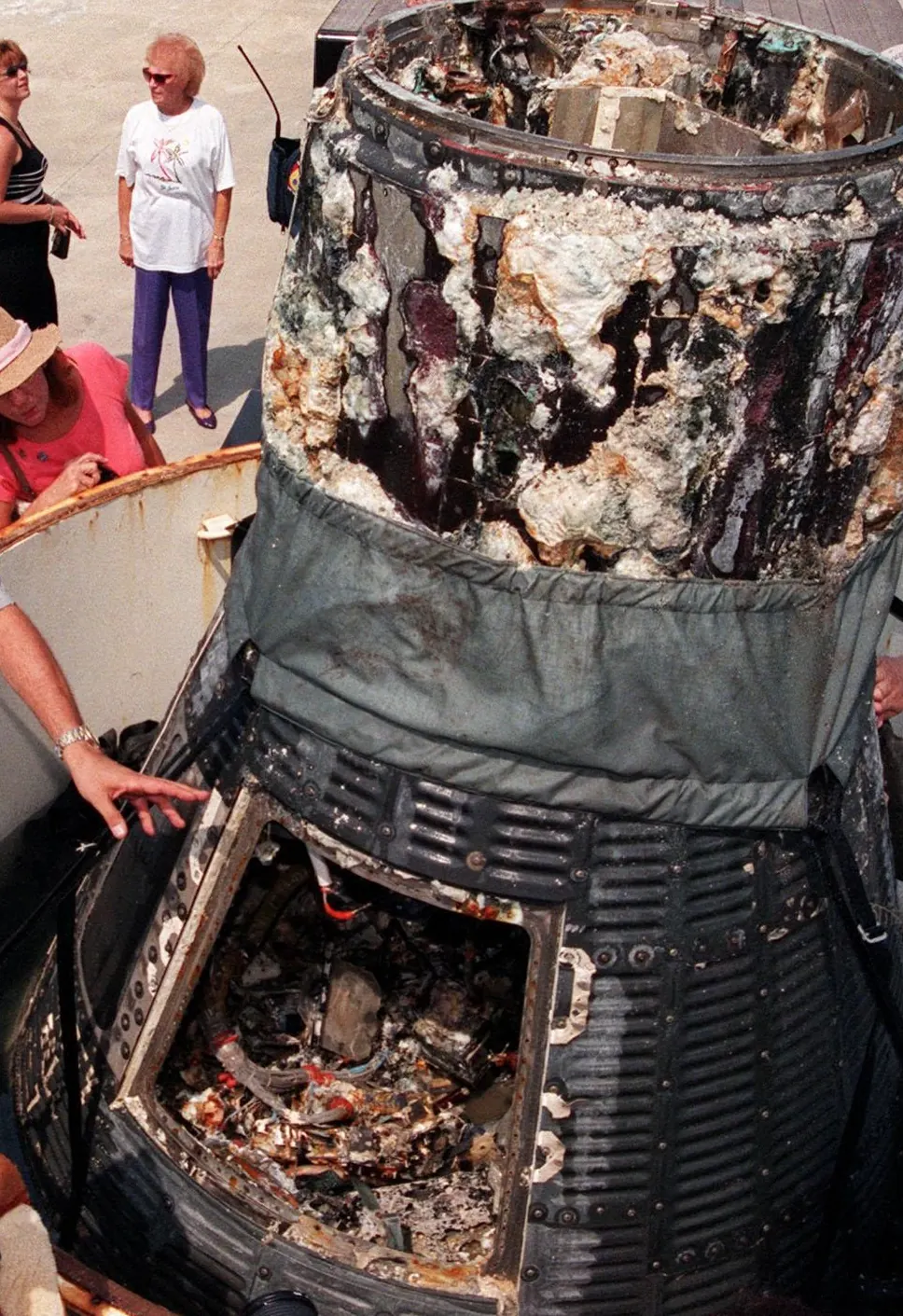
“With a wink, he named Gemini 3 Molly Brown, after a contemporary Broadway musical, The Unsinkable Molly Brown.” He “was tragically killed in a launch-pad fire in January 1967, along with Ed White, the first American to walk in space, and Roger Chaffee.” In 1999, “an expedition to recover the craft from its resting place more than 16,000 feet deep” brought it up: “The spacecraft was recovered on July 20, 1999—the 30th anniversary of Man walking on the Moon!” the Cosmosphere says, and it “was returned to Port Canaveral, Florida, on July 21, 1999, exactly 38 years after its flight into space.” “Today Liberty Bell 7 is in a special display case at the Cosmosphere in Hutchinson, Kansas.” Grissom never lived to see it come home.
Fact check
The facts and where they come from
- He made it back from space, but his spaceship sank, and he nearly drowned. The Cosmosphere: “It was a textbook mission until splashdown, when the spacecraft’s hatch door prematurely ejected off the craft— allowing it to fill with seawater and nearly drowning Grissom.” The Smithsonian: “Grissom’s was the only one that came close to killing an astronaut.” 31
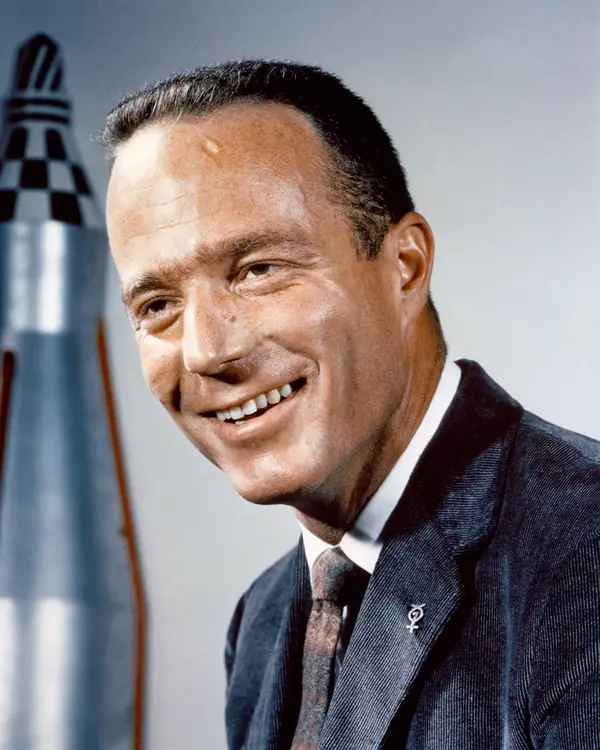
- His name was Gus Grissom. The Smithsonian: “Picked as one of the first seven astronauts in 1959, he made the further cut to the three who would make the initial flights.” 1
- In July 1961, he became the second American in space. The Cosmosphere: “On July 21, 1961, with a 15-minute suborbital flight of the Mercury spacecraft Liberty Bell 7, Gus Grissom became the second American in space.” The Smithsonian: “Lifting off from Cape Canaveral, Florida, about 8:20 am Eastern on July 21.” 21
- After splashdown, his hatch blew off, and seawater poured in. The Smithsonian: “It was not long after splashdown that things suddenly went bad”; “the hatch of the spacecraft below suddenly blew off. Seawater began pouring over the hatch rim.” 1
- He threw himself out and swam. The Smithsonian: “Grissom instantly threw himself out the hatch and swam away from the sinking spacecraft.” 1
- But a vent on his suit was open, and water leaked in. The Smithsonian: he “had forgotten, or did not have the time, to close the oxygen vent on his suit torso”; “As water leaked in through the oxygen inlet, he gradually got lower and lower in the water.” The Cosmosphere: “flooding the capsule and Grissom’s space suit.” 12
- The helicopter crew thought he was fine and went for the capsule. The Smithsonian: “The helicopter crew, thinking he was ok and following their training, moved in to hook on to Liberty Bell 7.” 1
- Then a warning light flashed, and they had to let it go. The Smithsonian: “The pilots got an engine overheating warning light. Forced to unhook, the crew watched the capsule slip beneath the waves.” Wikipedia: “a detector light had flashed on the instrument panel, indicating that metal chips were in the oil sump because of engine strain.” 14
- Liberty Bell 7 sank nearly three miles, deeper than the Titanic. The Cosmosphere: “the spacecraft sank nearly three miles to the bottom of the Atlantic and stayed there for 38 years”; “more than 16,000 feet deep—deeper than the Titanic.” Wikipedia: the Titanic’s wreck lies at “a depth of about 12,500 feet.” 36
- And Grissom was sinking too; he waved frantically. The Smithsonian: “Grissom, meanwhile, found himself slowly sinking too”; “Blasted by the rotor wash, Grissom waved frantically to the helicopter.” 1
- At last, a helicopter dropped a sling and pulled him out. The Smithsonian: “After Liberty Bell 7 sank, and fortunately before Grissom did, the crew came back and lowered the sling.” NASA’s photo caption (61-MR4-82): “Marine helicopter has astronaut Virgil I. Grissom in harness and is bringing him up out of the water.” 17
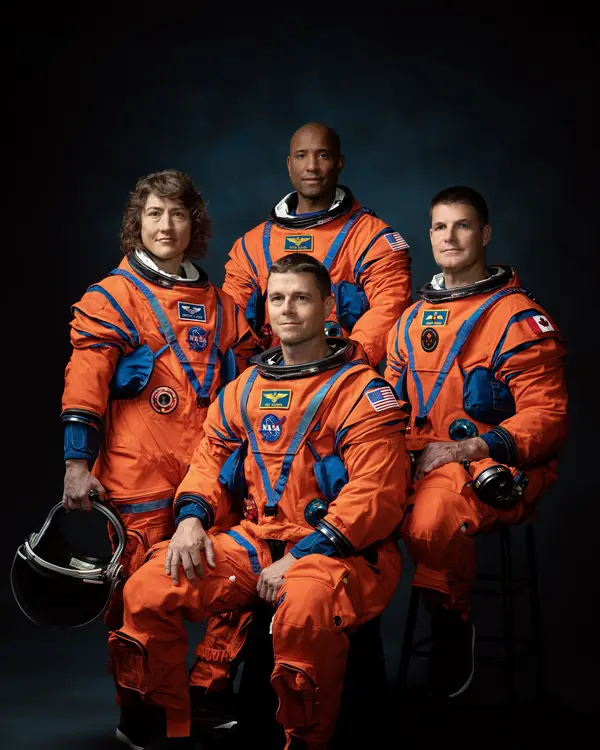
- In January 1967, he died in the Apollo 1 fire. The Smithsonian: he “was tragically killed in a launch-pad fire in January 1967, along with Ed White, the first American to walk in space, and Roger Chaffee.” NASA’s photo caption: “On January 27, 1967 … all three Apollo 1 crewmembers perished.” 19
- Decades later, his capsule was raised from the ocean floor. The Cosmosphere: “The spacecraft was recovered on July 20, 1999—the 30th anniversary of Man walking on the Moon!” NASA’s photo caption (KSC-99pp1030): “Retrieved from the ocean floor three miles deep, the Liberty Bell 7 Project Mercury capsule is revealed to photographers and the media in Port Canaveral, Fla.” 38
- It came home 38 years to the day after it flew. The Cosmosphere: “The spacecraft was returned to Port Canaveral, Florida, on July 21, 1999, exactly 38 years after its flight into space.” 32
- He never lived to see it. He died in January 1967, the Smithsonian says, and the capsule was raised in July 1999, the Cosmosphere says. 13
Sources
- The Sinking of Liberty Bell 7: Gus Grissom’s Near-Fatal Mission (Michael J. Neufeld, July 21, 2021) Smithsonian National Air and Space Museum
- Liberty Bell 7: The Peril and Promise of Space Exploration Cosmosphere
- Liberty Bell 7 Fun Facts Cosmosphere
- Mercury-Redstone 4 Wikipedia
- Mercury Redstone 4: A close shave for America’s second man in space (David Szondy, July 19, 2021) New Atlas
- Wreck of the Titanic Wikipedia
- Grissom lifted from the water (NASA photo 61-MR4-82 and its caption) NASA
- Liberty Bell 7 at Port Canaveral (NASA photo KSC-99pp1030 and its caption) NASA
- Apollo 1 Prime Crew (NASA photo GPN-2000-001159 and its caption) Wikimedia Commons
Notes
Which helicopter pulled him out: the Smithsonian says “the crew came back and lowered the sling,” while Wikipedia, following NASA’s history, says a second helicopter picked him up; the photos agree with Wikipedia, since the capsule hangs under one helicopter and Grissom rides the sling of another. The Short says only “a helicopter.”
The warning light: the Smithsonian calls it an engine overheating light and Wikipedia a chip-detector light, so the Short says only “a warning light.” “Thought he was fine” is the Smithsonian’s “thinking he was ok”; Wikipedia says the co-pilot was about to pass Grissom the hoist when the light came on.
The vent: the Smithsonian says he “had forgotten, or did not have the time,” to close it, so the Short doesn’t say he forgot. The hatch: who or what fired it is still argued; Grissom always said it “just blew,” and a static spark from the helicopter is the 2021 theory. The Short says only that it blew off.
Depth: the Cosmosphere, which owns the capsule, says “more than 16,000 feet” and “nearly three miles”; Wikipedia says “nearly 16,000 ft,” New Atlas “3,000 fathoms” and an NPR photo caption 15,000 feet. The Short uses the Cosmosphere’s “nearly three miles.” Time in the water: Wikipedia says “four or five minutes,” New Atlas “about five minutes.”
Left out: the dimes found inside the capsule, because the sources disagree on how many there were.
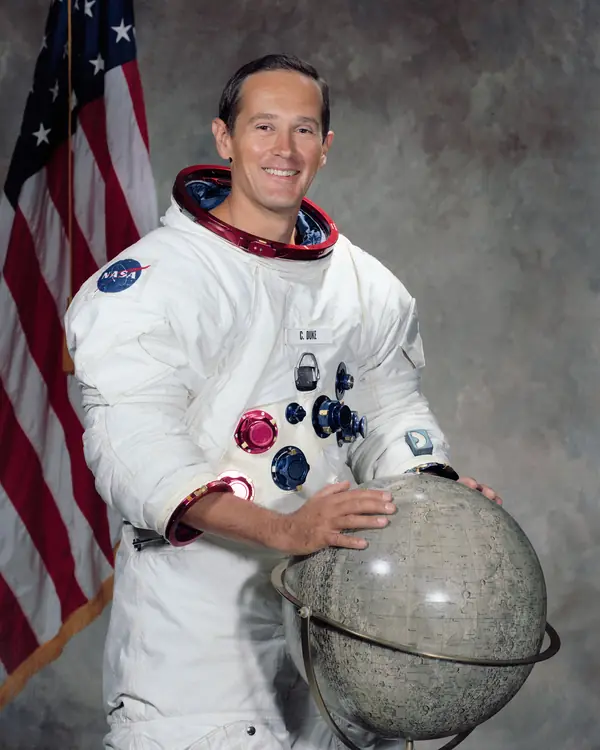
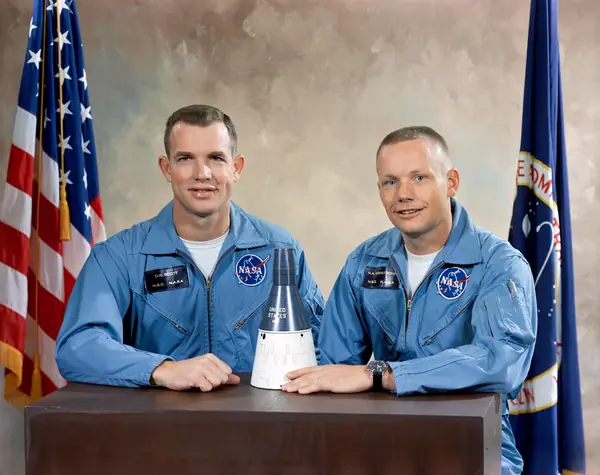
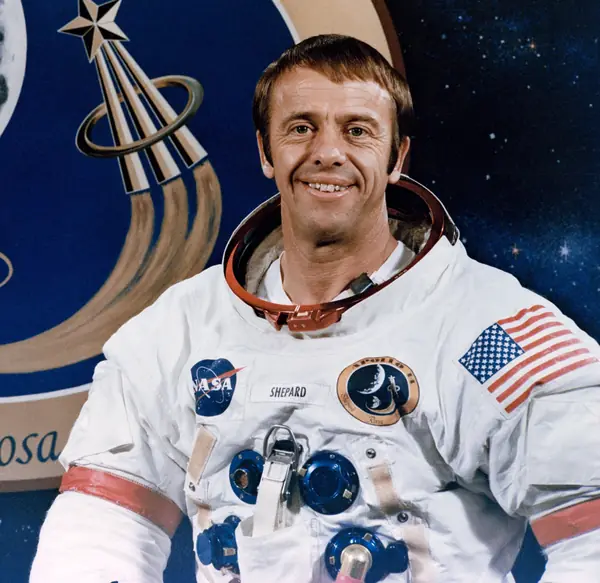
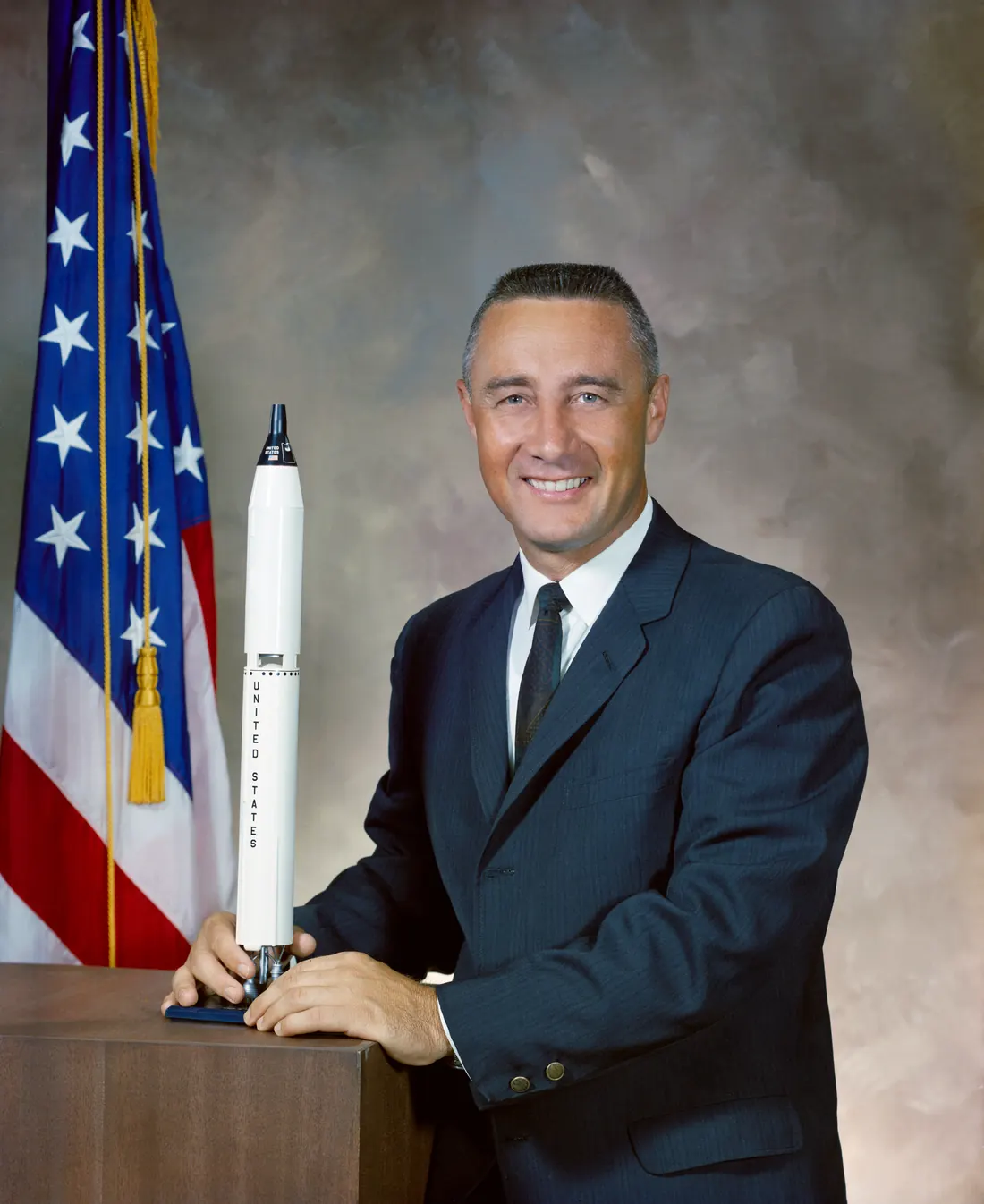
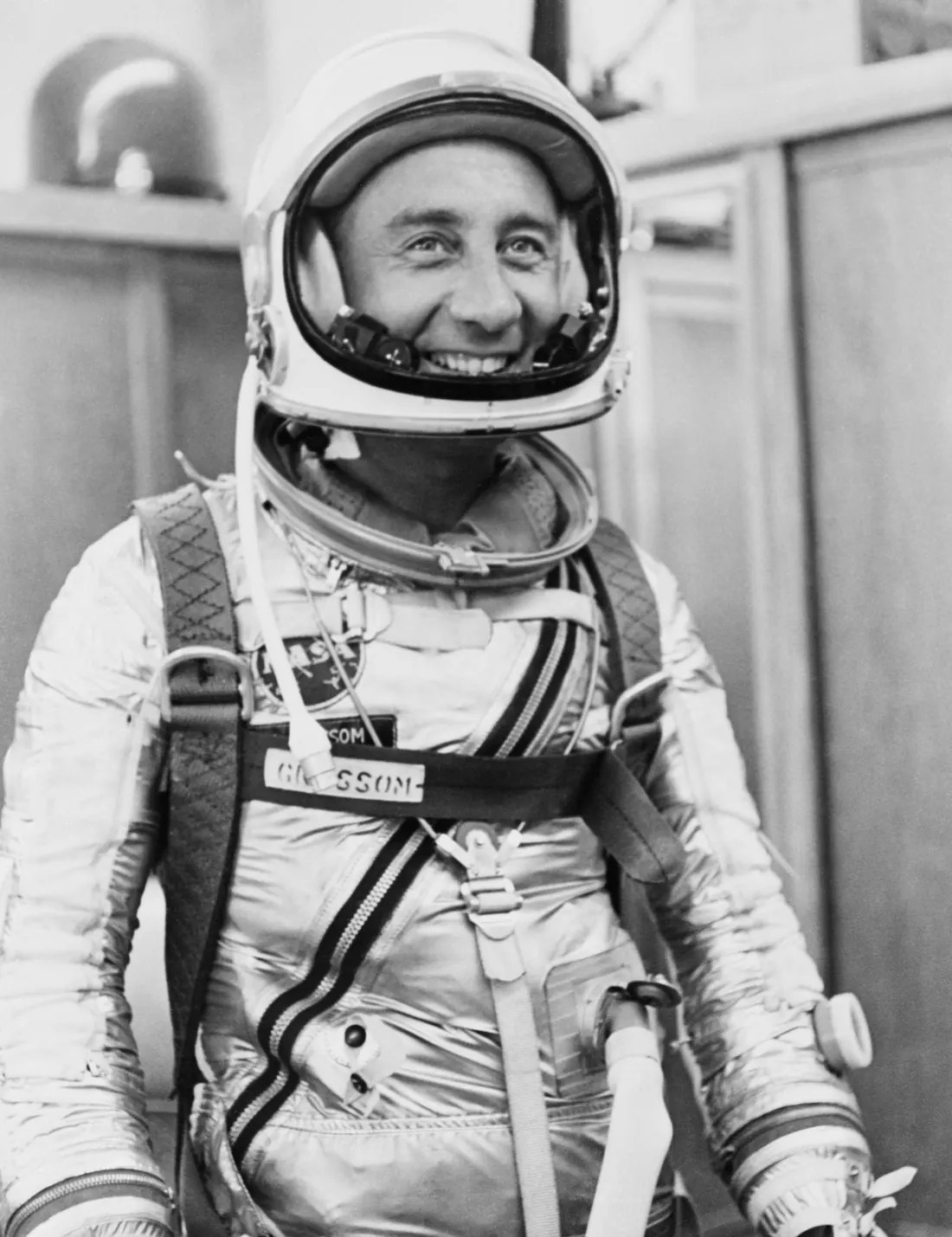
Pictures: all are NASA photos in the public domain. Gus Grissom is beside Liberty Bell 7 in his silver Mercury suit as he prepares to board, in July 1961; suited up on July 19, 1961, the day of the scrubbed first launch attempt; in his official portrait of September 14, 1964; and with Ed White and Roger Chaffee, the Apollo 1 crew, in 1966. Mercury-Redstone 4 lifts off from Cape Canaveral and climbs on July 21, 1961. The recovery photos are from July 21, 1961: the Marine helicopter dropping its line to the capsule, trying to lift it, towing it, and, in the photo NASA says was taken seconds before it let the capsule go, with the speck beside the capsule that NASA says is Grissom’s head; then Grissom lifted from the water in a helicopter’s sling just after the capsule sank (two photos). The raised capsule is shown to the press at Port Canaveral on July 21, 1999, and its UNITED STATES lettering is seen the same day. No photo shows the hatch blowing off or the capsule on the ocean floor. The other people in these photos are not named.
Photo credits
The archive photos in this story
All the photographs and illustrations in this story are in the public domain. Tap one to enlarge it, or follow the link to its archive page for the full record. The narration, captions and graphics in the Short are our own; its music and sound effects are credited below.
Music and sound effects
Music: Schumann, Kinderszenen, Op. 15: No. 1 'Of Foreign Lands and Peoples' (Musopen, public domain); Mussorgsky, Pictures at an Exhibition: IV. Bydlo (piano) (Musopen, public domain); Dvorak, Symphony No. 9 'From the New World': II. Largo (Musopen, public domain).
Sound effects: Freesound, CC0.